More Weight Control, Nutrition & Exercise Articles
Do Avocados Contain Vitamin C?
By Your Health Magazine Health Information Team
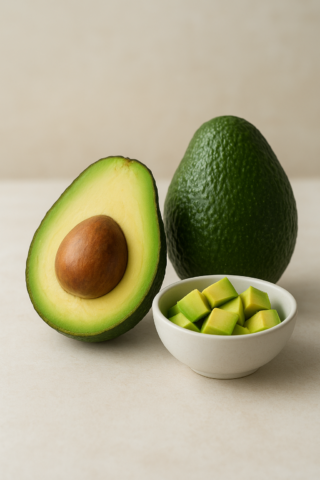
Yes, avocados contain vitamin C, but they are not among the richest sources. Standard USDA nutrient data list about 10 milligrams of vitamin C in 100 grams of raw avocado. That is approximately 11% of the 90-milligram Daily Value used on U.S. food labels. The exact amount can vary with the avocado variety, growing conditions, ripeness, storage, and serving size.
How Much Vitamin C Is in an Avocado?
The following estimates are based on USDA data listing 10 milligrams of vitamin C per 100 grams of raw avocado. The USDA vitamin C content table also lists 15 milligrams in one cup of cubed avocado weighing 150 grams.
| Amount of raw avocado | Approximate vitamin C | Approximate Daily Value |
|---|---|---|
| 50 grams | 5 milligrams | 6% |
| 100 grams | 10 milligrams | 11% |
| 1 cup, cubed (150 grams) | 15 milligrams | 17% |
These figures should be treated as estimates rather than guarantees. Nutrient databases may report different results for specific varieties or groups of samples. A packaged avocado product may also differ from plain raw avocado because of processing, storage, or added ingredients.
Is Avocado a Good Source of Vitamin C?
Avocado can contribute to your daily vitamin C intake, but it generally should not be your main source. The FDA Daily Value for vitamin C is 90 milligrams for adults and children age 4 and older. As a general labeling guide, 5% of the Daily Value or less per serving is considered low, while 20% or more is considered high.
A typical 50-gram portion of avocado provides roughly 6% of the Daily Value. Even a full cup of cubed avocado falls below the FDA’s 20% threshold for a high-vitamin C food.
Foods that generally supply more vitamin C per serving include:
- Red and green bell peppers
- Oranges, grapefruit, and other citrus fruits
- Kiwifruit
- Strawberries
- Broccoli and Brussels sprouts
- Tomatoes
- Cantaloupe
- Baked potatoes
Pairing avocado with these foods can create a meal that provides both the beneficial fats and fiber associated with avocado and a larger amount of vitamin C. Examples include avocado with tomato salsa, an avocado and strawberry salad, or avocado toast served with citrus fruit.
What Does Vitamin C Do?
Vitamin C, also called ascorbic acid, is a water-soluble nutrient. According to the National Institutes of Health vitamin C fact sheet, the body needs it to make collagen, support normal wound healing, assist immune function, and improve the absorption of iron from plant foods. Vitamin C also acts as an antioxidant that helps protect cells from oxidative damage.
Recommended daily amounts depend on age and life stage. Adult women generally need 75 milligrams per day, while adult men need 90 milligrams. Pregnancy and breastfeeding change these requirements, and people who smoke are advised to obtain an additional 35 milligrams per day.
Vitamin C is sensitive to extended storage and heat. Because avocado is usually eaten raw, cooking losses are typically not an issue, although the amount naturally present may decline during prolonged storage.
Avocados Offer More Than Vitamin C
Vitamin C is not the main nutritional reason to eat avocados. Avocados are better known for providing unsaturated fat, particularly monounsaturated fat, along with dietary fiber, folate, potassium, vitamin K, vitamin E, and several B vitamins.
Those nutrients can make avocado a useful part of a balanced eating pattern, but portions still matter because avocado is more calorie-dense than many other fruits. Adding a moderate amount to meals may help provide flavor and texture while replacing foods that are higher in saturated fat, such as some creamy spreads or sauces.
No single food has to supply every nutrient. A varied diet containing fruits, vegetables, whole grains, legumes, protein foods, and appropriate sources of fat is more important than relying on avocado—or any other food—for vitamin C. MedlinePlus offers additional guidance on nutrition and healthy eating.
Do You Need a Vitamin C Supplement?
Eating avocado does not automatically mean you need a vitamin C supplement. Most people can meet their needs by regularly eating a variety of fruits and vegetables. Supplements may be appropriate in certain circumstances, but high doses are not necessarily better and can cause diarrhea, nausea, or abdominal cramps.
Adults should generally avoid exceeding 2,000 milligrams of vitamin C per day from all sources unless a healthcare professional recommends otherwise. People with iron-overload disorders, significant kidney problems, or cancer treatment plans should speak with their physician or registered dietitian before using high-dose vitamin C supplements.
The Bottom Line
Avocados do have vitamin C. Raw avocado provides approximately 10 milligrams per 100 grams, although the amount can vary. That makes avocado a modest contributor rather than a high-vitamin C food. For more vitamin C, combine it with foods such as peppers, citrus, strawberries, kiwi, broccoli, or tomatoes.
If you are changing your diet because of abnormal bloodwork, remember that one food rarely explains or corrects a laboratory result. This overview of diet considerations when alkaline phosphatase is high explains why results should be interpreted in the context of your overall health and medical evaluation.
Other Articles You May Find of Interest...
- Do Avocados Contain Vitamin C?
- How to Appeal a Wegovy Insurance Denial: Coverage, Exceptions and Next Steps
- How to Get Abs: The Ultimate Guide to a Leaner Body
- Plate-Loaded vs Pin-Loaded Strength Machines: What’s the Difference?
- Meal Planning With Hashimoto’s: A Week of Thyroid-Friendly Eating Without the Stress
- How Can I Get More Magnesium in My Diet?
- Is a Personal Trainer Worth It After 50?