More Press Releases Articles
Inside Cronos Dental Clinic: How Advanced Dentistry in Albania Is Evolving for International Patients
The following content consists of press releases and company announcements submitted by third parties. These articles are provided for informational purposes and have not been independently verified by Your Health Magazine.
For years, travelling abroad for dental treatment was largely associated with one thing: cost.
Today, that conversation is changing.
As patients become more informed about implantology, restorative dentistry and full-mouth rehabilitation, price is no longer the only factor shaping where they choose to receive treatment. Clinical expertise, technology, materials, treatment planning and the ability to manage complex cases from diagnosis to final restoration are increasingly part of the decision.
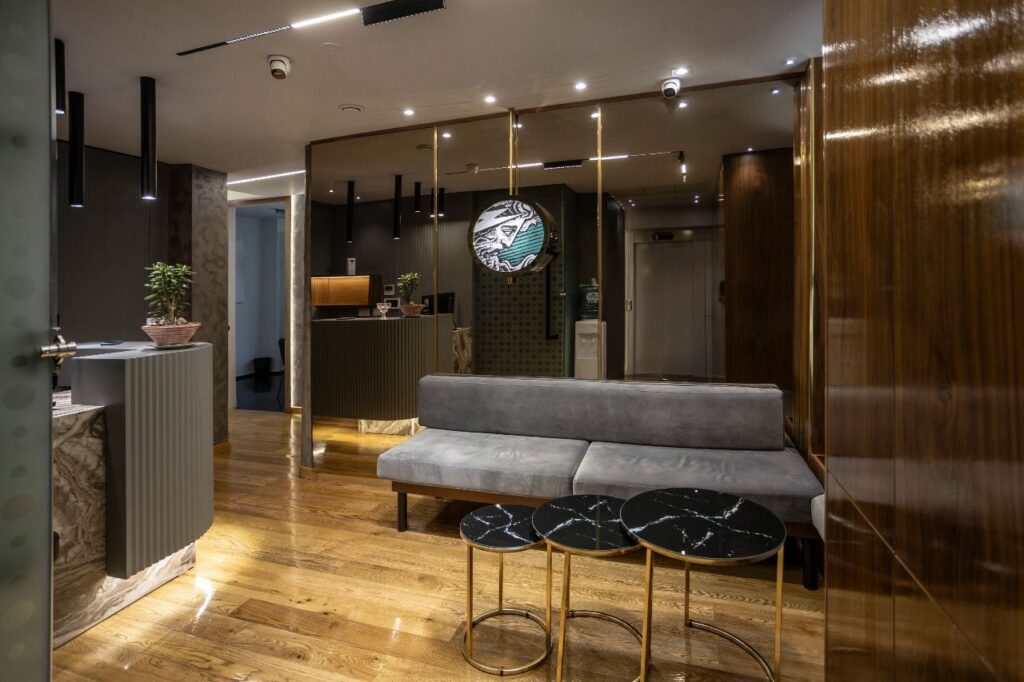
In Tirana, Cronos Dental Clinic reflects this new direction in Albanian dentistry.
Rather than positioning dental tourism simply as a lower-cost alternative to treatment elsewhere in Europe, Cronos has developed its clinical model around advanced dentistry, internationally trained professionals, digital technology and multidisciplinary treatment, with an approach designed to meet the expectations of patients accustomed to modern European dental care.
A Different Picture of Dentistry in Albania
Albania has increasingly attracted international patients seeking dental treatment, particularly from European countries where complex restorative and implant treatments can represent a significant financial investment.
Lower operating costs can make treatment in Albania more accessible. But at Cronos, affordability is only part of the proposition.
The clinic’s approach is built around a more important question: can patients access advanced treatment abroad without lowering their expectations of clinical care?
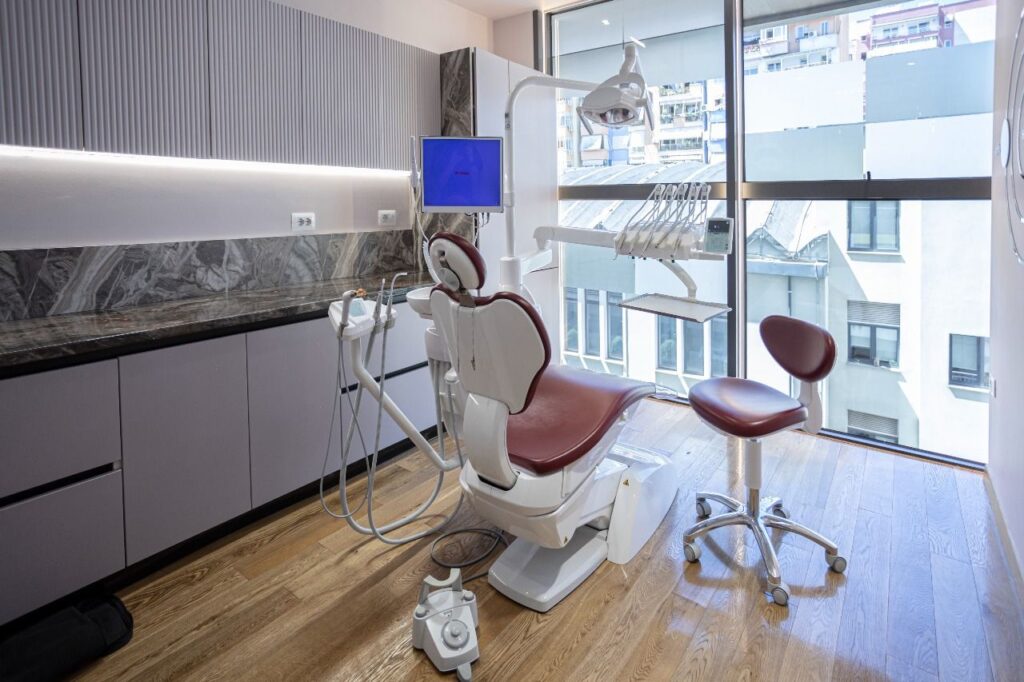
Cronos has invested in the areas that increasingly define modern dentistry: specialised clinicians, digital diagnostics, advanced implantology, prosthodontics, restorative and cosmetic dentistry, guided treatment planning and internationally recognised dental technologies.
The result is a clinic designed not around high-volume dental tourism, but around comprehensive treatment and individual case planning.
International Experience Brought Back to Tirana
Technology can improve dentistry, but it cannot replace the clinician using it.
That principle is particularly visible in the medical team at Cronos.
The clinic brings together professionals working across implantology, oral surgery, prosthodontics, restorative dentistry and aesthetic dentistry, allowing complex cases to be approached from several clinical perspectives rather than as isolated procedures.
Among them is Dr. Flori, Head of Implantology and Oral Surgery, whose professional background includes eight years of clinical experience in periodontal practices in the United States.
His work has included implant placement, full-arch implant surgery, All-on-4 and All-on-6 rehabilitation, immediate-loading protocols, surgical extractions, bone management and implant-supported prosthetics.
His continuing education has also included advanced implantology training through the Dentsply Sirona Academy in Pennsylvania, international implantology education in Italy and advanced training focused on the biology of hard and soft tissues surrounding implants.
That international exposure is part of a broader philosophy at Cronos: advanced dentistry depends on continuous clinical development, not simply on purchasing advanced equipment.
Across the team, different areas of expertise come together when required, particularly in cases where surgery, function and aesthetics must be considered simultaneously.
Technology Designed to Improve Clinical Control
Walk into a modern dental clinic today and some of the biggest differences are no longer immediately visible to the patient.
They happen behind the scenes, during diagnosis and planning.
Cronos has invested in a digital clinical workflow that includes 3D Cone Beam CT imaging, digital scanning, CAD/CAM systems, guided implant surgery and laser dentistry.
The clinic also works with technology from Dentsply Sirona, including digital imaging and scanning systems and SiroLaser Blue.
For clinicians, these technologies provide something more valuable than novelty: information and control.
Three-dimensional imaging allows doctors to evaluate anatomical structures before surgery. Digital scans can replace or complement conventional impressions. Digital treatment planning can help clinicians evaluate implant positioning before entering the surgical phase, while guided surgery can translate that planning into the clinical procedure.
In restorative dentistry, CAD/CAM workflows can also connect digital impressions, restoration design and manufacturing with greater efficiency.
The philosophy at Cronos is deliberately simple: technology should not replace expertise. It should elevate it.
Advanced Implantology and Full-Mouth Rehabilitation
One of the areas in which this combination becomes particularly important is complex implant dentistry.
Cronos provides treatments ranging from single dental implants to All-on-4 and All-on-6 full-arch rehabilitation, implant-supported restorations and complete full-mouth reconstruction.
These treatments are fundamentally different from simply replacing an individual tooth.
A full-mouth rehabilitation can require decisions about bone availability, implant positioning, bite, function, prosthetic design, aesthetics and long-term maintenance.
For that reason, the surgical and prosthetic stages cannot be treated as separate worlds.
At Cronos, complex cases can involve collaboration between implantologists, oral surgeons, prosthodontists and restorative dentists, with the final rehabilitation considered from the planning stage onward.
Where clinically appropriate, immediate-loading protocols may allow selected patients to receive fixed temporary teeth during the initial treatment phase.
The definitive restoration follows the appropriate healing and reassessment process, allowing the clinical team to move from surgery toward a final result designed around function, stability and aesthetics.

From Implant Surgery to Aesthetic Dentistry
Not every international patient travelling to Cronos requires extensive implant surgery.
The clinic’s treatment scope also includes zirconia crowns, ceramic restorations, veneers, smile rehabilitation, restorative dentistry, Invisalign and other aesthetic treatments.
This broader range becomes especially relevant in complex cases.
A patient may not need one single procedure, but a combination of treatments. Some teeth may be preserved and restored, others may require replacement, while aesthetic corrections may form another part of the same rehabilitation.
Instead of approaching every patient through a predetermined treatment package, comprehensive dentistry allows different disciplines to contribute to one personalised plan.
That distinction matters.
Modern full-mouth dentistry is not simply about creating white, uniform teeth. The objective is to rebuild a smile while considering facial proportions, function, bite and the condition of the patient’s existing teeth and tissues.
Premium Materials Without the Western European Price Structure
One of Albania’s major advantages in dental tourism remains economic.
Operating costs are different from those in markets such as the United Kingdom, Italy or the United States, allowing clinics to structure treatment at substantially different price levels.
Cronos’ position is that lower prices should come from that economic difference, rather than from reducing the standard of materials or clinical technology used in treatment.
The clinic states that it works with premium dental materials and established implant systems also used internationally, while its clinical workflow incorporates technologies and equipment from major global dental manufacturers.
This distinction is important for patients evaluating treatment abroad.
The question should not simply be “How much cheaper is it?”
It should also be:
Who is treating me? What materials are being used? How is my case being planned? What technology supports the diagnosis? And what happens after treatment?
Price may start the conversation about dental tourism. It should not be the only factor that ends it.
A Dental Journey Designed Around International Patients
Clinical treatment is only one part of travelling abroad for dentistry.
For an international patient, there are additional practical questions: travel, accommodation, communication, appointments, treatment phases and what happens between visits.
Cronos has structured its international patient experience around those realities.
The journey can begin remotely, allowing the clinic to evaluate available clinical information and discuss treatment before the patient travels to Albania.
Once in Tirana, diagnostic examinations and imaging allow the medical team to confirm the clinical situation and finalise the treatment plan.
Depending on the case, treatment may then be divided into phases, particularly when implant healing is required before definitive prosthetic work can be completed.
Support for international patients can also include assistance with airport transfers, accommodation and communication throughout the treatment journey.
The aim is to make travelling for dentistry feel less like navigating an unfamiliar healthcare system and more like following a clearly organised clinical pathway.
Long-Term Care Is Part of Advanced Dentistry
One of the easiest mistakes in dental tourism is to judge treatment entirely by the moment a patient receives a new smile.
But complex dentistry does not end there.
Implants, crowns, bridges and full-arch restorations all require appropriate hygiene, maintenance and professional monitoring.
For patients returning abroad, communication with the treating clinic becomes especially important.
Cronos incorporates aftercare and follow-up into its approach to international treatment, including guidance for patients once they return home and further clinical assessment when required.
This is also why treatment planning matters from the beginning.
A successful dental rehabilitation should not only be designed to photograph well on the day it is completed. It should be planned with function, maintenance and long-term stability in mind.
Albania’s Dental Tourism Story Is Evolving
The growth of dental tourism in Albania is often explained through economics.
That explanation is increasingly incomplete.
Clinics such as Cronos are showing another side of the country’s dental sector: one shaped by internationally experienced clinicians, investment in advanced technology, multidisciplinary treatment and access to complex procedures that international patients might otherwise pursue closer to home.
Cronos is based in Tirana, but the dentistry it is building is deliberately international in outlook.
From U.S. clinical experience within its implantology department to European training, digital Sirona technology, guided implant surgery, full-mouth rehabilitation and advanced restorative and aesthetic dentistry, the clinic represents a model of Albanian dental tourism increasingly focused on clinical standards rather than cost alone.
For patients considering treatment abroad, that may ultimately be the more important development.
The question is no longer simply whether advanced dentistry can cost less in Albania.
It is whether a clinic in Albania can combine accessibility with the technology, expertise, materials and comprehensive care expected from modern European dentistry.
At Cronos Dental Clinic, that is precisely the standard the team is working to deliver.
Other Articles You May Find of Interest...
- Evaluating Moldable Matrix Materials: What to Review About BiFORM®
- What It Actually Takes to Open a Nurse Next Door Franchise
- 5 Reasons Employers Are Choosing Your Safety Dept for Respirator Fit Testing
- Inside Cronos Dental Clinic: How Advanced Dentistry in Albania Is Evolving for International Patients
- How MedXpert Supports Medical Credentialing in the USA
- Glow Beyond the Surface: Discover the Power of IPL at Facial Mania Med Spa
- AN EASY PILL TO SWALLOW