Your Health Magazine Contributor
4201 Northview Drive
Suite 102
Bowie, MD 20716
More Health Technology Articles
The Laboratory of the Future: Automation, AI and Smarter Scientific Research
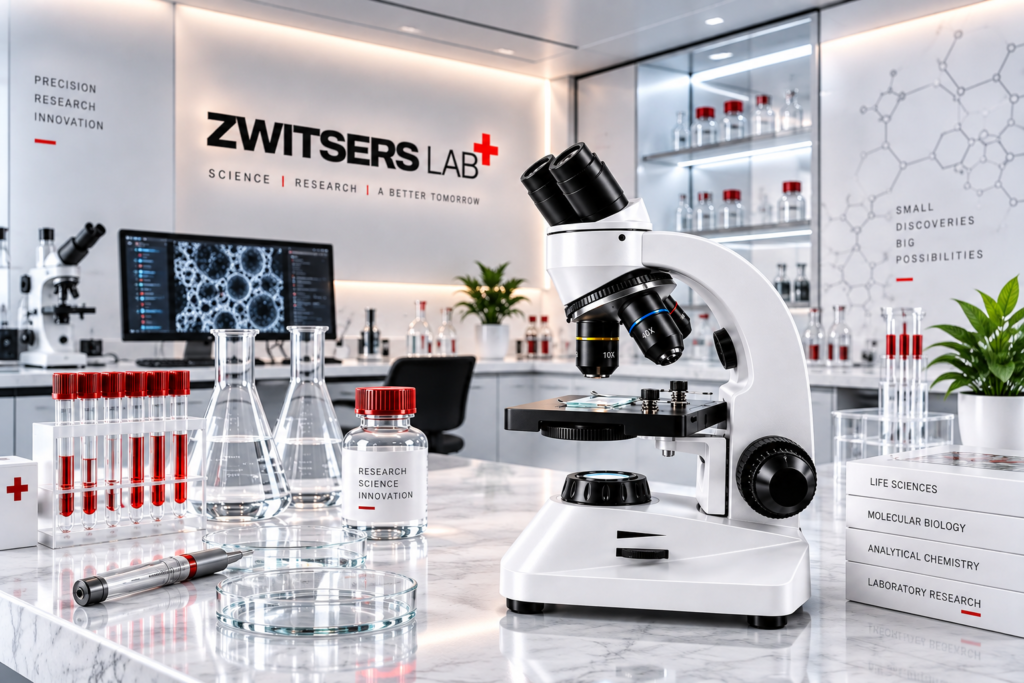
Scientific laboratories have always evolved alongside technology. From the development of increasingly powerful microscopes to sophisticated analytical instruments and computerized data systems, every generation of laboratory technology has changed what researchers can observe, measure and understand.
Today, another major transformation is underway.
Automation, artificial intelligence, connected instruments and advanced data analysis are beginning to reshape how modern laboratories operate. Instead of relying entirely on isolated instruments and manually recorded results, laboratories can increasingly build interconnected research environments where equipment, software and researchers work together.
The laboratory of the future is therefore not simply a room filled with more advanced equipment. It is an intelligent research environment designed to make scientific work more efficient, reproducible and data-driven.
Automation Is Changing Routine Laboratory Work
Many laboratory procedures involve repetitive tasks. Preparing samples, dispensing liquids, organizing specimens and recording measurements can consume substantial amounts of researchers’ time.
Automation offers an alternative.
Robotic liquid-handling systems, automated sample processors and programmable laboratory instruments can perform standardized procedures repeatedly under predefined conditions. This can be particularly valuable when hundreds or thousands of samples must be processed using the same methodology.
Automation does not necessarily eliminate the role of laboratory professionals. Instead, it can change where researchers spend their time.
When routine processes are automated, scientists can concentrate more heavily on experimental design, interpretation and troubleshooting.
Consistency represents another potential advantage. Even experienced laboratory professionals can introduce small variations when manually repeating a procedure many times. Properly configured automated systems can perform repetitive actions consistently, although their performance still depends on calibration, maintenance and appropriate validation.
Artificial Intelligence Enters the Laboratory
Artificial intelligence is becoming increasingly visible across scientific disciplines.
Modern laboratories can generate enormous quantities of information. Genomic sequencing, microscopy, analytical chemistry and high-throughput screening can produce datasets containing millions of individual measurements.
Finding meaningful relationships within such datasets can be challenging.
Machine-learning algorithms can help scientists identify patterns, classify observations and prioritize information for further investigation.
Microscopy provides a useful example. Instead of researchers manually examining every image, computer-vision systems can assist with identifying and categorizing features across large image collections.
AI can also support analytical workflows by helping researchers recognize unusual results or relationships that deserve closer examination.
However, artificial intelligence should not be confused with scientific proof. An algorithm can identify statistical patterns, but those patterns still need to be tested and interpreted through established scientific methods.
The laboratory of the future will therefore likely combine computational intelligence with human scientific judgment.
Connected Instruments and the Smart Laboratory
One of the biggest changes may be happening behind the scenes.
Traditionally, laboratory equipment has often operated independently. A researcher might obtain measurements from one instrument, manually transfer them into another program and eventually incorporate the results into a report.
Connected laboratory environments aim to reduce this fragmentation.
Modern instruments can increasingly communicate with laboratory information systems and other software platforms. Measurements can be captured digitally, associated with the correct experiment and incorporated into centralized research records.
This creates the foundation for what is sometimes described as a smart laboratory.
Imagine an experiment where environmental sensors continuously record temperature and humidity while analytical equipment generates measurements automatically. Instead of maintaining separate records, the information can potentially be brought together into a structured digital environment.
Researchers can then examine not only the final experimental results but also the conditions under which those results were produced.
Better Data Management Means Better Research
Modern science depends increasingly on data.
As laboratories become more digital, maintaining accurate and traceable information becomes just as important as operating sophisticated equipment.
Electronic laboratory notebooks and laboratory information management systems can help researchers organize experimental procedures, samples, measurements and observations.
Digital records can also make collaboration easier.
Researchers working in different departments—or even different countries—can potentially review standardized datasets without relying on handwritten notebooks or disconnected spreadsheets.
But digitization creates new responsibilities.
Laboratories must consider cybersecurity, access controls, backups and long-term data preservation. Sensitive scientific or medical information must be protected appropriately.
The future laboratory therefore requires expertise not only in biology or chemistry but also in information management.
Advanced Equipment Is Expanding Scientific Capabilities
Automation and software receive considerable attention, but physical laboratory equipment continues to advance as well.
Modern microscopes can capture extremely detailed digital images. Mass spectrometry can identify and characterize compounds at extraordinary sensitivity. Sequencing technologies can generate enormous amounts of genetic information, while sophisticated chromatography systems help researchers separate and analyze complex mixtures.
Laboratory suppliers are evolving alongside these technologies.
Companies operating within the scientific equipment sector, including ZuiverLab, form part of the wider ecosystem supporting contemporary laboratory environments through laboratory equipment and research-focused solutions. As laboratories become increasingly sophisticated, access to appropriate instruments and dependable laboratory infrastructure becomes an important part of building efficient research workflows.
The equipment itself, however, represents only one component of a modern laboratory. The greatest benefits emerge when instrumentation is combined with appropriate procedures, trained personnel and reliable data-management systems.
Predictive Maintenance Could Reduce Downtime
Scientific instruments can be expensive, and unexpected equipment failure can interrupt experiments or delay entire research projects.
Connected sensors and intelligent monitoring systems may provide another solution.
Instead of waiting for equipment to fail, laboratories can monitor operational parameters and look for signs that maintenance may be required.
This approach is commonly known as predictive maintenance.
For example, software could monitor temperature fluctuations, pressure readings, operating hours or other equipment-specific measurements. Unusual patterns could trigger an inspection before a more serious problem develops.
For laboratories running critical equipment continuously, preventing unexpected downtime could significantly improve operational efficiency.
Digital Twins and Virtual Experimentation
Another emerging concept is the digital twin.
A digital twin is essentially a virtual representation of a physical system. Information from the real system can be used to maintain and update its digital counterpart.
The technology is already being explored in engineering and manufacturing, and similar concepts could become increasingly relevant to scientific research.
Researchers may eventually use sophisticated simulations to explore experimental conditions before committing laboratory resources.
Computer models cannot replace physical experimentation, particularly when biological or chemical systems are incompletely understood. Nevertheless, simulations can help researchers narrow the number of conditions requiring physical testing.
Combining computational modeling with laboratory experiments could therefore accelerate certain research workflows.
Robotics and High-Throughput Research
Some scientific questions require researchers to examine enormous numbers of possibilities.
Drug discovery provides an obvious example. Researchers may need to investigate large libraries of molecules before identifying candidates worthy of deeper study.
Automated platforms can conduct repetitive experimental procedures at a scale that would be extremely difficult through manual work alone.
Robotics can prepare samples, move laboratory plates, operate compatible instruments and collect measurements.
AI can then help analyze the resulting information.
The combination of robotics and computational analysis creates a powerful cycle: automated equipment generates data, software analyzes the results, and researchers use those findings to determine what should be investigated next.
Sustainability Is Becoming Part of Laboratory Design
The laboratory of the future also needs to consider environmental efficiency.
Scientific laboratories can consume substantial amounts of electricity and generate significant quantities of disposable material. Freezers, ventilation systems, analytical instruments and other equipment may operate continuously.
Researchers and laboratory managers are consequently exploring ways to reduce unnecessary resource consumption.
Energy-efficient equipment, optimized ventilation, responsible chemical management and improved recycling programs can all contribute to more sustainable laboratories.
Automation may also help by reducing unnecessary reagent consumption through more precise dispensing and standardized procedures.
Sustainability does not mean compromising scientific quality. The objective is to identify unnecessary consumption while preserving experimental integrity and laboratory safety.
Scientists Will Remain Central
Discussions about AI and robotics sometimes create the impression that future laboratories will operate without people.
That is unlikely to describe most scientific research.
Machines are particularly effective at repetitive tasks, processing large datasets and performing precisely defined operations. Humans remain essential for asking meaningful scientific questions, designing experiments, recognizing unexpected observations and deciding whether results actually make sense.
Scientific discovery also involves creativity.
An algorithm may detect a correlation, but researchers must determine why that relationship might exist and how it can be tested.
The laboratory professional of the future may consequently work differently rather than disappear.
Scientists could spend less time manually transferring information or repeating routine procedures and more time interpreting results, designing experiments and collaborating across disciplines.
Building the Laboratory of Tomorrow
The transition toward smarter laboratories will not happen overnight.
Some research facilities already operate highly automated systems, while smaller laboratories may continue using largely conventional workflows for many years.
Cost, infrastructure, staff training and compatibility between equipment can all influence adoption.
Standardization will also become increasingly important. A laboratory containing sophisticated instruments gains limited benefit if those systems cannot exchange information reliably.
Manufacturers, software developers, laboratory suppliers and research organizations will therefore need to work toward more interoperable scientific environments.
A New Era of Scientific Research
The laboratory of the future will be defined by integration.
Automation can handle repetitive procedures. Artificial intelligence can assist researchers in analyzing increasingly complex datasets. Connected instruments can improve the flow of experimental information, while advanced analytical technologies continue expanding what scientists can measure.
At the same time, digital records, predictive maintenance, robotics and more sustainable laboratory practices can improve the infrastructure surrounding scientific discovery.
None of these technologies eliminates the fundamental principles of science. Experiments still need appropriate controls. Instruments require calibration. Results must be reproducible, and conclusions must remain supported by evidence.
What technology can change is how efficiently researchers reach those conclusions.
The smartest laboratory will not necessarily be the one containing the most machines or the most advanced AI. It will be the laboratory that successfully combines people, equipment, automation and reliable data into a research environment where each component supports the others.
That combination could define the next generation of scientific discovery.
Other Articles You May Find of Interest...
- How to Evaluate a HIPAA-Compliant Healthcare Software Development Partner in 2026
- How to Create Clear AI-Generated Patient Education Videos
- The Smart Lab Revolution: How Next-Generation Equipment is Reshaping Research
- When Health Photos Won’t Upload: A Practical Guide to File Formats for Patients and Practices
- The Real Cost of an EHR: 6 Costs Beyond the License
- 5 Managed PACS Support Companies for Hospitals and Imaging Centres
- 5 QR Code Generators for Hospitals, Clinics, and Health Information