Your Health Magazine Contributor
4201 Northview Drive
Suite 102
Bowie, MD 20716
More Health Technology Articles
Why the Human Element Still Matters as AI Enters Critical Care
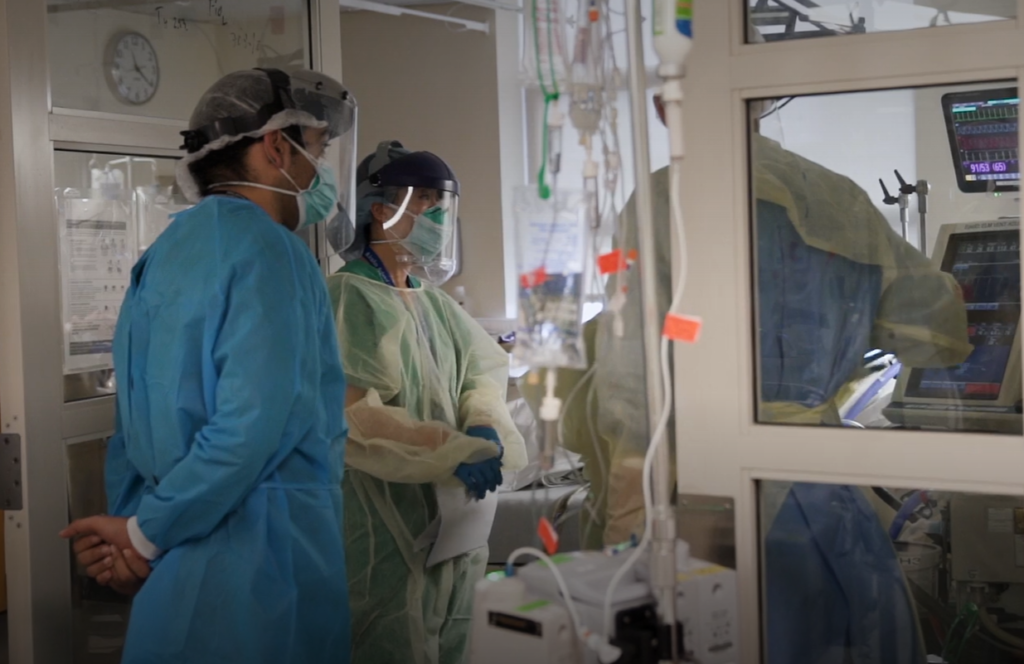
Picture a physician standing at a patient’s bedside at two in the morning. The monitors are alarming. The numbers are shifting. The data is all there, displayed on screens and printouts, ready to be read. And yet the physician is not staring at a dashboard. He’s looking at the patient’s face, listening, thinking, weighing things that no monitor can fully capture.
As artificial intelligence moves further into hospital workflows, hemodynamic monitoring, and clinical decision-making, physicians are increasingly weighing where these tools can improve care and where human judgment still matters.
Critical care physician Dr. Yasir Jawaid offers one perspective on that balance. His view is that AI can help clinicians process large amounts of information and reduce repetitive work, but it should support rather than replace clinical reasoning.
The Problem AI Is Actually Solving
To understand where Jawaid stands, it helps to understand the specific problems he’s watching AI address. They are not glamorous. They are largely about volume, speed, and consistency.
Critical care environments generate enormous amounts of data. A single patient in an intensive care unit can produce hundreds of data points per hour: blood pressure trends, oxygen saturation, heart rate variability, lab values, ventilator settings. No physician can hold all of that simultaneously in working memory while also managing a full patient load.
This is where Jawaid sees AI earning its place. Pattern recognition across large, continuous data streams is something machine learning systems can do reliably and quickly. Spotting an early sign of hemodynamic instability before it becomes a crisis is a meaningful use case, not just a theoretical one.
He’s equally interested in what AI can do for monitoring patients remotely. Digital health tools that track patients between clinical encounters, flagging early deterioration or non-adherence, extend a physician’s reach without requiring that physician to be physically present around the clock. That’s a practical gain.
And there’s the workflow side. Administrative burden is one of the most documented contributors to physician burnout. Tools that reduce friction in documentation, scheduling, and data retrieval free physicians to spend more time on the work that actually requires a physician.
Where Human Judgment Still Matters
The potential benefits of AI do not eliminate its risks. Jawaid is direct about where he sees risk.
The concern isn’t that AI will make a wrong recommendation. Every clinical tool, from a reference manual to a diagnostic algorithm, can produce flawed output. The deeper concern is what happens when a physician stops questioning the output.
AI-assisted diagnostics are only as useful as the clinical judgment applied on top of them. A system can identify that a set of vitals resembles sepsis. It cannot know that this particular patient has an unusual baseline, or that the family reported something during the last visit that changes the picture entirely. Context is not a data field. It lives in the conversation between a physician and a patient.
Technology should improve care without replacing the clinical reasoning that makes medicine more than computation. That distinction matters more in critical care than almost anywhere else, because the stakes of a missed nuance are immediate and severe.
He’s also cautious about how AI tools get presented to clinicians. There’s a difference between a system that supports a decision and one that nudges toward a conclusion. When physicians feel pressure, implicit or explicit, to defer to algorithmic output, clinical autonomy erodes. And clinical autonomy is not just a professional concern. It’s a patient safety one.
Hemodynamic Monitoring and the Limits of Pattern Matching
Hemodynamic monitoring is one of the areas where AI integration has moved fastest, and where Jawaid’s thinking is sharpest.
Modern monitoring systems can track cardiac output, fluid responsiveness, and vascular resistance in ways that would have required invasive procedures a generation ago. Layering AI onto that data stream opens possibilities: earlier identification of deterioration, more precise fluid management, better prediction of which patients are likely to decompensate overnight.
But there is a limitation that the technology itself can’t resolve. Hemodynamic data reflects what the body is doing at a given moment. It doesn’t explain why. Two patients with identical pressure waveforms might have completely different underlying causes, and the treatment for one could harm the other. Recognizing the pattern is step one. Understanding it is step two. That second step still belongs to the physician.
The most useful version of AI in this space functions like a well-trained second set of eyes. It flags what deserves attention. It does not decide what to do about it.
What Good Integration Actually Looks Like
Clinical experience across different healthcare environments can also shape how physicians evaluate new technology, particularly when patient populations, resources, and clinical cultures vary. Practicing medicine in contexts where the patient in front of you comes from a completely different background than the one described in the textbook teaches a specific kind of attentiveness.
That attentiveness is part of why he’s skeptical of systems trained on narrow data sets. AI models in medicine are only as representative as the populations used to build them. A diagnostic algorithm trained predominantly on data from one demographic group may perform inconsistently when applied to another. That’s not a minor technical footnote. In critical care, it’s a patient safety issue.
Experience with different patient populations also reinforces the importance of clinical context. AI-assisted tools may perform differently across settings, making careful evaluation of their real-world limitations especially important.
What Good Integration Actually Looks Like
For Yasir Jawaid, the question is never whether to use technology. It’s how to use it in a way that keeps the physician and the patient at the center of the process.
He thinks about good AI integration in terms of a few concrete conditions:
- The tool surfaces information rather than prescribing conclusions, leaving interpretation to the physician
- The system reduces low-value work, such as repetitive documentation or manual data aggregation, without reducing clinical engagement
- Clinicians receive adequate training not just on how to use the tool, but on its known failure modes and limitations
- Patient communication remains a physician responsibility, not a delegated function
- Outcomes data is tracked honestly, so that tools demonstrating real benefit are distinguished from those that simply look impressive
That last point is particularly important. The healthcare system has adopted technologies that generated excitement before generating evidence. A physician’s job is to ask for the evidence.
The Question That Should Come Before the Algorithm
There’s a question Jawaid thinks should precede every conversation about AI in critical care, and it’s not a technical one.
It’s this: Does this genuinely improve care for the patient?
Not does it improve efficiency for the system. Not does it reduce costs on paper. Not does it position a hospital as forward-looking. Those things may follow from a genuinely useful tool. But they shouldn’t be the starting point.
Medicine’s purpose has not changed even as the technology available to support it continues to evolve. Keeping those priorities in the right order—patient care first, technology second—will be an important part of integrating AI responsibly into critical care.
AI will likely play a growing role in critical care, but physicians will remain central to interpreting its output, applying clinical context, and deciding how that information should influence patient care.
This article is for informational purposes only and does not constitute medical advice. The views presented reflect the subject’s professional perspective and are not intended to guide clinical decision-making. Always consult a qualified healthcare professional regarding medical treatment and care decisions.
Other Articles You May Find of Interest...
- Why the Human Element Still Matters as AI Enters Critical Care
- How to Use AI Search to Find a Doctor, and What It Still Gets Wrong
- In Health Care, Your Inbox Can Contain Part of the Patient Record
- How to Evaluate a HIPAA-Compliant Healthcare Software Development Partner in 2026
- How to Create Clear AI-Generated Patient Education Videos
- The Smart Lab Revolution: How Next-Generation Equipment is Reshaping Research
- When Health Photos Won’t Upload: A Practical Guide to File Formats for Patients and Practices