Your Health Magazine Contributor
4201 Northview Drive
Suite 102
Bowie, MD 20716
More Health Education Articles
The Hormonal Cost of Anabolic Steroids: Heart, Liver and Endocrine Health
Medical Disclaimer: This article is for educational and informational purposes only and does not constitute medical advice, diagnosis, or treatment. Anabolic steroid use can carry serious health risks. Always consult a qualified healthcare professional regarding symptoms, hormone use, medications, or concerns about your health.
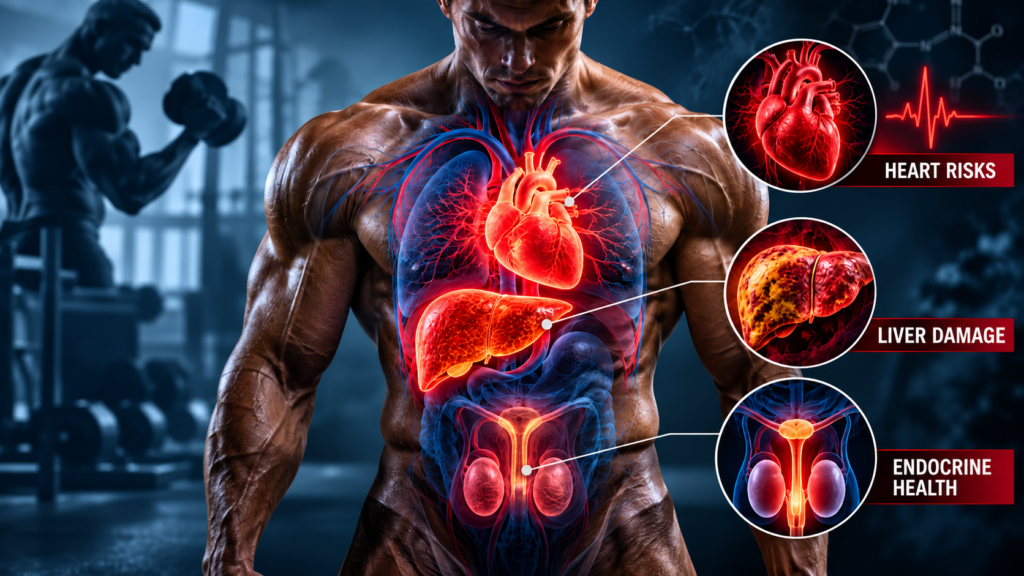
Anabolic-androgenic steroids (AAS) are synthetic compounds designed to reproduce some of the biological effects of testosterone. Although several androgenic hormones have legitimate medical applications, non-medical steroid use often involves doses, combinations, or durations substantially different from those used under medical supervision.
The most visible effect of anabolic steroids is increased muscle mass and strength. The less visible effects occur inside the cardiovascular, hepatic, reproductive, and endocrine systems.
This distinction matters because an individual can appear physically healthy while important biological changes are taking place. Blood pressure may rise, cholesterol profiles may deteriorate, natural testosterone production may become suppressed, and structural changes may occur within the heart before obvious symptoms develop.
Recent medical literature increasingly describes anabolic steroid exposure as a multi-system health issue rather than simply a hormone-related issue. A 2025 review examining recreational AAS users highlighted hypertension, adverse lipid changes, accelerated atherosclerosis, cardiomyopathy, myocardial infarction, endocrine disruption, and liver toxicity among the complications associated with chronic exposure.
Understanding these risks requires examining what happens to several interconnected systems.
What Are Anabolic-Androgenic Steroids?
Anabolic-androgenic steroids are testosterone-related compounds with two broad biological characteristics.
The anabolic effect refers primarily to stimulation of protein synthesis and tissue development, including skeletal muscle growth.
The androgenic effect refers to characteristics associated with androgen hormones, including effects on reproductive tissues, body hair, sebaceous glands, sexual function, and secondary sex characteristics.
Testosterone itself is medically important. Testosterone replacement can be appropriate for certain patients with confirmed hypogonadism when prescribed and monitored by a physician.
Non-medical anabolic steroid use represents a substantially different situation.
People may expose themselves to supraphysiological androgen concentrations, use several compounds simultaneously, continue exposure for extended periods, or obtain products through markets where manufacturing quality is uncertain.
For this reason, the physiological effects of AAS cannot be understood simply by saying that they are “similar to testosterone.” Dose, duration, compound chemistry, individual susceptibility, underlying disease, and simultaneous use of other substances can substantially change the risk profile.
Educational platforms such as AnaboleGids similarly emphasize that anabolic steroid risks extend beyond muscle growth and can involve the heart, blood vessels, liver, hormone production, fertility, and psychological health.
The Cardiovascular System May Pay the Highest Price
Among the most concerning areas of modern AAS research is cardiovascular health.
The heart is itself a muscle, but increasing cardiac muscle size is not equivalent to beneficial skeletal muscle development.
Long-term exposure to anabolic steroids has been associated with changes in blood pressure, lipids, cardiac structure, vascular function, and the heart’s ability to contract and relax normally.
Blood Pressure
Research indicates that AAS users can develop higher systolic and diastolic blood pressure.
A systematic review and meta-analysis reported statistically significant increases in both measurements among AAS users, including a pooled increase of approximately 12 mmHg in systolic blood pressure and 8 mmHg in diastolic pressure.
Persistent hypertension places additional mechanical stress on arteries and increases the workload placed on the heart.
Over years, elevated blood pressure is an established contributor to cardiovascular disease.
Cholesterol and Atherosclerosis
Steroids may also alter lipid metabolism.
A particularly concerning pattern is deterioration in the relationship between low-density lipoprotein cholesterol (LDL-C) and high-density lipoprotein cholesterol (HDL-C).
LDL contributes to the development of atherosclerotic plaque when present at elevated concentrations and under appropriate biological conditions. HDL participates in reverse cholesterol transport and is generally associated with cardiovascular protection.
Some anabolic steroids can therefore create an unfavorable cardiovascular environment by raising LDL, lowering HDL, or producing both effects simultaneously.
The consequences may not become apparent immediately.
Atherosclerosis develops gradually.
Someone may therefore use steroids for years without chest pain while structural disease develops silently within coronary arteries.
Changes to the Heart Muscle
Another concern is cardiac remodeling.
Research has associated prolonged AAS exposure with increased left ventricular mass and abnormalities of cardiac function.
Cardiac hypertrophy in this context is not necessarily equivalent to the physiological enlargement occasionally seen in trained endurance athletes. Pathological remodeling may involve fibrosis, impaired relaxation, altered ventricular filling, electrical instability, and reduced cardiac performance.
Reviews published in 2024 and 2025 have linked chronic anabolic steroid misuse with cardiac dysfunction and cardiomyopathy.
This helps explain why cardiovascular concern extends beyond cholesterol measurements alone.
The steroid-exposed heart may simultaneously experience greater blood pressure, altered lipid metabolism, structural remodeling, inflammatory changes, and additional physiological stress.
Heart Attack and Sudden Cardiac Events
The most serious cardiovascular outcomes include myocardial infarction, arrhythmias, heart failure, and sudden cardiac death.
A major 2025 study published in Circulation examined cardiovascular disease in anabolic-androgenic steroid users, reflecting growing clinical concern about long-term cardiovascular outcomes in this population.
Several biological pathways may contribute simultaneously.
Steroids may adversely affect cholesterol.
Blood pressure can increase.
Hematocrit may rise in some users, making blood more concentrated.
Endothelial function may become impaired.
Cardiac tissue may remodel.
Together, these effects can create conditions that increase cardiovascular vulnerability.
Importantly, cardiovascular risk cannot always be estimated from appearance or exercise performance. An individual capable of intense strength training can still have hypertension, abnormal cholesterol, ventricular hypertrophy, or early coronary disease.
The Liver and Anabolic Steroids
The liver is another organ frequently associated with steroid-related toxicity.
However, not all anabolic steroids affect it equally.
Certain orally active anabolic steroids are chemically modified to survive first-pass metabolism. In particular, 17-alpha-alkylated anabolic steroids have historically been associated with greater hepatic toxicity.
Potential liver complications include elevated hepatic enzymes, cholestatic liver injury, jaundice, and, less commonly, more serious hepatic abnormalities.
A review of anabolic-steroid-induced liver injury describes cholestasis, fibrosis, and other forms of hepatic damage associated with AAS exposure. Although liver function can improve following discontinuation in many cases, the review also notes that some consequences may be prolonged or irreversible.
Why Oral Steroids Can Be Particularly Problematic
When drugs are swallowed, they travel through the gastrointestinal tract and portal circulation before reaching systemic circulation.
Chemical modifications that allow some oral anabolic steroids to resist hepatic metabolism also increase exposure of liver tissue to these substances.
That does not mean every person using an oral steroid will develop clinically significant liver disease. Nor does it mean injectable products are automatically harmless.
Instead, the important point is that route of administration and molecular structure affect toxicity.
It is therefore misleading to categorize all steroids simply as either “safe” or “dangerous.”
Risk exists on a spectrum influenced by compound, dose, duration, simultaneous substances, underlying health, and individual biology.
Warning signs such as jaundice, dark urine, persistent abdominal discomfort, unusual itching, or marked fatigue warrant medical assessment.
Endocrine Disruption: When External Hormones Shut Down Internal Production
Perhaps the most predictable biological consequence of substantial exogenous androgen exposure is suppression of the body’s own hormone-regulating system.
In men, testosterone production is governed largely through the hypothalamic-pituitary-gonadal axis, commonly called the HPG axis.
The hypothalamus releases gonadotropin-releasing hormone.
This stimulates the pituitary gland to release luteinizing hormone (LH) and follicle-stimulating hormone (FSH).
LH stimulates testosterone production within the testes, while FSH contributes importantly to spermatogenesis.
When large amounts of external androgen enter the bloodstream, the brain detects the elevated androgen signal.
Through negative feedback, production of GnRH, LH, and FSH can fall.
The result can be significant suppression of endogenous testosterone production.
What Happens After Steroid Use Stops?
Stopping AAS does not necessarily cause natural hormone production to return immediately.
The HPG axis must recover.
A systematic review and meta-analysis involving 32 studies and more than 9,000 individuals found that LH and FSH were reduced among AAS users and could remain suppressed for months after discontinuation. The analysis also found adverse changes affecting testicular size and sperm parameters.
Recovery varies substantially between individuals.
Some recover relatively quickly.
Others can experience prolonged hypogonadism.
Possible symptoms after withdrawal include:
reduced libido, erectile dysfunction, fatigue, reduced mood, decreased motivation, loss of muscle mass, impaired fertility, and reduced natural testosterone production.
This variability makes claims that the endocrine system will simply “restart” according to a predictable schedule medically unreliable.
Fertility Is Closely Connected to Hormonal Suppression
A common misunderstanding is that anabolic steroids enhance male reproductive function because they are androgenic.
In reality, circulating androgen concentration and fertility are not the same thing.
High levels of external testosterone or related steroids can suppress LH and FSH enough to substantially decrease intratesticular testosterone—the testosterone concentration inside the testes required for normal sperm production.
Consequently, sperm production can decline substantially.
Research has associated AAS use with impaired sperm function, reduced testicular volume, sexual dysfunction following withdrawal, and male infertility.
This is one reason reproductive consequences deserve particular attention among younger men who may want children later.
The endocrine effects may outlast the period during which the steroids were taken.
A broader explanation of the Side effects of anabolic steroids likewise discusses testosterone suppression, fertility changes, cardiovascular effects, liver complications, and other health concerns rather than treating steroid use purely as a question of muscle growth.
Effects on Women
Anabolic steroids can produce additional endocrine consequences in women because androgen concentrations are normally much lower.
Possible effects include menstrual irregularities, increased facial or body hair, acne, scalp hair loss, changes in libido, clitoral enlargement, and deepening of the voice.
Some androgenic changes may not completely reverse after exposure ends.
The severity depends on the androgenic characteristics of the substance, duration of exposure, concentration, and individual sensitivity.
This is another example of why the biological consequences of AAS cannot be reduced to muscle-building effects alone.
Psychological and Neurological Effects
Hormones interact with the central nervous system as well as peripheral tissues.
Changes in mood, irritability, anxiety, aggression, sleep, and depressive symptoms have been reported among AAS users, although individual responses vary considerably.
The withdrawal period can be particularly important.
When endogenous testosterone remains suppressed after external androgens are discontinued, some individuals experience significant changes in mood and energy.
Psychological effects should therefore be considered part of the endocrine picture rather than treated as completely separate from it.
Why the Absence of Symptoms Does Not Equal Safety
One of the biggest challenges associated with steroid-related health effects is that several important abnormalities can initially be silent.
High LDL cholesterol usually causes no immediate symptoms.
Low HDL causes no obvious physical sensation.
Early hypertension may go unnoticed.
Suppressed LH and FSH cannot be felt directly.
Cardiac hypertrophy may exist before exercise capacity declines.
Early liver abnormalities may appear first in laboratory testing rather than through obvious illness.
Consequently, judging risk solely by how someone feels can provide false reassurance.
The lack of immediate symptoms does not demonstrate that the cardiovascular, hepatic, or endocrine systems are unaffected.
Unregulated Products Add Another Layer of Risk
There is also an important distinction between pharmaceutical treatment and hormones obtained outside regulated medical supply chains.
Approved medicines are manufactured according to defined quality standards and prescribed for specific medical indications.
Unregulated steroid products may introduce additional uncertainties involving identity, concentration, contamination, sterility, and manufacturing consistency.
A label therefore cannot always guarantee that an underground or illegally manufactured product contains exactly the substance or concentration it claims.
This makes health assessment more complicated because the biological exposure itself may be uncertain.
A Multi-System Problem Requires a Multi-System Perspective
The major mistake in discussions about anabolic steroids is examining each organ separately.
The cardiovascular system, liver, and endocrine system interact continuously.
For example, androgen exposure may increase blood pressure and worsen cholesterol while simultaneously suppressing reproductive hormones.
Liver dysfunction may affect hormone metabolism.
Altered hematocrit can add cardiovascular strain.
Sleep disturbances and psychological changes may influence blood pressure and metabolic health.
The resulting risk profile is therefore cumulative rather than isolated.
Modern research increasingly supports viewing non-medical anabolic steroid use as a systemic exposure with potentially interconnected consequences.
Conclusion
The physiological cost of anabolic steroid exposure extends far beyond changes in muscle mass.
The cardiovascular system may experience hypertension, unfavorable cholesterol changes, vascular dysfunction, cardiac remodeling, and potentially greater risk of serious cardiovascular disease.
The liver—particularly during exposure to certain orally active compounds—may face cholestatic or other forms of drug-induced injury.
At the same time, the endocrine system responds to external androgens by suppressing the hypothalamic-pituitary-gonadal axis, potentially affecting natural testosterone production, sexual function, testicular volume, and fertility.
Not every person will experience the same complication, and risk varies according to compound, exposure, duration, underlying health, genetics, and numerous other factors.
That variability, however, should not be confused with predictability or safety.
The central lesson from current research is that anabolic steroids influence multiple biological systems simultaneously. Some changes may recover after exposure ends; others may persist, and serious complications may develop before clear symptoms become apparent.
For anyone currently using anabolic steroids or experiencing symptoms after previous use, individualized medical evaluation is more informative than relying on generalized online protocols. Cardiovascular measurements, appropriate laboratory testing, endocrine assessment, and clinical history can identify problems that outward appearance alone cannot reveal.
The pursuit of greater strength or muscle size may be visible on the outside. The hormonal cost, however, is often paid internally—and understanding that cost is essential to making informed decisions about health.
References
- Liu M, Yu Y. Adverse Effects of Anabolic Androgenic Steroid Abuse in Athletes and Physically Active Individuals: A Systematic Review and Meta-Analysis. Substance Use & Misuse. 2025;60(6):873–887. doi:10.1080/10826084.2025.2460986. This meta-analysis reported significant associations between AAS exposure and higher blood pressure, increased LDL cholesterol, elevated liver enzymes, and endocrine disruption. PubMed
- Windfeld-Mathiasen J, Heerfordt IM, Dalhoff KP, et al. Cardiovascular Disease in Anabolic Androgenic Steroid Users. Circulation. 2025;151:828–834. doi:10.1161/CIRCULATIONAHA.124.071117. The long-term Danish cohort found substantially higher rates of several cardiovascular outcomes among AAS users, including myocardial infarction, arrhythmias, cardiomyopathy, and heart failure. AHA Journals
- Anabolic-androgenic steroids among recreational athletes and cardiovascular risk. Current Opinion in Cardiology. 2025;40(4):221–229. doi:10.1097/HCO.0000000000001235. This review discusses hypertension, adverse lipid profiles, atherosclerosis, cardiomyopathy, myocardial infarction, endocrine disruption, and other systemic consequences associated with chronic Anabolic exposure. PubMed Central (PMC)
- Petrovic A, Vukadin S, et al. Anabolic androgenic steroid-induced liver injury: An update. World Journal of Gastroenterology. 2022;28(26):3071–3080. doi:10.3748/wjg.v28.i26.3071. The review describes AAS-associated cholestasis, peliosis hepatis, liver tumors, oxidative stress, and the greater hepatotoxic potential of certain 17-alpha-alkylated steroids. PubMed Central (PMC)
- Use of Anabolic-Androgenic Steroids and Male Fertility: A Systematic Review and Meta-analysis. The review included 32 studies and 9,371 participants and found adverse effects on gonadotropin levels, sperm motility, testicular size, sexual function, and male fertility, while also emphasizing substantial variability in recovery.
Other Articles You May Find of Interest...
- Your COA Says “Pass.” Here’s How to Check the Lab Agrees.
- How to Make a Nutrition Facts Label for Your Food Product: A Step-by-Step Guide
- How to Count Respirations in 15 Seconds
- Are There Lymph Nodes in the Lower Leg?
- Why Blood Plasma Is Yellow
- How to Measure Respiration Rate Accurately
- Where Are the Pores of Sweat Glands Located?