More Health Education Articles
Is 99.5°F a Fever? Converting It to Celsius
By Your Health Magazine Health Information Team
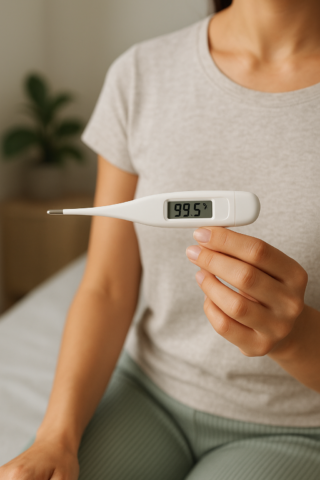
You check the thermometer because you feel a little warm, and the display reads 99.5°F. Is that a fever, or is it still within a normal range? For most adults and older children, 99.5°F is not considered a clear fever under the commonly used threshold of 100.4°F. However, body temperature varies, and the meaning of a reading depends on the person, the time of day, the measurement method, and any accompanying symptoms.
What Is 99.5 Fahrenheit in Celsius?
The exact conversion of 99.5 Fahrenheit to Celsius is 37.5°C.
To convert Fahrenheit to Celsius, subtract 32 from the Fahrenheit temperature and multiply the result by 5/9:
99.5 − 32 = 67.5
67.5 × 5/9 = 37.5°C
Therefore, 99.5°F equals 37.5°C. This is slightly above the traditional average body temperature of 98.6°F, or 37°C, but it does not automatically mean that someone is sick.
Is 99.5°F Considered a Fever?
In many healthcare settings, a body temperature of 100.4°F (38°C) or higher is used as the general fever threshold. By that standard, 99.5°F is below the fever range. Some clinicians may describe it as a mildly elevated or borderline temperature, particularly if it is higher than the person’s usual baseline.
There is no single “normal” temperature that applies to everyone. A healthy person’s temperature may change throughout the day and is often lower in the morning and higher in the late afternoon or evening. Age, physical activity, hormonal changes, stress, heavy clothing, a warm environment, and recent food or drink can also affect a reading.
If you are comparing readings in different units, this guide to understanding Celsius and Fahrenheit body temperature conversions offers additional context about normal temperature variation.
Why the Measurement Method Matters
A temperature reading is most useful when you know where and how it was taken. Readings from different areas of the body are not always directly interchangeable.
- Oral: A thermometer placed correctly under the tongue provides a useful reading for many adults and older children.
- Rectal: Rectal readings generally reflect core body temperature more closely and are often used for young infants.
- Forehead: Temporal artery thermometers are convenient, but positioning, sweat, and environmental conditions may affect the result.
- Ear: Ear thermometers can provide quick readings, but earwax, placement, and the size of a young child’s ear canal may influence accuracy.
- Underarm: Axillary readings are easy to obtain but tend to be less precise than oral or rectal measurements.
When speaking with a healthcare professional, report both the number and the method used. Saying “99.5°F orally” provides more useful information than reporting the temperature alone.
What to Do After a 99.5°F Reading
If you otherwise feel well, a single reading of 99.5°F usually does not require treatment. Rest for a short period and repeat the measurement if you remain concerned. Use the same thermometer and body site so that the readings are easier to compare.
For an oral reading, wait about 30 minutes after eating or drinking, especially after consuming something very hot or cold. Avoid checking immediately after vigorous exercise, a hot bath, or spending time in a warm environment. Follow the thermometer manufacturer’s directions and make sure the device is clean and positioned correctly.
Pay attention to the overall pattern rather than focusing only on one number. A temperature that continues to rise or occurs with worsening symptoms may be more meaningful than an isolated reading of 99.5°F.
Symptoms Matter as Much as the Number
A mildly elevated temperature can occur early in an infection, but temperature alone cannot identify the cause. Consider whether there are other symptoms, such as:
- Chills or unusual sweating
- Cough, sore throat, or nasal congestion
- Headache or body aches
- Unusual fatigue or weakness
- Nausea, vomiting, or diarrhea
- Rash, painful urination, or localized pain
Influenza, for example, may cause fever, chills, cough, body aches, headache, and fatigue, but not everyone with influenza develops a measurable fever. The MedlinePlus influenza health information guide explains common flu symptoms, risk factors, and complications.
Someone who has significant respiratory or other symptoms may still be ill even if the thermometer shows only 99.5°F. Conversely, a person who feels normal and has no symptoms may simply be experiencing ordinary daily temperature variation.
Special Considerations for Babies and Higher-Risk Individuals
Temperature guidelines require extra caution for infants. A baby younger than 3 months with a rectal temperature of 100.4°F (38°C) or higher should receive prompt medical evaluation, even if the baby appears comfortable. A reading of 99.5°F does not meet that threshold, but parents and caregivers should contact a pediatrician if a young infant is feeding poorly, unusually sleepy, difficult to console, or showing breathing problems.
People who are pregnant, older, immunocompromised, recovering from surgery, or living with serious chronic health conditions may need earlier medical guidance when symptoms develop. In these situations, the severity of symptoms and changes from the person’s normal condition may be more important than whether the temperature reaches a specific number.
When to Seek Care
Contact a primary care clinician or pediatrician if the temperature reaches the fever range, keeps rising, lasts for several days, returns after improving, or occurs with symptoms that are persistent or concerning. Seek prompt medical advice for anyone with a weakened immune system or a serious underlying condition.
Emergency evaluation may be appropriate for trouble breathing, persistent chest pain or pressure, confusion, seizures, severe weakness, inability to stay awake, signs of significant dehydration, a stiff neck, or blue, gray, or unusually pale lips or skin. Any rectal temperature of 100.4°F or higher in a baby younger than 3 months warrants immediate contact with a healthcare professional.
The Bottom Line
Converting 99.5 Fahrenheit to Celsius gives an exact result of 37.5°C. For most adults and older children, this is not a definite fever, although it may be slightly elevated compared with their usual temperature. Check the measurement method, repeat the reading under consistent conditions, and consider how the person feels. Symptoms, age, medical history, and temperature trends provide more meaningful information than one thermometer reading by itself.
Other Articles You May Find of Interest...
- How to Make a Nutrition Facts Label for Your Food Product: A Step-by-Step Guide
- How to Count Respirations in 15 Seconds
- Are There Lymph Nodes in the Lower Leg?
- Why Blood Plasma Is Yellow
- How to Measure Respiration Rate Accurately
- Where Are the Pores of Sweat Glands Located?
- Why Event Medical Planning Matters More Than Most Organizers Expect