Your Health Magazine Contributor
4201 Northview Drive
Suite 102
Bowie, MD 20716
More Hair Care Articles
GFC Hair Treatment Explained: A Modern Approach to Hair Regrowth
Hair loss is one of the most common concerns affecting people of all ages, from teenagers to older adults. Several factors can contribute to hair loss, including poor nutrition, stress, hormonal changes, genetics, and certain medical conditions.
In the early stages, maintaining a healthy diet, following a proper hair care routine, and making positive lifestyle changes may help support healthier hair, particularly when nutritional deficiencies or other lifestyle factors contribute to hair loss. However, if you’re experiencing excessive hair loss or noticeable thinning, relying solely on shampoos, oils, or home remedies may not be enough. Seeking professional help at a hair clinic can help identify and treat the underlying cause.
At a hair clinic, specialists perform a detailed hair and scalp analysis to understand the reason behind your hair loss before recommending a suitable treatment. One emerging option is GFC Hair Treatment.
GFC Hair Treatment has gained attention because it uses growth factors derived from a patient’s own blood. Researchers are investigating whether these concentrated growth factors can support hair follicle activity and improve certain types of hair loss. However, evidence of its effectiveness remains limited. This article explores what GFC Hair Treatment is, how it works, who may be considered for it, and what patients should realistically expect.
What Is GFC Hair Treatment?
GFC stands for Growth Factor Concentrate. It is a non-surgical procedure that uses concentrated growth factors derived from a patient’s own blood. These growth factors are being studied for their potential to influence hair follicle activity and support hair growth.
In simpler terms, your blood already contains proteins involved in tissue repair and cellular communication. GFC Hair Treatment involves processing a blood sample to obtain a preparation containing these growth factors, which is then injected into areas of the scalp affected by hair thinning.
Although this approach uses components from the patient’s own blood, its effectiveness and long-term safety for hair restoration are still being evaluated.
How Does GFC Actually Work?
Hair follicles go through natural growth cycles: anagen (growth), catagen (transition), and telogen (resting/shedding). In people experiencing certain types of hair loss, follicles may spend less time in the growth phase or gradually miniaturise, producing thinner and shorter hair.
Growth factors are signalling proteins involved in cellular communication and tissue processes. Researchers are investigating whether concentrated growth factors derived from blood may influence hair follicle activity, blood circulation, and the hair growth cycle.
Although some early studies suggest potential benefits for certain types of hair loss, evidence specifically supporting GFC treatment remains limited. Larger, well-controlled studies are needed to establish its effectiveness, optimal treatment protocols, and long-term outcomes.
The GFC Treatment Procedure: What Happens Step by Step
GFC therapy is generally performed as an outpatient procedure. The process involves collecting a blood sample, preparing the growth factor concentrate, and administering it to the scalp.
Step 1: A small amount of blood is drawn from your arm, similar to a routine blood test.
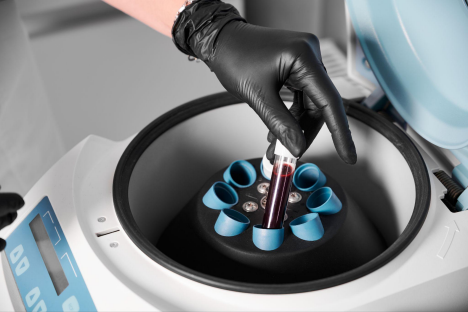
Step 2: The blood is processed using a specialised GFC kit designed to isolate and concentrate growth factors. This process may take approximately 30 to 45 minutes, depending on the equipment and protocol used.
Step 3: The treatment area is cleansed. A topical anaesthetic may be applied to minimise discomfort during injection.
Step 4: The concentrated GFC preparation is injected into the scalp at specific points across the thinning or affected areas using fine needles.
Step 5: After treatment, the provider gives instructions about scalp care, possible side effects, and any recommended follow-up appointments. Many patients can return to their normal activities the same day.
Each session may take approximately 60 to 90 minutes from start to finish. Some clinics recommend three to four sessions spaced several weeks apart, followed by maintenance treatments. However, there is no universally established GFC treatment schedule, and recommendations vary between providers.
Who Can Consider GFC Hair Treatment?
GFC therapy is being investigated for people experiencing certain types of hair loss, particularly those with early to moderate thinning.
Individuals who may wish to discuss this option with a qualified dermatologist include:
- Men and women experiencing androgenetic alopecia (pattern hair loss)
- Individuals with diffuse thinning across the scalp
- People experiencing hair loss who want to understand available non-surgical treatment options
- Patients considering complementary hair restoration procedures, including treatment before or after a hair transplant
However, GFC is not an established treatment for every type of hair loss. Its effectiveness for stress-related shedding, advanced baldness, or improving hair transplant outcomes has not been adequately demonstrated.
It may not be appropriate for individuals with active scalp infections, certain blood disorders, or other medical conditions that could increase procedural risks.
A proper scalp assessment and diagnosis before starting treatment are essential. Patients should also discuss established treatments, such as minoxidil or finasteride when appropriate, rather than assuming that GFC is a suitable replacement.
What Results Can You Realistically Expect?
Results from GFC hair treatment are not guaranteed, and evidence regarding its effectiveness and ideal treatment schedule is still developing.
Some patients may experience improvements in shedding or hair density, but outcomes can vary depending on the underlying cause of hair loss, age, overall health, and other treatments being used.
Patients should discuss realistic expectations with a qualified dermatologist and understand that multiple sessions may be recommended without guaranteeing a particular result.
Established treatments for certain types of hair loss, such as minoxidil or finasteride when appropriate, should also be considered.
Is GFC Hair Treatment Painful?
GFC injections involve fine needles placed into the scalp, so some discomfort may occur. A topical anaesthetic may be applied beforehand to minimise the sensation.
The degree of discomfort varies between individuals and can depend on the number of injections, treatment technique, and personal pain sensitivity.
Some providers describe GFC treatment as less uncomfortable than platelet-rich plasma (PRP) injections, but there is insufficient comparative evidence to establish that this is consistently the case.
After treatment, mild redness or sensitivity on the scalp may occur and usually improves within a short period.
Are There Any Side Effects?
Because GFC uses components derived from the patient’s own blood, certain immune reactions may be less likely. However, the procedure is not risk-free.
Possible complications include pain, bruising, swelling, infection, and reactions to substances used during treatment. Long-term safety data for GFC hair treatment remain limited.
Minor, temporary side effects can include:
- Mild redness or swelling at injection sites
- Slight tenderness on the scalp for 24–48 hours
- Occasional mild bruising
Patients should contact their healthcare provider if they experience increasing pain, persistent swelling, fever, unusual drainage, or other concerning symptoms after treatment.
What to Look for When Choosing a Hair Clinic
The quality and safety of GFC treatment depend significantly on the clinic, the qualifications of the practitioner, and the protocol used.
When choosing a provider, look for:
- A qualified dermatologist or appropriately trained medical professional
- Appropriate equipment and established preparation protocols
- A proper scalp assessment and diagnosis
- Clear information about the evidence supporting treatment
- Appropriate infection-control procedures
- A structured follow-up plan for monitoring outcomes and complications
When evaluating providers such as VCare hair and skin clinic, patients should ask about practitioner qualifications, the preparation method used, infection-control procedures, and how treatment outcomes are monitored.
An appropriate diagnosis should be established before considering GFC or other hair restoration procedures.
The Bottom Line
GFC hair treatment is an emerging approach that uses growth factors derived from a patient’s own blood. Although it is being investigated for certain types of hair loss, more research is needed to determine its effectiveness, safety, and long-term benefits.
Anyone experiencing persistent hair thinning or excessive shedding should seek a professional evaluation to identify the underlying cause and discuss suitable treatment options.
Choosing an appropriate treatment depends on the diagnosis, available scientific evidence, individual health considerations, and realistic expectations.
About the Author
Priyadharsini is a content strategist at VCare, where she works on content related to healthcare, wellness, and hair care.
Other Articles You May Find of Interest...
- GFC Hair Treatment Explained: A Modern Approach to Hair Regrowth
- Exploring Different Hairstyles You Can Achieve with Human Hair Half Wigs
- How to Get Rid of Head Lice and Prevent Reinfestation
- Thinning Hair After 40: What Actually Works (Minoxidil, Finasteride, Red Light Therapy and More)
- Hair Transplant Without Shaving: Who Is It Suitable For?
- Copper Peptides for Hair Growth: What the Evidence Says About Today’s Serums
- Building a Hair Care Routine With Kérastase Hair Oil for Smoothness