More Hair Care Articles
How to Get Rid of Head Lice and Prevent Reinfestation
By Your Health Magazine Health Information Team
To remove lice from hair permanently, you must eliminate the current infestation, interrupt the egg-hatching cycle, and prevent another exposure. Confirm that live lice are present, use an FDA-approved treatment exactly as directed, repeat treatment only when the product label recommends it, comb and inspect the hair for two to three weeks, and check close contacts. No treatment can guarantee that lice will never return, but these steps can clear an infestation and greatly reduce reinfestation.
First, Make Sure It Is Really Head Lice
The best evidence of an active infestation is a live crawling louse on the scalp or hair. Adult lice are approximately the size of a sesame seed and move quickly. A fine-toothed lice comb and bright light can make them easier to find, especially behind the ears and near the back of the neck.
Nits are small eggs firmly attached to individual hair shafts. Unlike dandruff or hair-product residue, they do not brush away easily. Nits within about one-quarter inch of the scalp may still be viable. Nits farther from the scalp are usually hatched or dead and, without live lice, may not indicate an active infestation. The CDC’s guidance on identifying and preventing head lice provides additional details.
Head lice are not caused by poor hygiene. They crawl rather than jump or fly, and they spread mainly through direct hair-to-hair contact. Pets do not carry or transmit human head lice.
How to Remove Lice From Hair Step by Step
- Choose an appropriate lice treatment. Read the Drug Facts label carefully, including age restrictions, allergy warnings, preparation instructions and retreatment guidance. Ask a pharmacist or healthcare professional if you are treating an infant, are pregnant or breastfeeding, have irritated skin, or are uncertain which product is suitable.
- Prepare the hair as instructed. Do not use conditioner or a combination shampoo-conditioner before treatment unless the label specifically permits it. Conditioner may interfere with some lice medicines.
- Apply enough medicine to cover the scalp and attached hair. Long or thick hair may require more than one container. Pay particular attention to the hairline, behind the ears and the back of the neck.
- Leave the treatment on only for the labeled time. More medicine or a longer application does not necessarily improve results and may increase irritation or toxicity. Keep the product away from the eyes.
- Rinse exactly as directed. Rinsing over a sink with warm rather than hot water can limit unnecessary skin exposure. An adult should apply and rinse treatment for a child.
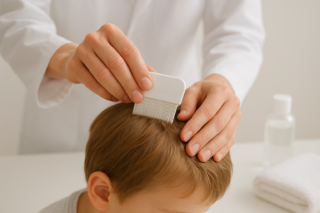
- Comb the hair carefully. Divide damp hair into small sections and draw a metal or sturdy fine-toothed nit comb from the scalp to the ends. Wipe or rinse the comb between passes.
- Inspect every two to three days. Continue checking and combing for two to three weeks. Follow the product label regarding whether and when another application is needed.
The CDC offers detailed head lice treatment and household-cleaning instructions. For other reliable consumer health resources, visit the MedlinePlus health topics directory.
Which Lice Treatment Works Best?
The best choice depends on the person’s age, allergies, previous treatments and whether lice in the community may be resistant to a particular medicine. Products with similar-looking packaging may contain different active ingredients, so always check the label rather than relying on a brand name.
| Active ingredient | What to know | Important precautions |
|---|---|---|
| Permethrin lotion 1% | An over-the-counter treatment that kills live lice but may not kill every unhatched egg. Label-directed retreatment may be needed, commonly around day nine. | Approved for children age two months and older. Treatment failure may occur because of incorrect use, reinfestation or lice resistance. |
| Pyrethrins with piperonyl butoxide | Over-the-counter shampoos or mousses that kill live lice but not unhatched eggs. A second treatment is generally needed according to the label. | For people age two years and older. Avoid in people allergic to chrysanthemums or ragweed unless a healthcare professional says it is appropriate. |
| Ivermectin lotion 0.5% | An over-the-counter topical lotion generally used as a single application. It kills lice and prevents most newly hatched lice from surviving. | Approved for people age six months and older. It is for external use on the scalp and hair. Do not use veterinary ivermectin or repeat treatment without appropriate guidance. The FDA describes the approved nonprescription ivermectin lotion. |
| Prescription treatments | Options may include spinosad 0.9% topical suspension or malathion 0.5% lotion when an over-the-counter product is inappropriate or unsuccessful. | Spinosad is approved for ages six months and older. Malathion is intended for ages six years and older and is flammable, so flames, smoking and electrical heat-styling tools must be avoided while the hair is wet. |
Do not combine multiple lice medicines or repeatedly use the same unsuccessful product without professional advice. If lice are as active as before eight to 12 hours after a correctly applied treatment, contact a pharmacist or healthcare professional before applying more medicine.
How to Prevent Reinfestation
Check everyone in the household and other close contacts. Treat people with live lice and, as recommended by the CDC, people who share a bed with an infested person at the same time. Do not use lice medicine preventively on someone who has no evidence of infestation unless a healthcare professional recommends it.
- Avoid hair-to-hair contact until treatment has begun and follow-up checks show no live lice.
- Do not share combs, brushes, towels, hats, helmets, hair accessories or pillows.
- Wash clothing, bedding and towels used during the two days before treatment in water at least 130°F, then use a high-heat dryer cycle.
- Seal items that cannot be washed or dry-cleaned in a plastic bag for two weeks.
- Soak combs and brushes in water at least 130°F for five to 10 minutes.
- Vacuum places where the affected person recently sat or lay, including upholstered furniture and car seats.
Extensive house cleaning is unnecessary because head lice survive poorly away from the scalp. Do not use pesticide foggers or fumigant sprays; they are unnecessary and can be toxic. If itching or bumps occur after outdoor exposure but no live head lice are found, consider that other arthropods may be responsible, including the exposures discussed in this article about possible turkey mite-related health issues.
Home Remedies and Common Mistakes
Mayonnaise, olive oil, petroleum jelly, essential oils and similar “smothering” remedies have not been reliably proven to eliminate head lice. Never use gasoline, kerosene, household insecticides or products intended for animals. These substances can cause poisoning, burns, breathing problems or severe skin irritation.
Another common mistake is assuming that itching means treatment failed. Scalp itching can persist for several days after lice have been killed, and some products can irritate the skin. Look for live, normally moving lice rather than relying on itching or old nits alone.
When to Seek Care
Contact a pediatrician, primary care professional, dermatologist or pharmacist if you cannot confirm the diagnosis, the person is younger than the treatment’s approved age, treatment has failed despite correct use, or the scalp develops significant redness, swelling, pain, drainage, crusting or open sores. Professional guidance is also appropriate before treatment during pregnancy or breastfeeding, for people with known product allergies, and when lice remain after a complete label-directed treatment and retreatment cycle.
Other Articles You May Find of Interest...
- GFC Hair Treatment Explained: A Modern Approach to Hair Regrowth
- Exploring Different Hairstyles You Can Achieve with Human Hair Half Wigs
- How to Get Rid of Head Lice and Prevent Reinfestation
- Thinning Hair After 40: What Actually Works (Minoxidil, Finasteride, Red Light Therapy and More)
- Hair Transplant Without Shaving: Who Is It Suitable For?
- Copper Peptides for Hair Growth: What the Evidence Says About Today’s Serums
- Building a Hair Care Routine With Kérastase Hair Oil for Smoothness