






Your Health Magazine Contributor
4201 Northview Drive
Suite 102
Bowie, MD 20716
More Child Health and Safety Articles
Sports Physicals in 2026: What They Check, Why They Matter, and How to Know Yours Was Done Right
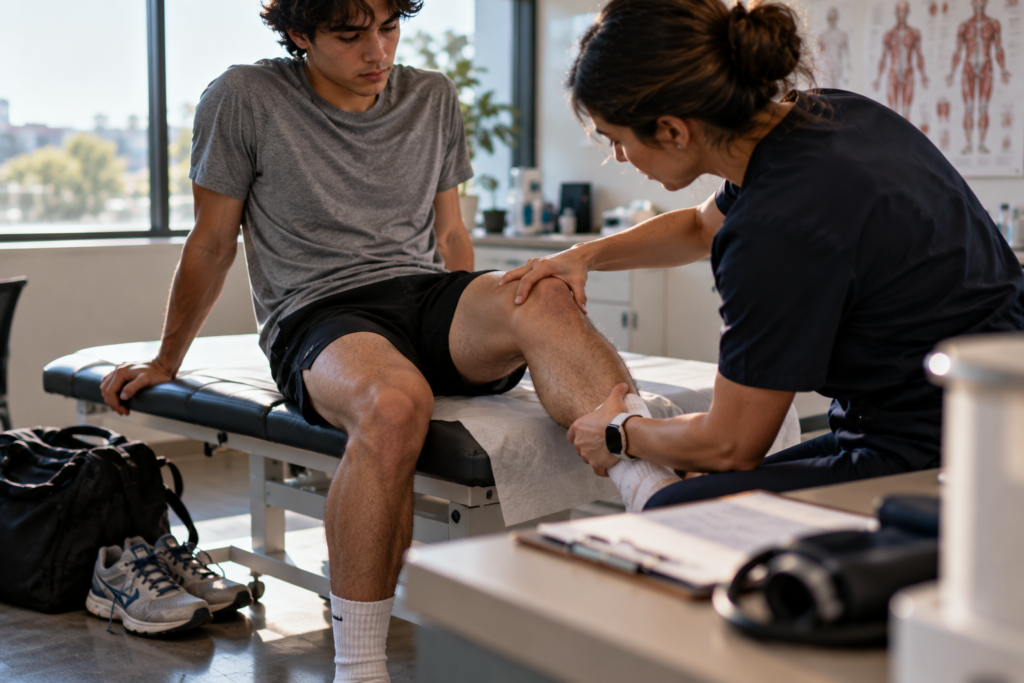
Every year, millions of American children need a sports physical before they can join a team, attend camp, or start a season. Families get them at the pediatrician’s office, at urgent care, and increasingly online through services like SportSlip, which provides physician-reviewed sports and camp physical clearances. Wherever it happens, the sports physical — formally the preparticipation physical evaluation, or PPE — exists for a serious reason, and knowing what it should include is the best way to make sure your child gets a good one.
What is a sports physical for?
A sports physical answers one focused question: is this child safe to train and compete? It’s narrower than an annual well-child visit, which looks at overall growth, development, and vaccines. The PPE zeroes in on the conditions that matter most during intense physical activity — above all, the heart.
Sudden cardiac arrest is the leading medical cause of death in young athletes, and many of the underlying conditions, such as hypertrophic cardiomyopathy (estimated to affect roughly 1 in 500 people), can go unnoticed in an otherwise healthy-looking child. A careful sports physical is one of the few routine chances to catch warning signs before they become emergencies.
What should a sports physical include?
National guidelines spell out what a thorough evaluation covers. The American Academy of Pediatrics publishes the PPE monograph, developed with several sports medicine organizations, and the American Heart Association recommends a 14-element cardiovascular screening. In practice, a good sports physical should cover:
- Cardiac history. Has your child ever fainted or nearly fainted during exercise? Had chest pain with exertion? Has anyone in the family died suddenly before age 50? These questions are among the most important in the entire exam.
- Injury and concussion history. Prior fractures, joint problems, and especially concussions — including whether your child was formally cleared to return to play.
- Medical conditions. Asthma, diabetes, seizure history, allergies, heat illness, and current medications.
- Vitals. Height, weight, blood pressure, and resting heart rate.
- Musculoskeletal check. How your child moves — strength, flexibility, balance, and symmetry.
Why the medical history matters most
Here’s something many parents don’t realize: the questionnaire is often the highest-yield part of the exam. Research on young athletes who suffered sudden cardiac events shows that warning signs — exertional symptoms, a family history of early sudden death — typically appear in the history, not in a few seconds with a stethoscope.
That’s also where rushed physicals tend to fall short. When a clinic has only a few minutes per patient during the August rush, the history is what gets compressed. Studies of state screening forms have found that many historically left out recommended cardiac questions entirely.
The takeaway for parents: whoever performs your child’s physical, answer the history questions carefully and completely. Talk to relatives about family heart history before the visit. That information is an important part of an effective sports physical and can identify warning signs that require further evaluation.
In-person or online: which is right for your family?
Today, families have more options than the pediatrician’s office. Urgent care centers and retail clinics offer in-person sports physicals, while some telehealth services offer physician-reviewed sports clearance screenings.
Online services work differently from an in-person PPE. Parents may complete a structured screening at home, submit vitals, and record a short guided movement video for physician review. Services such as SportSlip build their screening around AAP and AHA guidance and refer children for in-person evaluation when a concern requires a hands-on examination. Whether an online clearance is acceptable depends on the requirements of the school, camp, league, and applicable state rules.
There are trade-offs worth weighing honestly:
- Online can’t replace a hands-on exam when one is genuinely needed — listening to a heart murmur, for example, or examining a recent injury.
- Not every program accepts online physicals. Camps and youth leagues usually do. But many state high school athletic associations require their own form, completed after an in-person examination.
- In-person visits let a clinician examine your child directly, but appointment availability can be tight in late summer.
The simplest rule: check with your school or program first. Ask whether they accept a clearance from a licensed telehealth physician, and look at the form itself — if it includes an examination table with boxes like “Heart” and “Lungs,” plan on an in-person visit.
How to tell if your child’s sports physical was done right
Whatever route you choose, a quality sports physical has a few hallmarks:
- A complete cardiac history — the fainting, chest pain, and family-history questions were all asked.
- A named, licensed clinician signed it — someone you could look up if needed.
- The right form. It’s completed on the form your school or league actually requires.
- A real decision. The outcome is cleared, cleared with follow-up, or referred — not an automatic yes.
- Concerns were addressed, not skipped. If anything in the history raised a flag, it led to follow-up.
The bottom line
A sports physical is quick, but it isn’t a formality. It’s a chance to catch conditions that matter, especially for the heart. Give honest, complete answers to the history questions, choose a provider who takes the screening seriously — in person or online — and confirm with your child’s program what they’ll accept. A few minutes of diligence can mean a safer season.
Disclaimer: This article is for general information and isn’t a substitute for professional medical advice. Talk to your child’s doctor about specific health concerns.
Other Articles You May Find of Interest...
- Sports Physicals in 2026: What They Check, Why They Matter, and How to Know Yours Was Done Right
- Can Milk Cause Diaper Rash?
- How to Collaborate Effectively with Your Child’s Educational and Therapy Team for Autism
- 6 Vitamins for Picky Eaters to Consider in 2026
- Metabolic Disorders in Children: Symptoms, Testing, and Care
- Lambskin for Babies: 7 Things Parents Should Know
- Can Nits Survive in Your Bedding?





