Your Health Magazine Contributor
4201 Northview Drive
Suite 102
Bowie, MD 20716
More Health Education Articles
How to Turn Language Mock Test Results Into a Better Study Plan
A mock test can leave you with a score, several wrong answers, and little idea what to do next. The natural response is often to review every mistake or take another full paper immediately, but that may create more data without improving the study plan. The useful information sits behind the score: which section caused the loss, what kind of mistake repeated, whether timing mattered, and which errors came from missing knowledge.
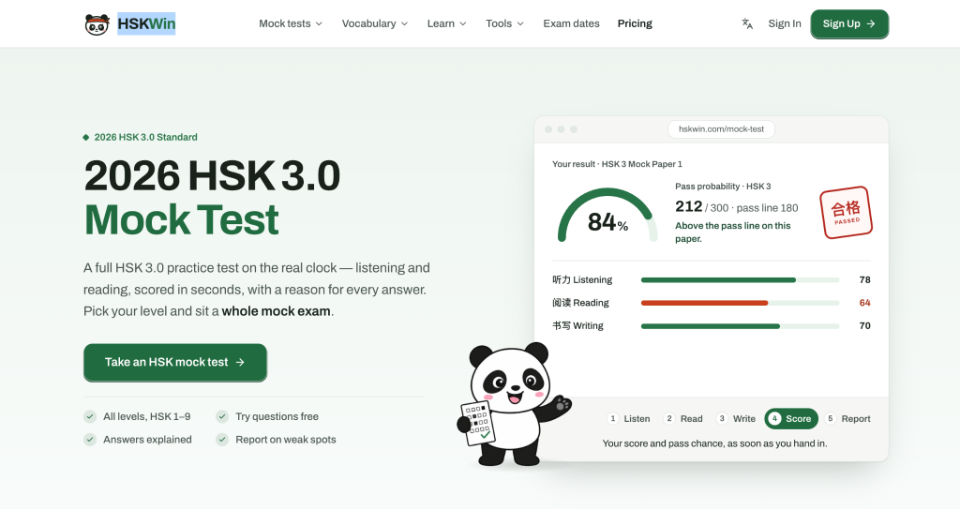
Mock exams are most useful as diagnostic tools rather than weekly scoreboards. The learner needs a way to turn one sitting into a short list of priorities, then check whether those priorities improve next time. When a structured HSK practice environment is needed for that diagnostic step, HSKWin can be explored as one option within the process. The wider task is to convert exam evidence into specific study actions instead of collecting more scores.
Separate Score Problems From Skill Problems
Ignore the total score for a moment. One number cannot tell you whether the main issue was vocabulary, interpretation, writing control, listening attention, or pacing. Break the result into sections and identify where avoidable mistakes appeared most often.
Then look for repeatable patterns. Three reading errors caused by unknown words require a different response from three caused by rushing through negatives or connectors. In the first case, vocabulary review may help. Secondly, the language may already be known, but the checking routine needs work.
Use a simple rule: if the same error type appears at least twice, label it. If it appears once and disappears during calm review, keep it in the notes but do not automatically build a study session around it.
Turn Wrong Answers Into Useful Categories
An error log should explain what failed, not just which question was wrong. Categories need to be specific enough to suggest the next action.
1. Mark Knowledge Gaps Precisely
A knowledge gap means the answer remains unavailable even with enough time. Examples include an unknown word, unfamiliar grammar pattern, or inability to form the required sentence.
Avoid broad labels such as “grammar” or “vocabulary.” Write something like “confused 把 sentence order” or “did not recognise the measure word 双.” Specific labels make later review faster.
2. Mark Interpretation Errors Separately
Sometimes all the words are familiar, but the question is misunderstood. Negatives, comparison words, implied meaning, and distracting answer choices can all create this problem.
For these mistakes, adding vocabulary is not enough. Re-read the question, identify the word that changes the task, and explain why the wrong answer looked plausible. If you can explain the difference, the mistake is easier to prevent next time.
3. Mark Timing and Attention Failures
Timing errors happen when knowledge is present but cannot be used efficiently. This may mean spending too long on one reading item, missing the next listening question while thinking about the previous one, or rushing the final writing tasks.
Record what happened precisely. “Ran out of time” is vague; “spent six minutes on two reading questions and guessed the final three” gives you a behaviour to change.
4. Mark Output Errors by Cause
Writing mistakes may come from vocabulary, word order, missing characters, or incomplete use of the prompt. Rewrite the answer once, then identify the smallest change that fixes it.
If the sentence is acceptable but does not fully answer the task, classify it as a task-completion problem rather than grammar. That changes the repair method.
Convert Error Patterns Into Weekly Tasks
Once the categories are visible, choose only two or three priorities for the next study block. Trying to repair every weakness at once usually creates a long list and shallow practice.
Rank each pattern by frequency and impact. A repeated problem that costs several questions deserves attention before a rare mistake. A single writing weakness may still rank highly if it affects an entire task type.
Suppose several reading errors involve measure words, listening points are lost because the learner does not move on quickly enough, and one unusual vocabulary mistake appears. The next week could focus on common measure-word combinations, short listening sets with an “answer and release” rule, and normal review of the unfamiliar word. The whole study plan does not need rebuilding.
Keep every task measurable. “Improve listening” is vague. “Complete two 10-question listening sets without mentally replaying the previous item” creates a clear finish line.
Retest the Weakest Pattern Before Another Full Exam
A full mock should confirm progress, not replace focused practice. Before taking another complete paper, test the specific area you worked on. If pacing causes trouble, use a timed section. If sentence order was the problem, practise that pattern first.
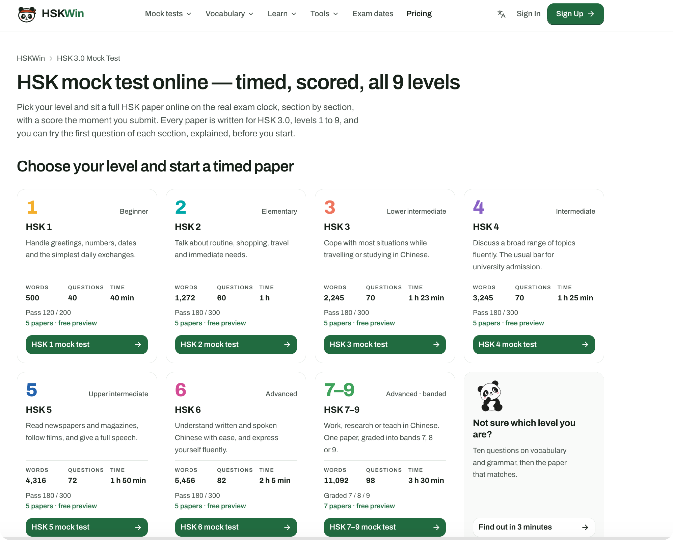
When you are ready for a complete check, an HSK 3.0 Mock Test can be used by selecting the relevant level and completing the paper under exam timing. The test covers listening, reading, and writing, then provides scoring, answer explanations, and section-level feedback. Compare the new results with the earlier attempt and check whether the targeted mistakes appear less often.
If the same error returns at roughly the same rate, change the repair method rather than simply repeating it. You may need smaller practice sets, a different explanation, or more deliberate pacing work.
New weaknesses may also appear once a larger issue improves. That is normal. The study plan should change as the evidence changes.
Build a Study Plan That Updates Itself
The most useful mock-test routine is a cycle of evidence and adjustment. Complete enough of the exam to expose real weaknesses, classify mistakes by cause, choose a few priorities, practise them directly, and retest. This makes the study plan responsive instead of generic and prevents one low score from creating the false impression that everything needs more work.
Over time, keep a short record of recurring patterns rather than an archive of every mistake. A useful weekly review can ask three questions: which error disappeared, which one repeated, and which new problem deserves attention next? When study decisions come from those answers, mock tests become more than rehearsals. They become a feedback system for deciding what to keep, what to change, and when to move on.
Other Articles You May Find of Interest...
- First Aid Courses: What to Expect and How to Choose the Right One
- What Does ALT Mean in Blood Work?
- How to Turn Language Mock Test Results Into a Better Study Plan
- What Happens When You Call Your Doctor After Hours, and What to Do If No One Calls Back
- Is 99.5°F a Fever? Converting It to Celsius
- The Bones of the Foot and Lower Leg, Mapped
- Where Lymph Fluid Comes From and How It Circulates