Your Health Magazine Contributor
4201 Northview Drive
Suite 102
Bowie, MD 20716
More Workplace Health & Safety Articles
How Commercial Kitchen Organization Can Support Food Safety and Reduce Workplace Injury Risk?
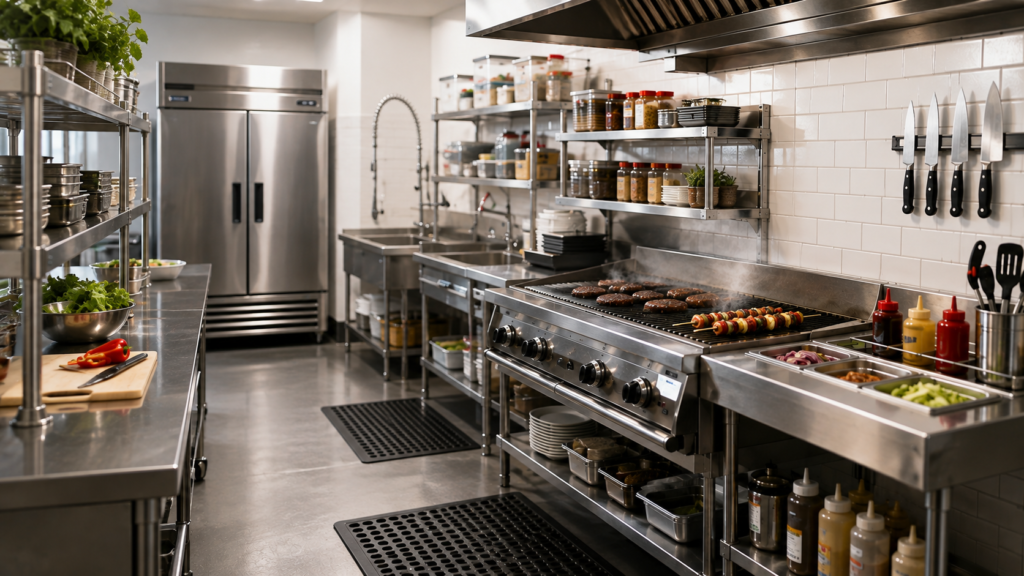
In a busy commercial kitchen, organization is about more than making the workspace look clean. The way ingredients, utensils, pans, and equipment are arranged can influence how easily employees follow safe food-handling practices and how safely they move during service.
A cluttered grill station creates unnecessary movement. Cooks may reach across hot surfaces, search for ingredients, move pans out of the way, or place containers wherever space is available. During a rush, these small inconveniences can become bigger operational problems.
A well-organized station, on the other hand, gives every frequently used item a logical place. It can help keep food and equipment separated, make cleaning easier, and reduce unnecessary reaching and movement.
Here are several ways commercial kitchen organization can support both food safety and workplace safety.
1. Keep Ingredients in Defined, Accessible Locations
When ingredients have no designated location, they tend to end up wherever there is available space. Around a busy flat-top grill, that might mean pans sitting on the cooking surface, containers placed beside equipment, or ingredients being moved repeatedly throughout a shift.
Creating designated ingredient zones makes the station more predictable. Cooks know where to reach for commonly used items, while managers and other employees can more easily see whether the station is properly stocked and organized.
This is particularly useful during high-volume service, when employees need to work quickly without constantly rearranging their workspace.
2. Use Vertical Space Around the Flat-Top Grill
One of the simplest ways to improve organization is to stop treating the cooking surface as storage space.
Tools, pans, bottles, and ingredients can quickly compete with the actual cooking area. Moving appropriate items into dedicated storage positions around the grill creates a clearer separation between where food is cooked and where supplies are staged.
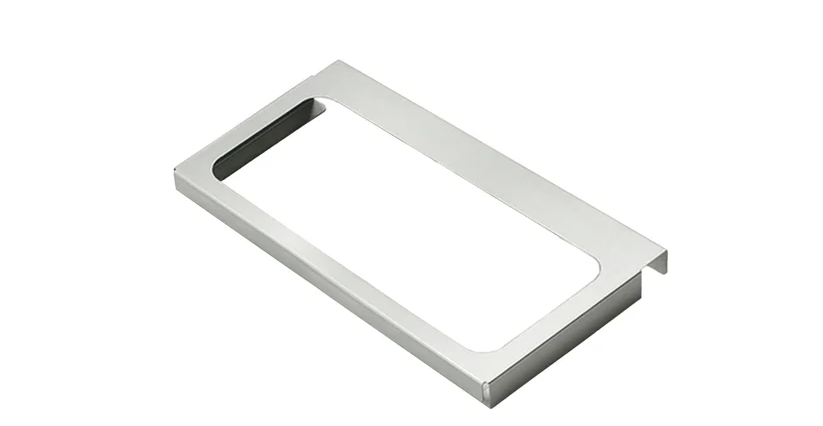
A flat top accessory for grill such as a pan holder can help create this type of organization. The holder attaches to a flat-top grill’s backsplash extender or side splash and provides a designated position for larger ingredient pans. It is designed for high-volume ingredients and lifts the holder away from the griddle surface, creating additional vertical space.
The goal isn’t simply to add storage. It’s to establish a predictable location for ingredients so the cook doesn’t have to improvise during service.
3. Keep the Cooking Surface Focused on Cooking
Commercial griddles are designed for cooking—not as general-purpose shelves.
When ingredient containers and miscellaneous tools occupy the cooking surface, they can interfere with cooking lanes and make cleaning more difficult. They can also force employees to move objects repeatedly as they work.
Moving suitable accessories away from the cooking surface helps create a clearer workstation. Grill Advantage’s pan holder system, for example, is designed to keep pans off the griddle while maintaining access to ingredients.
This also creates a more straightforward end-of-shift cleaning routine because fewer items need to be moved before the cooking surface can be properly cleaned.
4. Make Cleaning and Sanitizing Easier
Organization only supports food safety when the equipment itself can be maintained properly.
The FDA Food Code emphasizes keeping food-contact surfaces and utensils clean and addressing contamination when it occurs. It also provides specific cleaning frequencies and requirements depending on the food and equipment involved.
That means kitchen accessories should not become permanent clutter.
The 1/3 Pan Holder Accessory is made from heavy-duty stainless steel and is designed to be removed easily for cleaning. Grill Advantage states that the accessory is fully dish-room safe and uses an open-angle design intended to simplify cleaning and sanitizing.
Of course, an accessory doesn’t replace normal cleaning and sanitizing procedures. It simply makes it easier to incorporate cleaning into the station’s routine.
5. Reduce Unnecessary Reaching During Service
Workplace safety isn’t only about major accidents. Repeated awkward movements can also make a demanding shift more physically taxing.
Consider a cook who needs the same ingredient dozens of times during a busy service. If that ingredient is positioned behind them or across another workstation, the employee may repeatedly twist, stretch, reach around equipment, or step away from the grill.
Placing frequently used ingredients within a consistent reach zone can reduce some of that unnecessary movement.
The 1/3 Pan Holder is specifically designed around this concept. It positions higher-volume ingredients close to the cook and provides a fixed location rather than requiring the pan to sit wherever space happens to be available.
6. Reduce Clutter Around Walking and Working Areas
A commercial kitchen has limited space, and clutter can quickly turn that space into an obstacle course.
Boxes, containers, utensils, ingredient pans, and equipment should not be allowed to accumulate in areas where employees need to walk or work. Keeping supplies in designated locations helps maintain clearer paths and gives employees more room to move around the line.
The principle is simple: items that are needed frequently should have a home, and that home shouldn’t interfere with another task.
7. Create Consistent Stations for Different Employees
Organization becomes even more valuable when multiple cooks work the same station.
Without a consistent setup, each employee may arrange ingredients differently. The next person then spends time looking for pans, moving containers, or figuring out where supplies were left.
A standardized layout solves much of this problem.
For example, a kitchen can establish:
- Frequently used ingredients in pan holders
- Cooking tools in a dedicated tool area
- Condiments in a defined location
- Backup ingredients away from the immediate cooking zone
- Cleaning supplies in their designated storage area
The result is a station that works the same way regardless of who is operating it.
8. Choose Accessories Based on the Kitchen’s Actual Volume
Not every kitchen needs the same organization system.
A restaurant serving a small number of griddle items may need only a few ingredient positions. A high-volume operation may need substantially more capacity and faster access to frequently used ingredients.
That’s one reason pan size matters.
Grill Advantage positions its 1/3 Pan Holder for higher-volume ingredients, while its 1/6 Pan Holder is intended for smaller portions or tighter setups.
The right setup should therefore be based on the menu, ingredient volume, available space, and how often cooks access each item.
9. Make the Station Easier to Reset
A good kitchen organization system should work at the end of the rush just as well as it does at the beginning.
When every item has a defined location, resetting the station becomes a repeatable process rather than a guessing game. Empty pans can be removed, surfaces can be cleaned, ingredients can be replenished, and equipment can be returned to its designated position.
That consistency is valuable for the next shift because employees start with a predictable workstation rather than inheriting someone else’s arrangement.
Organization Is a Safety Practice, Not a Substitute for One
Commercial kitchen organization can support safer food handling and reduce some of the unnecessary movement and clutter associated with busy service. But organization alone doesn’t guarantee food safety or prevent workplace injuries.
Proper employee training, cleaning and sanitizing procedures, food-temperature controls, equipment maintenance, appropriate personal protective equipment, and compliance with applicable local requirements remain essential.
The role of organization is to make those practices easier to follow consistently.
Final Thoughts
A well-organized commercial kitchen gives employees fewer things to work around and fewer reasons to improvise during a rush. Ingredient pans have designated locations, cooking surfaces stay focused on cooking, cleaning becomes more straightforward, and frequently used supplies can remain within a practical working zone.
For flat-top stations, accessories such as a 1/3 Pan Holder can be one part of that larger system. By creating a fixed location for high-volume ingredients and moving pans away from the cooking surface, it can help turn a crowded grill station into a more structured workstation.
Ultimately, the best kitchen organization isn’t about adding as many accessories as possible. It’s about designing the station so that the safest and most efficient way of working is also the easiest way to work.
In a busy commercial kitchen, organization is about more than making the workspace look clean. The way ingredients, utensils, pans, and equipment are arranged can influence how easily employees follow safe food-handling practices and how safely they move during service.
A cluttered grill station creates unnecessary movement. Cooks may reach across hot surfaces, search for ingredients, move pans out of the way, or place containers wherever space is available. During a rush, these small inconveniences can become bigger operational problems.
A well-organized station, on the other hand, gives every frequently used item a logical place. It can help keep food and equipment separated, make cleaning easier, and reduce unnecessary reaching and movement.
Here are several ways commercial kitchen organization can support both food safety and workplace safety.
1. Keep Ingredients in Defined, Accessible Locations
When ingredients have no designated location, they tend to end up wherever there is available space. Around a busy flat-top grill, that might mean pans sitting on the cooking surface, containers placed beside equipment, or ingredients being moved repeatedly throughout a shift.
Creating designated ingredient zones makes the station more predictable. Cooks know where to reach for commonly used items, while managers and other employees can more easily see whether the station is properly stocked and organized.
This is particularly useful during high-volume service, when employees need to work quickly without constantly rearranging their workspace.
2. Use Vertical Space Around the Flat-Top Grill
One of the simplest ways to improve organization is to stop treating the cooking surface as storage space.
Tools, pans, bottles, and ingredients can quickly compete with the actual cooking area. Moving appropriate items into dedicated storage positions around the grill creates a clearer separation between where food is cooked and where supplies are staged.
A flat top accessory for grill such as the Grill Advantage 1/3 Pan Holder Accessory can help create this type of organization. The holder attaches to a flat-top grill’s backsplash extender or side splash and provides a designated position for larger ingredient pans. It is designed for high-volume ingredients and lifts the holder away from the griddle surface, creating additional vertical space.
The goal isn’t simply to add storage. It’s to establish a predictable location for ingredients so the cook doesn’t have to improvise during service.
3. Keep the Cooking Surface Focused on Cooking
Commercial griddles are designed for cooking—not as general-purpose shelves.
When ingredient containers and miscellaneous tools occupy the cooking surface, they can interfere with cooking lanes and make cleaning more difficult. They can also force employees to move objects repeatedly as they work.
Moving suitable accessories away from the cooking surface helps create a clearer workstation. Grill Advantage’s pan holder system, for example, is designed to keep pans off the griddle while maintaining access to ingredients.
This also creates a more straightforward end-of-shift cleaning routine because fewer items need to be moved before the cooking surface can be properly cleaned.
4. Make Cleaning and Sanitizing Easier
Organization only supports food safety when the equipment itself can be maintained properly.
The FDA Food Code emphasizes keeping food-contact surfaces and utensils clean and addressing contamination when it occurs. It also provides specific cleaning frequencies and requirements depending on the food and equipment involved.
That means kitchen accessories should not become permanent clutter.
The 1/3 Pan Holder Accessory is made from heavy-duty stainless steel and is designed to be removed easily for cleaning. Grill Advantage states that the accessory is fully dish-room safe and uses an open-angle design intended to simplify cleaning and sanitizing.
Of course, an accessory doesn’t replace normal cleaning and sanitizing procedures. It simply makes it easier to incorporate cleaning into the station’s routine.
5. Reduce Unnecessary Reaching During Service
Workplace safety isn’t only about major accidents. Repeated awkward movements can also make a demanding shift more physically taxing.
Consider a cook who needs the same ingredient dozens of times during a busy service. If that ingredient is positioned behind them or across another workstation, the employee may repeatedly twist, stretch, reach around equipment, or step away from the grill.
Placing frequently used ingredients within a consistent reach zone can reduce some of that unnecessary movement.
The 1/3 Pan Holder is specifically designed around this concept. It positions higher-volume ingredients close to the cook and provides a fixed location rather than requiring the pan to sit wherever space happens to be available.
6. Reduce Clutter Around Walking and Working Areas
A commercial kitchen has limited space, and clutter can quickly turn that space into an obstacle course.
Boxes, containers, utensils, ingredient pans, and equipment should not be allowed to accumulate in areas where employees need to walk or work. Keeping supplies in designated locations helps maintain clearer paths and gives employees more room to move around the line.
The principle is simple: items that are needed frequently should have a home, and that home shouldn’t interfere with another task.
7. Create Consistent Stations for Different Employees
Organization becomes even more valuable when multiple cooks work the same station.
Without a consistent setup, each employee may arrange ingredients differently. The next person then spends time looking for pans, moving containers, or figuring out where supplies were left.
A standardized layout solves much of this problem.
For example, a kitchen can establish:
- Frequently used ingredients in pan holders
- Cooking tools in a dedicated tool area
- Condiments in a defined location
- Backup ingredients away from the immediate cooking zone
- Cleaning supplies in their designated storage area
The result is a station that works the same way regardless of who is operating it.
8. Choose Accessories Based on the Kitchen’s Actual Volume
Not every kitchen needs the same organization system.
A restaurant serving a small number of griddle items may need only a few ingredient positions. A high-volume operation may need substantially more capacity and faster access to frequently used ingredients.
That’s one reason pan size matters.
Grill Advantage positions its 1/3 Pan Holder for higher-volume ingredients, while its 1/6 Pan Holder is intended for smaller portions or tighter setups.
The right setup should therefore be based on the menu, ingredient volume, available space, and how often cooks access each item.
9. Make the Station Easier to Reset
A good kitchen organization system should work at the end of the rush just as well as it does at the beginning.
When every item has a defined location, resetting the station becomes a repeatable process rather than a guessing game. Empty pans can be removed, surfaces can be cleaned, ingredients can be replenished, and equipment can be returned to its designated position.
That consistency is valuable for the next shift because employees start with a predictable workstation rather than inheriting someone else’s arrangement.
Organization Is a Safety Practice, Not a Substitute for One
Commercial kitchen organization can support safer food handling and reduce some of the unnecessary movement and clutter associated with busy service. But organization alone doesn’t guarantee food safety or prevent workplace injuries.
Proper employee training, cleaning and sanitizing procedures, food-temperature controls, equipment maintenance, appropriate personal protective equipment, and compliance with applicable local requirements remain essential.
The role of organization is to make those practices easier to follow consistently.
Final Thoughts
A well-organized commercial kitchen gives employees fewer things to work around and fewer reasons to improvise during a rush. Ingredient pans have designated locations, cooking surfaces stay focused on cooking, cleaning becomes more straightforward, and frequently used supplies can remain within a practical working zone.
For flat-top stations, accessories such as a 1/3 Pan Holder can be one part of that larger system. By creating a fixed location for high-volume ingredients and moving pans away from the cooking surface, it can help turn a crowded grill station into a more structured workstation.
Ultimately, the best kitchen organization isn’t about adding as many accessories as possible. It’s about designing the station so that the safest and most efficient way of working is also the easiest way to work.
Other Articles You May Find of Interest...
- Asbestos Removal Immediately in Commercial Properties: Managing Workplace Safety and Business Disruption
- The Long-Term Health Effects of Repetitive and Physically Demanding Work
- Create Extra Office Space in the Garden for Employee Well-Being
- Chemical Exposure at Work: The Symptoms You Shouldn’t Ignore
- Garfield DTF Shops: Before Installing Equipment Check List
- How Remote Work Benefits Employee Wellbeing: What The Remote Work Statistics Really Say
- How Classic Car Restoration in South Florida Can Bring Your Vehicle Back to Life