More Pain Management & Rehabilitation Articles
Knee Joint Discomfort: Causes and Relief
By Your Health Magazine Health Information Team
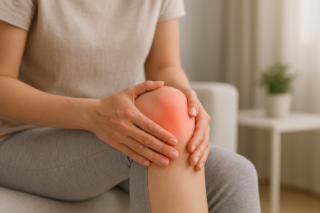
Discomfort in the knee joint commonly results from overuse, a minor injury, osteoarthritis, or irritation of a tendon, ligament, cartilage, or fluid-filled sac around the knee. Mild symptoms may improve with activity modification, cold or heat, gentle movement, and appropriate nonprescription pain relief. However, severe pain, major swelling, inability to bear weight, joint deformity, or a hot, red knee with fever requires prompt medical evaluation.
What Can Cause Knee Joint Discomfort?
The knee contains bones, cartilage, menisci, ligaments, tendons, muscles, and joint fluid. A problem involving any of these structures can cause pain, stiffness, swelling, weakness, or reduced movement. The National Library of Medicine provides an overview of knee injuries and disorders, while its broader guide to joint disorders explains conditions that can affect joints throughout the body.
| Possible cause | Typical pattern |
|---|---|
| Minor sprain or strain | Discomfort begins after an awkward step, sudden twist, or unfamiliar activity. Mild swelling or tenderness may occur. |
| Overuse | Pain develops gradually after repeated running, jumping, kneeling, climbing, or changes in exercise intensity. |
| Meniscus or ligament injury | A twist or direct impact may cause swelling, instability, catching, locking, or difficulty fully straightening the knee. |
| Osteoarthritis | Pain and stiffness usually develop gradually. Symptoms may be worse with weight-bearing activity or after inactivity. The NIH offers more information about osteoarthritis symptoms and risk factors. |
| Bursitis or tendinopathy | Localized tenderness may worsen with kneeling, stairs, running, jumping, or repeated bending. |
| Inflammatory arthritis or gout | The knee may become swollen, warm, tender, and stiff, sometimes without an obvious injury. |
| Joint infection | Intense pain, warmth, redness, swelling, fever, or inability to move the knee can signal an urgent problem. |
Hip or lower-back conditions can occasionally produce pain that is felt near the knee. Because different problems can cause similar symptoms, the location and character of the discomfort provide clues but cannot confirm a diagnosis.
What Your Symptoms May Suggest
Consider what happened before the discomfort began and which movements make it worse:
- Pain in front of the knee may occur with irritation around the kneecap or patellar tendon.
- Pain along the inner or outer joint line can occur with meniscus, ligament, or arthritis-related problems.
- Pain behind the knee may be associated with muscle or tendon irritation, arthritis, or a fluid-filled Baker cyst.
- Sudden swelling after an injury may indicate bleeding or fluid accumulation within the joint.
- Clicking without pain is not always concerning, but painful catching, locking, or buckling deserves evaluation.
- Morning stiffness and swelling in multiple joints may point toward an inflammatory condition rather than an isolated mechanical knee problem.
Visible fullness above the kneecap may be related to excess joint fluid. Learn more about causes and treatment options for suprapatellar joint effusion.
Relief for Mild Knee Discomfort
If symptoms are mild, there was no serious injury, and you can walk safely, the following measures may help:
- Reduce aggravating activity. Temporarily limit running, jumping, deep squats, prolonged kneeling, or other movements that increase pain. Complete bed rest is generally unnecessary.
- Use cold for a recent flare or injury. Apply a wrapped cold pack for about 15 to 20 minutes at a time. Do not place ice directly on the skin or fall asleep with it in place.
- Consider heat for stiffness. Gentle warmth may help a stiff knee when there is no new injury, significant swelling, or unusual warmth in the joint.
- Elevate a swollen knee. Supporting the leg above heart level when practical may help reduce swelling.
- Try gentle movement. Comfortable bending and straightening can help preserve mobility. Stop if an exercise causes sharp pain, instability, or increasing swelling.
- Return to activity gradually. Increase duration or intensity in small steps rather than immediately resuming the activity that triggered symptoms.
A compression sleeve may provide light support, but it should not cause numbness, tingling, discoloration, or increased pain. Persistent symptoms may benefit from physical therapy focused on strength, flexibility, movement mechanics, and a safe return to activity.
Using Pain Relievers Safely
Acetaminophen may reduce pain but does not treat inflammation. Nonsteroidal anti-inflammatory drugs, or NSAIDs, such as ibuprofen and naproxen may reduce both pain and inflammation. Topical pain-relief products are another option for some adults.
These medicines are not appropriate for everyone. NSAIDs can contribute to stomach bleeding, kidney problems, and cardiovascular complications. Ask a healthcare professional or pharmacist before using them if you have kidney disease, heart disease, high blood pressure, a history of ulcers or bleeding, take anticoagulants, use other NSAIDs, or are pregnant. Acetaminophen can cause serious liver injury if too much is taken or if multiple products containing it are combined.
Always check the active ingredients and follow the Drug Facts label. The FDA provides guidance on the safe use of over-the-counter pain relievers. Do not start, stop, or change a prescription medication without guidance from the prescribing clinician.
How Knee Problems Are Evaluated
A healthcare professional will usually ask how the symptoms started, whether an injury occurred, where the pain is located, and whether the knee swells, locks, or gives way. The examination may include the knee, hip, lower leg, gait, strength, and range of motion.
Imaging is not necessary for every case. An X-ray can help identify fractures and arthritis-related bone changes. MRI may be considered when a significant ligament, meniscus, cartilage, or other soft-tissue injury is suspected. If the joint is unusually swollen, hot, or red, a clinician may remove and test joint fluid for infection, crystals associated with gout, or other causes.
Depending on the likely cause, care may involve a primary care clinician, sports medicine physician, orthopedist, rheumatologist, or physical therapist. Treatment can include rehabilitation, activity changes, medication, injections, bracing, or, less commonly, surgery.
When to Seek Care
Seek urgent medical evaluation if:
- The knee is deformed, or the injury involved a major fall, collision, or direct blow.
- You cannot bear weight, fully bend or straighten the knee, or safely walk.
- The knee rapidly develops substantial swelling after an injury.
- The joint is hot, red, very swollen, or intensely painful, especially with fever or chills.
- The knee locks in one position or repeatedly gives way.
- The foot becomes cold, pale, blue, numb, or weak.
- Calf pain or swelling accompanies the knee symptoms, particularly if you also develop chest pain or shortness of breath.
Schedule a nonemergency appointment if discomfort does not begin improving after several days of home care, repeatedly returns, disturbs sleep, or limits work, exercise, or everyday activities. Earlier evaluation is appropriate for people with recent surgery, a weakened immune system, a bleeding disorder, or a history of cancer or joint infection.
This information is for general education and does not replace evaluation or treatment from a qualified healthcare professional.
Other Articles You May Find of Interest...
- Knee Joint Discomfort: Causes and Relief
- Radius and Ulna Fractures at the Wrist: Treatment and Recovery
- Signs Your Knee Cartilage May Be Damaged
- What to Avoid With C5-C6 Degenerative Disc Disease
- Treating a Pinched Nerve in the Lower Back
- Treating Knock Knees in Adults: Exercise, Bracing, and Surgery
- Why Radiofrequency Ablation Might Be Your Answer to Chronic Neck and Back Pain