






More Neurology Articles
Bruce Willis’ Health: What Disease Does He Have?
Updated August 21, 2026, by the Your Health Magazine Health Information Team. This article was substantially revised to reflect Bruce Willis’ publicly confirmed frontotemporal dementia diagnosis and current medical guidance about FTD and aphasia.

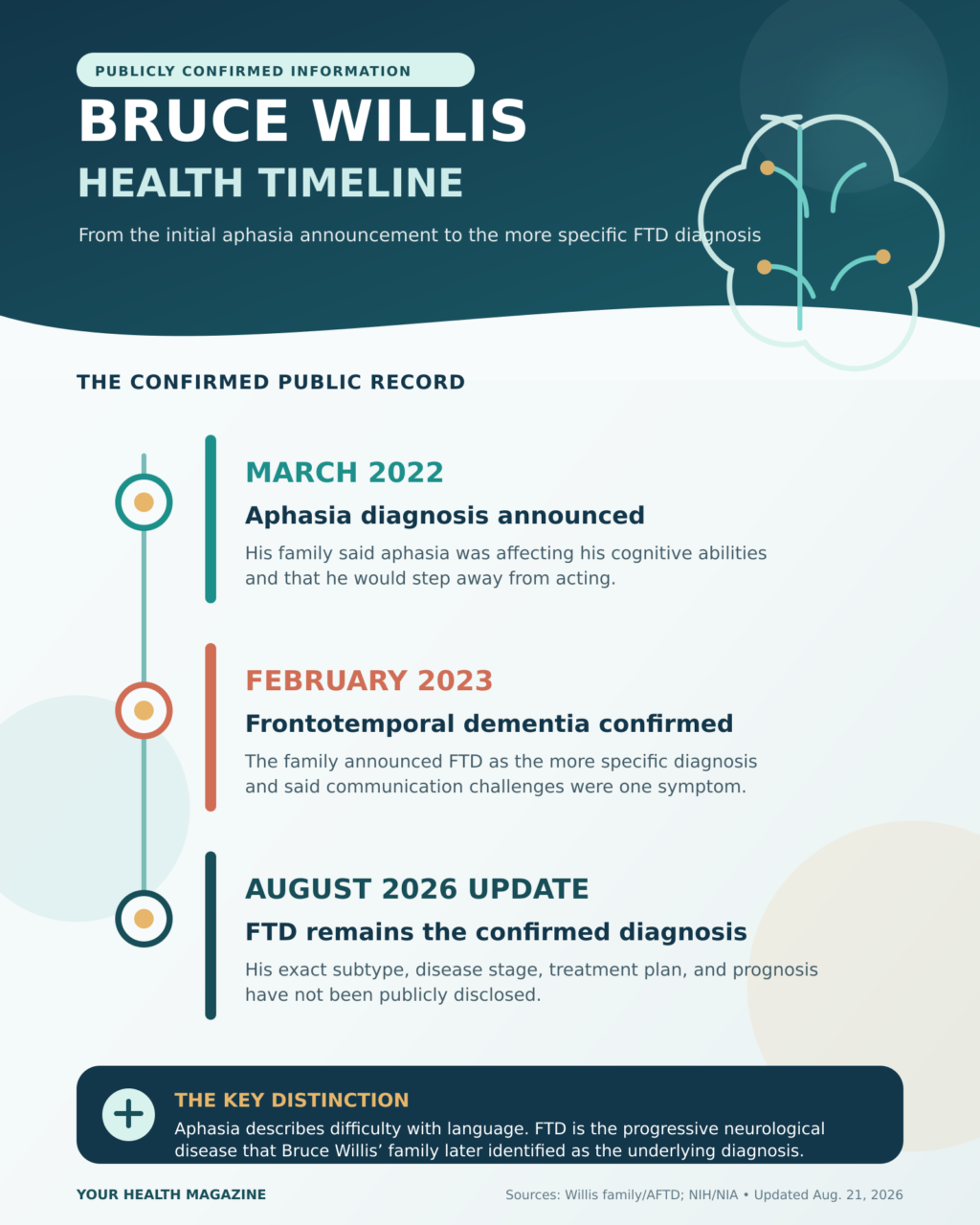
Bruce Willis has frontotemporal dementia, commonly called FTD. His family first announced in March 2022 that he had aphasia, a disorder affecting language and communication. In February 2023, the family provided the more specific diagnosis of FTD. Questions such as “what disease does Bruce Willis have?” therefore have two related answers: aphasia described his communication difficulties, while frontotemporal dementia identifies the underlying neurological disease his family has publicly confirmed.
Bruce Willis Health Update: What Has Been Confirmed?
The most important confirmed facts about Bruce Willis’ health are:
- His family announced an aphasia diagnosis in 2022 and said he would step away from acting.
- In February 2023, the family announced that his condition had progressed and that doctors had reached the more specific diagnosis of frontotemporal dementia.
- Communication difficulties are among the symptoms his family has publicly discussed.
- His family has not publicly released his medical records, precise FTD subtype, disease stage, treatment plan, or prognosis.
As of this article’s August 21, 2026 update, Bruce Willis is alive. Recent coverage documented his attendance at his daughter Tallulah Willis’ August 8 wedding. A public appearance or photograph, however, cannot reveal the stage or severity of a neurological condition.
Bruce Willis’ Diagnosis Timeline
- March 2022: Willis’ family announced that he had been diagnosed with aphasia and would retire from acting because the condition was affecting his cognitive abilities.

- February 2023: In an official family statement published by the Association for Frontotemporal Degeneration, the family announced the more specific diagnosis of frontotemporal dementia.
- August 2026: FTD remains his publicly confirmed diagnosis. His family continues to share selected information while keeping most clinical details private.
What Disease Does Bruce Willis Have?
Bruce Willis has frontotemporal dementia. FTD is not one single disorder but a group of progressive neurological diseases involving damage to nerve cells in the frontal and temporal lobes of the brain.
According to the National Institute on Aging, these brain regions help regulate language, behavior, emotion, judgment, planning, and movement. The symptoms depend on which areas are affected first and can differ substantially from one person to another.
Possible symptoms of FTD may include:
- Progressive difficulty speaking, finding words, reading, writing, or understanding language.
- Changes in personality, judgment, empathy, inhibition, or social behavior.
- Problems organizing activities, solving problems, or completing familiar tasks.
- Repetitive behaviors or changes in eating habits.
- Movement, balance, coordination, or swallowing problems in some forms of FTD.
This list describes FTD generally. It should not be interpreted as a list of symptoms Bruce Willis personally experiences.
Bruce Willis and Aphasia: How Are the Conditions Connected?
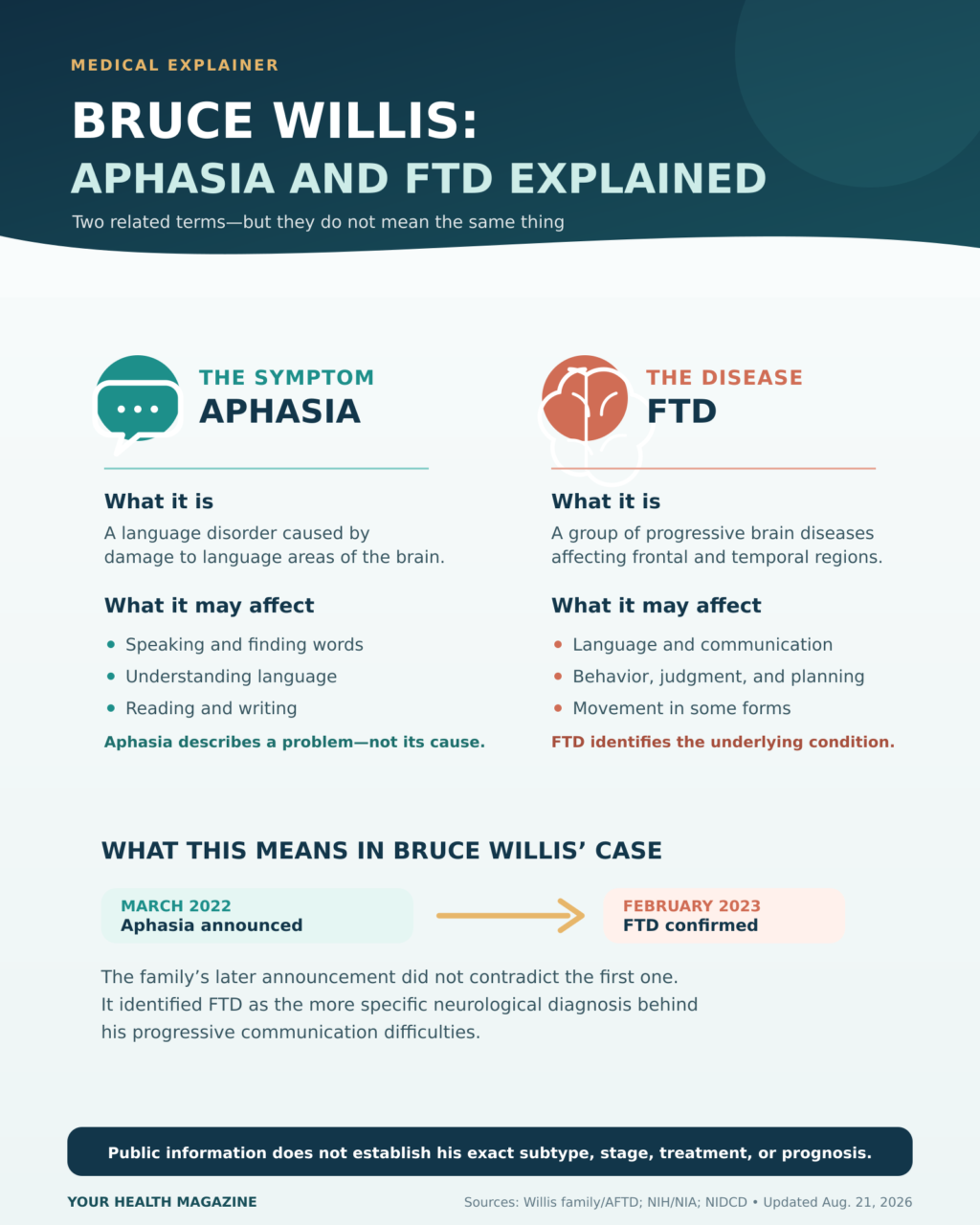
Aphasia is a language disorder caused by damage to parts of the brain responsible for communication. It may affect a person’s ability to speak, understand speech, read, or write. Aphasia is not itself one specific disease and does not necessarily indicate dementia.
The National Institute on Deafness and Other Communication Disorders explains that aphasia can result from several causes. It often appears suddenly after a stroke or traumatic brain injury, but it can also develop gradually with a progressive neurological disease.
In Bruce Willis’ case, aphasia was the initial publicly announced diagnosis. His family later identified frontotemporal dementia as the more specific condition underlying his progressive communication problems.
Readers interested in how language problems can differ may find our explanation of the different types of aphasia and their effects on communication helpful.
Does Aphasia Mean Someone Has Frontotemporal Dementia?
No. Aphasia describes a communication impairment, not its cause. Stroke, head injury, brain tumors, infections, and progressive neurological disorders can all affect language. Doctors must investigate the underlying cause rather than diagnosing FTD from aphasia alone.
Primary progressive aphasia is a neurological syndrome in which language abilities gradually deteriorate. It can be associated with frontotemporal degeneration, but Willis’ publicly available information does not provide enough clinical detail for outsiders to assign him a more precise subtype.
Is Frontotemporal Dementia the Same as Alzheimer’s Disease?
No. FTD and Alzheimer’s disease are both causes of dementia, but they are different neurological diseases.
Alzheimer’s disease often begins with difficulty forming or recalling memories, although its presentation varies. FTD more commonly begins with changes involving language, behavior, personality, judgment, or movement. Memory can also be affected by FTD, particularly as the condition progresses.
FTD also tends to develop at a younger age than Alzheimer’s disease. Nevertheless, symptoms can overlap, which is one reason diagnosis sometimes requires evaluation by clinicians experienced in cognitive and behavioral neurology.
How Is Frontotemporal Dementia Diagnosed?
There is no reliable home test for FTD. Evaluation may involve:
- A detailed history from the patient and people who know the patient well.
- Neurological and physical examinations.
- Language, memory, behavior, and cognitive assessments.
- Blood tests or other testing to rule out conditions that can produce similar symptoms.
- Brain imaging, such as MRI and, in selected cases, PET imaging.
- Genetic counseling or testing when family history or clinical findings make it appropriate.
FTD can initially resemble depression, another psychiatric condition, Alzheimer’s disease, a communication disorder, or another neurological illness. A neurologist, behavioral neurologist, neuropsychologist, psychiatrist, speech-language pathologist, and other specialists may participate in the evaluation.
Can Frontotemporal Dementia Be Treated?
As of this update, there is no cure for FTD and no treatment proven to stop or reverse its underlying progression. Treatment instead focuses on managing symptoms, supporting communication and mobility, maintaining safety, and helping caregivers.
Depending on the individual’s symptoms, care may include:
- Speech-language therapy and alternative communication tools.
- Occupational or physical therapy.
- Environmental and routine changes intended to reduce confusion or distress.
- Medical management of selected behavioral, emotional, sleep, or movement symptoms.
- Evaluation of nutrition, swallowing, mobility, and home-safety needs.
- Support and respite resources for family caregivers.
The National Institute on Aging provides additional information about how frontotemporal disorders are treated and managed. Treatment must be individualized by clinicians familiar with the patient’s symptoms, other conditions, and medications.
Communication and Caregiving Support
People with progressive language difficulties may need more time to understand a question or form a response. Helpful communication approaches can include speaking slowly, using short and direct sentences, limiting distractions, allowing time for a response, and supplementing speech with gestures, drawings, written choices, or labeled photographs.
A speech-language pathologist can evaluate which communication tools are most useful for a particular person. The National Institute on Aging also offers guidance on caring for someone with a frontotemporal disorder.
As symptoms change, families may also need to consider making the home safer for a person with dementia. Caregivers seeking remote support may find these teletherapy tips for dementia caregivers useful.
Does Bruce Willis Know He Has Dementia?
In a January 2026 podcast interview about caregiving and FTD, Emma Heming Willis said that her husband had not connected his symptoms with having the disease. She described this as anosognosia.
Anosognosia is a neurological lack of awareness of one’s condition. It is different from deliberately denying a diagnosis. This information comes from Willis’ wife and should not be expanded into assumptions about what he understands or experiences from day to day.
Sudden Language Trouble Can Be an Emergency
Bruce Willis’ aphasia developed in the context of a progressive neurological condition. However, aphasia can also begin suddenly during a stroke.
If someone suddenly develops trouble speaking, understanding speech, seeing, walking, or moving one side of the body, call 911 immediately. The Centers for Disease Control and Prevention identifies sudden confusion or difficulty speaking or understanding speech as a potential stroke warning sign.
Our guide to recognizing neurological warning signs explains other symptoms that warrant timely medical attention.
Why Bruce Willis’ Exact Prognosis Is Not Publicly Known
FTD is progressive, but its symptoms and rate of change differ among individuals. A person’s prognosis cannot be determined from age, photographs, short public appearances, or general information about the diagnosis.
Willis’ family has not publicly disclosed his exact disease stage, test results, medications, or individualized prognosis. Statements claiming to know those details should therefore be treated cautiously unless they come directly from the family or an authorized representative.
Key Takeaways
- Bruce Willis has frontotemporal dementia, or FTD.
- His family announced aphasia in 2022 and the more specific FTD diagnosis in 2023.
- Aphasia affects language and communication; it is not itself the underlying cause.
- FTD can affect language, behavior, judgment, emotion, planning, and movement.
- There is currently no cure, but therapy, symptom management, safety planning, and caregiver support can help.
- Willis’ precise subtype, stage, treatment, and prognosis remain private.
Frequently Asked Questions
What disease does Bruce Willis have?
Bruce Willis has frontotemporal dementia, a progressive neurological disease commonly abbreviated as FTD.
Does Bruce Willis have aphasia or dementia?
Both terms apply, but they describe different things. Aphasia describes his communication impairment. Frontotemporal dementia is the more specific underlying neurological diagnosis his family announced in 2023.
What kind of dementia does Bruce Willis have?
His family has publicly identified frontotemporal dementia. It has not released enough clinical information to responsibly assign a more precise subtype or stage.
When was Bruce Willis diagnosed?
His family announced aphasia in March 2022. It announced the more specific frontotemporal dementia diagnosis in February 2023.
Does Bruce Willis know he has dementia?
Emma Heming Willis said in a January 2026 interview that he had not connected his symptoms with having the disease and described this as anosognosia. This neurological lack of awareness is not the same as intentional denial.
Is Bruce Willis still alive?
Yes. As of this article’s August 21, 2026 update, Bruce Willis is alive. Recent reporting documented his attendance at his daughter Tallulah Willis’ wedding on August 8, 2026. Because this answer is time-sensitive, the article should always display a clear update date.
How is Bruce Willis doing today?
Only his family and care team can accurately describe his day-to-day condition. Publicly confirmed information establishes that he has FTD and has experienced communication difficulties, but his precise stage and current clinical status have not been disclosed.
Is frontotemporal dementia curable?
No cure or treatment that stops the progression of FTD is currently available. Clinicians can nevertheless treat certain symptoms and recommend communication, mobility, behavioral, safety, and caregiving support.
Can aphasia improve?
It depends on the cause. Some people with aphasia caused by a stroke or injury improve with recovery and therapy. Aphasia caused by a progressive neurological disease generally changes as the underlying disease progresses, although therapy and communication tools may help a person communicate more effectively.
Sources and Further Reading
- Association for Frontotemporal Degeneration: Willis Family Statement
- National Institute on Aging: Frontotemporal Disorders
- National Institute on Deafness and Other Communication Disorders: Aphasia
- Centers for Disease Control and Prevention: Stroke Signs and Symptoms
Other Articles You May Find of Interest...
- How to Read a Nerve Conduction Study Report
- Can a Tissue Paper Test Detect a CSF Leak?
- What Does Cerebrospinal Fluid Taste Like During a CSF Leak?
- Cervical Laminectomy: A Complete Guide to This Spinal Decompression Surgery
- Why Concussion Symptoms Can Look Different From Person to Person
- The Crushing Fatigue of ALS
- Complex Partial Seizures: Managing Focal Awareness Loss





