






Your Health Magazine Contributor
4201 Northview Drive
Suite 102
Bowie, MD 20716
More Healthy Aging Articles
What’s at the End of Your Fork?
Drs. Mark and Michele Sherwood on Anti-Inflammatory Eating and Longevity
When people talk about longevity, the conversation can quickly turn toward supplements, testing, technology and the newest intervention promising to help us live longer, but one of the most important decisions affecting our long-term health happens several times every day, and it is remarkably simple.
It happens at the end of our fork.
We often remind people that every time they sit down to eat, they are making a decision that can either support their health or work against it. Those decisions may seem small in isolation, but repeat them three times a day, perhaps with a couple of snacks in between, 365 days a year, and suddenly they become enormously significant.
As we often say, “The most important medical decision that you make every single day is at the end of your fork.”
That is why we believe understanding the difference between inflammatory and anti-inflammatory nutrition deserves far more attention in the longevity conversation.
Understanding Inflammation
Inflammation itself is not inherently bad. It is part of the body’s natural response to something it perceives as a threat. The immune system responds, signals are released and the body mobilizes to protect itself. The problem arises when inflammatory signaling becomes chronic.
In the context of nutrition, our approach is to reduce the foods and ingredients that may continually place unnecessary metabolic demands on the body while emphasizing nutrient-dense foods that support normal physiological function. And that does not have to be complicated. One of the simplest ways we explain anti-inflammatory nutrition is to think about food in something close to its original form.
Fruits. Vegetables. Nuts. Seeds. Quality protein sources. Healthy fats.
As foods become increasingly processed, they can also accumulate added sugars, highly processed oils, preservatives and other ingredients that move us further away from the nutritional value of the original food.
The body depends on nutrients. Food is one of the primary ways we provide them. So what we consistently put into our body matters.
Start With Real Food
Walk through a grocery store and you can make this philosophy remarkably practical. An apple is an example of a whole food. An avocado is another. Fruits, vegetables, nuts, seeds, quality proteins and minimally processed foods provide nutrients in forms that are generally recognizable. Compare those choices with heavily processed packaged foods containing long lists of added ingredients.
We encourage people to read labels. The more difficult it becomes to recognize what is actually in a product, the more important it becomes to ask whether that food deserves a regular place in your diet. This isn’t about achieving dietary perfection. It is about establishing a pattern.
If most of what you eat consists of nutrient-dense, minimally processed foods, you begin creating a nutritional foundation that supports health rather than continually asking the body to compensate for poor choices. And that foundation becomes increasingly important as we age.
What Does Food Have to Do With Longevity?
We make an important distinction between lifespan and health span. Simply accumulating more birthdays isn’t the entire goal. For us, longevity means preserving enough health, strength and function to participate in those additional years.
Mark describes it very simply: longevity is being able to “do what you want when you want how you want and not hurt for as long as you want.”
Nutrition plays an important role in creating that possibility. There is no single “longevity food.” The body requires a broad spectrum of nutrients, which is why we favor dietary variety rather than extreme approaches.
Fruits and vegetables provide an array of vitamins, minerals, fiber, antioxidants and plant compounds, including polyphenols. Healthy fats can come from foods such as nuts, seeds, avocados and olive oil, while quality protein sources provide amino acids needed throughout the body. Foods such as wild-caught salmon can also provide omega-3 fatty acids.
The bigger picture is not about obsessing over one nutrient. It is about consistently supplying the body with the raw materials it needs.
The Problem With Dietary Extremes
Nutrition has become remarkably tribal. One year carbohydrates are the enemy. Another year fat is the enemy. Then plants become the problem. The next trend tells us that one particular food or macronutrient is the secret to everything. We prefer to come back to physiology and common sense.
During our discussion, we specifically addressed the growing popularity of carnivore-style diets. Whatever dietary approach someone chooses, we believe there is considerable value in the compounds found in plant foods, including polyphenols, and in consuming a broad spectrum of real foods.
That means fruits and vegetables alongside appropriate proteins and healthy fats. Longevity nutrition doesn’t need to become another extreme.
Think of Your Body Like a Classic Car
A beautifully maintained classic automobile may have been built decades ago, but when its systems have been properly cared for, it can continue to run remarkably well. Leave that same car sitting neglected in a backyard and the outcome will be very different.
Our bodies obviously aren’t automobiles, but the analogy illustrates an important principle: age and condition are not necessarily the same thing. We cannot stop chronological aging. But the way we care for ourselves influences how we experience it.
Nutrition is part of that maintenance. So are movement, muscle, sleep, metabolic health, stress management, relationships and purpose. Food isn’t the entire longevity equation, but it is one of the variables we encounter every single day. And unlike many aspects of aging, it is something over which we have considerable influence.
Consistency Matters More Than Perfection
People sometimes become overwhelmed when they’re told they need to change their diet. They imagine throwing away everything in the kitchen, adopting an entirely new lifestyle overnight and never eating something they enjoy again. That isn’t necessary. Real change comes from consistency.
If you return to an old habit occasionally, that doesn’t erase everything you’ve accomplished. You simply return to the healthier behavior at the next opportunity. Over time, those repeated decisions become your normal way of living.
That may mean choosing whole fruit instead of a heavily processed snack. It may mean keeping nuts or fruit available when you’re traveling. It might mean building dinner around vegetables, quality protein and healthy fats instead of reaching for a packaged meal. Individually, those choices can seem almost insignificant. Multiply them across weeks, months, years and decades, and they become something very different. They become a lifestyle.
Longevity Begins With the Decisions We Make Today
There is tremendous excitement surrounding longevity medicine, and some of the emerging science deserves that excitement. But longevity cannot simply be something we buy. Before looking for increasingly sophisticated ways to extend life, we should pay attention to the decisions we are already making every day.
- What are we eating?
- Are we supplying our bodies with the nutrients they need?
- Are most of our foods recognizable as food?
- Are we building habits we could realistically maintain for decades?
Because ultimately, longevity isn’t simply about extending lifespan. It is about protecting health span, remaining strong, active, capable and engaged with life for as long as possible. And one of the simplest places to begin is sitting right in front of us. Look at what’s at the end of your fork.
To hear more from Drs. Mark and Michele Sherwood on the connection between nutrition, inflammation, anxiety, stress, long-term health and more, watch the full episode on YouTube here:
Subscribe to The Authentic Longevity Podcast for new conversations each week on health, wellness and longevity.
About Drs. Mark and Michele Sherwood
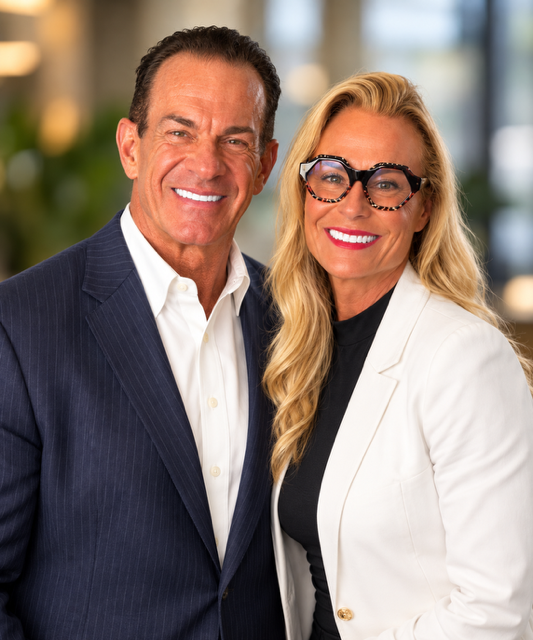
Dr. Mark Sherwood, ND, is a traditional naturopathic doctor and clinician, and Dr. Michele Sherwood, DO, is a physician. Together, they are educators, authors, speakers and co-founders of the Functional Medical Institute in Tulsa, Oklahoma. Their work focuses on personalized, whole-person health with an emphasis on prevention, metabolic health, healthy aging, performance and longevity.
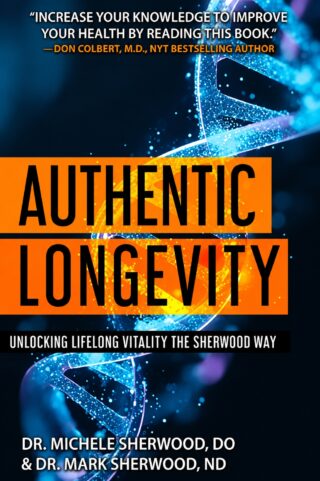
Their new book, Authentic Longevity: Unlocking Lifelong Vitality, The Sherwood Way, combines decades of clinical experience, patient stories and actionable science to explore nutrition, movement, sleep, stress and hydration alongside genetics, peptides, supplements, hormones, laboratory testing and the role of emotional and spiritual health in healthy aging.
Other Articles You May Find of Interest...
- How to Maintain Healthy Movement as You Age
- What Actually Predicts How Long You’ll Live
- What’s at the End of Your Fork?
- Why Your Reaction Time Matters More Than You Think, Especially as You Age
- Chess and the Aging Brain: What We Know, and What We Hope
- How to Build a Realistic and Sustainable Anti-Aging Routine
- Dr. Michele Sherwood Explains Exogenous Ketones: What They Can and Can’t Do





