Your Health Magazine Contributor
4201 Northview Drive
Suite 102
Bowie, MD 20716
More Healthy Aging Articles
Can We Actually Reverse Aging?
Drs. Mark and Michele Sherwood on the question, what if the speed at which we age is far more modifiable than we once believed?
We have all heard the familiar statement: “Getting older is inevitable.” And in one important sense, it is true. The calendar keeps moving. None of us can stop another birthday from arriving. But here is the more interesting question: Must our bodies decline at the same rate as the calendar advances?
In our work at Functional Medical Institute, we challenge the assumption that fatigue, lost muscle, poor metabolic health, and diminished function are simply the unavoidable price of getting older. Aging is a complex biological process, but many of the factors that influence how well we age are modifiable. That is a powerful message of hope, provided we are equally clear about what science has and has not demonstrated.
First, What Do We Mean by Aging?
Lifespan is the total number of years a person lives. Healthspan is the portion of those years spent in reasonably good health and with meaningful function. They are related, but they are not identical.
Chronological age is the number on your birth certificate. Biological age is an estimate derived from measurements associated with aging, such as DNA methylation patterns or other biomarkers. Functional age is a practical way to describe what you can actually do: walk briskly, lift, balance, recover, think clearly, and participate fully in life.
A 70-year-old who maintains strength, mobility, independence, and metabolic health may function better than someone decades younger. That does not mean the older person has literally become younger. It means chronological age alone is an incomplete description of health.
Our goal is not simply to chase a lower number on a laboratory report. Our goal is to protect the capacity to live well.
The Biology Behind the Aging Conversation
Scientists now study aging through interconnected processes, including mitochondrial dysfunction, cellular senescence, altered nutrient sensing, impaired cellular maintenance, chronic inflammation, and epigenetic changes. These are useful frameworks for research, not switches that can simply be flipped to reverse aging.
Mitochondria: These cellular structures help produce usable energy and participate in signaling, stress responses, and metabolism. Exercise and sound metabolic health support mitochondrial adaptations. When mitochondrial function is impaired, energy regulation and tissue performance may suffer, but there is no single clinical test that captures all aspects of mitochondrial health.
Inflammation and senescence: Chronic low-grade inflammation is associated with many age-related conditions. Senescent cells can accumulate and contribute to inflammatory signaling. Researchers are exploring drugs that target these cells, but routine anti-aging use has not been proven safe or effective in humans.
Autophagy: Cells constantly recycle damaged or unnecessary components. This maintenance system is essential, and its regulation changes with age. Exercise and nutritional status affect related pathways, but we should not pretend that a specific fasting schedule guarantees “cellular rejuvenation.”
Epigenetics: Chemical modifications around DNA influence how genes are regulated. Some patterns change predictably with age and form the basis of biological-age clocks. They offer intriguing measurements, but they do not tell the whole story of a person’s health.
The Most Powerful Longevity Tools May Be the Least Exotic
There is a temptation in longevity medicine to move immediately to the newest compound, peptide, device, or laboratory panel. Yet the strongest human evidence still supports a foundation built on physical activity, nutrition, sleep, cardiovascular risk reduction, and avoiding tobacco.
Muscle is a longevity asset. Resistance training helps preserve strength, physical independence, bone health, and glucose handling. Adequate protein and recovery support that effort. Muscle is not merely cosmetic; it is essential to remaining capable as we age.
Cardiorespiratory fitness matters. VO₂ max is a measure of aerobic capacity. Higher cardiorespiratory fitness is consistently associated with better health outcomes, although an association alone does not prove that changing a number guarantees a particular lifespan. Training can improve aerobic capacity and everyday function.
Metabolic health matters. Blood pressure, glucose regulation, lipid burden—including ApoB and Lp(a) when appropriate, and body composition help reveal risks that can be addressed before disease progresses.
Sleep matters. Consistent, sufficient sleep supports cognitive function, emotional regulation, metabolic health, and recovery. No supplement can reliably replace the biological work of sleep.
Hormones matter, but context matters more. Clinically significant hormone deficiencies deserve appropriate evaluation and treatment. However, giving hormones to otherwise healthy adults solely to reverse aging has not been shown to extend lifespan and can introduce risks.
This is not an argument against innovation. It is an argument for putting proven fundamentals in the proper order.
Can Biological-Age Tests Tell Us If We Are Getting Younger?
We are excited about the development of epigenetic clocks, GlycanAge, and other biological-aging assessments. They may help us understand patterns of aging and follow changes over time. But there are important limitations.
Different clocks measure different biological signals. Two tests may give the same person different “ages.” Results can vary with methodology, population, and timing. Some clocks are associated with disease or mortality risk at a population level, yet it remains uncertain whether lowering a clock score through a particular intervention translates into longer life for an individual.
If someone’s reported biological age falls by three years after a lifestyle change, that may be interesting. It is not, by itself, proof that three years of whole-body aging have been reversed.
We prefer to interpret these tests alongside more established measures: blood pressure, cardiometabolic markers, strength, aerobic fitness, symptoms, sleep, and daily function. The complete picture matters more than one attractive number.
What About Molecular Hydrogen, NAD, Sauna, Red Light, and Peptides?
These interventions generate understandable interest, and some have promising mechanisms or early findings. But promise and proof are different things.
Molecular hydrogen: Small human studies have explored hydrogen-rich water and inhaled hydrogen for oxidative-stress and inflammatory outcomes. The evidence is preliminary, and there is no convincing human evidence that molecular hydrogen reverses biological aging or extends lifespan.
NAD biology: NAD is central to cellular metabolism and multiple signaling pathways. NAD levels and related pathways change with age. Precursors such as NR and NMN can influence some NAD-related measurements, but robust evidence of improved lifespan or broad clinical rejuvenation in humans is lacking.
Sauna: Observational research links frequent sauna use with favorable cardiovascular outcomes in some populations. Sauna can be a reasonable wellness practice for suitable individuals, but those associations do not prove that sauna reverses aging. Hydration and medical suitability matter.
Red and near-infrared light: Photobiomodulation has evidence for certain specific clinical applications and is being studied more broadly. Claims of whole-body age reversal go beyond established human data.
Peptides: This is a wide category, not a single treatment. Some peptides are approved medications for specific conditions; many promoted for longevity remain investigational or unapproved, with limited human safety and efficacy data. They should never replace evidence-based care. We can remain curious about emerging tools without making them the centerpiece of a longevity plan before the science warrants it.
So, Can We Actually Reverse Aging?
The most scientifically defensible answer is this: We can improve many drivers and consequences of age-related decline. We can often improve metabolic health, strength, aerobic capacity, blood pressure, and other important outcomes. Some biological-age measurements may also move in a more favorable direction.
But demonstrating that an intervention reverses the full biological aging process—and that this reversal leads to longer, healthier human lives, is a much higher bar. We are not there yet.
That distinction does not diminish the opportunity in front of us. It makes the opportunity real.
The Daily Habits That Change How You Age
If you want a practical starting point, focus on what you can consistently influence: Build and preserve muscle through progressive resistance training. Improve aerobic fitness with regular movement and appropriately challenging exercise. Protect sleep and address snoring, insomnia, or suspected sleep apnea. Eat a nutrient-dense diet that supports adequate protein, fiber, and metabolic health. Measure and manage cardiovascular risks rather than relying on how healthy you feel. Maintain meaningful relationships, purpose, stress recovery, and time for reflection.
Use advanced tests and therapies selectively, asking whether each result changes a meaningful decision.
Our Definition of Authentic Longevity
We do not believe aging should be approached with resignation. But neither should it be approached with fear, hype, or the belief that one supplement, one peptide, or one biological-age score holds the secret to immortality.
We believe in taking responsibility for the things we can influence. We believe in strong bodies, clear minds, metabolic resilience, meaningful relationships, and a life anchored in purpose. We believe health is something to steward, not simply something to measure. A longer life without the ability to enjoy it is not the goal. And a younger-looking laboratory number without better function is not the finish line.
The real question is not only, “Can I make my biological age younger?” It is, “What can I do today that gives me a better chance of living tomorrow with strength, independence, clarity, and joy?”
That is the promise of authentic longevity: not that we can stop the clock, but that we can make the years we are given healthier, stronger, and more meaningful.
About Drs. Mark and Michele Sherwood
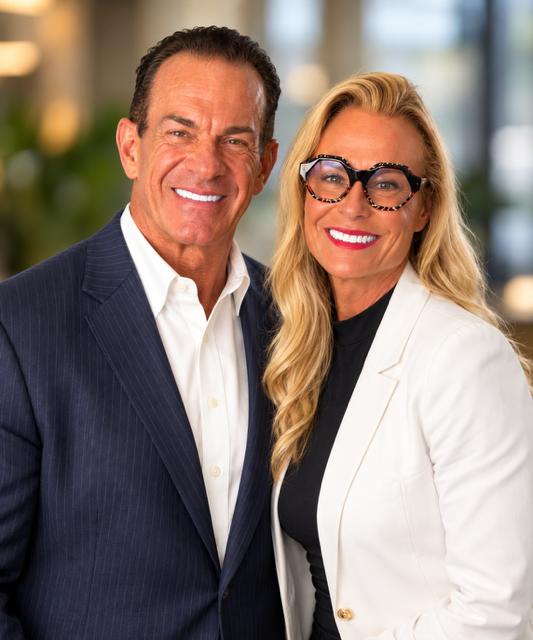
Dr. Mark Sherwood, ND, is a traditional naturopathic doctor and clinician, and Dr. Michele Sherwood, DO, is a physician. Together, they are educators, authors, speakers and co-founders of the Functional Medical Institute in Tulsa, Oklahoma. Their work focuses on personalized, whole-person health with an emphasis on prevention, metabolic health, healthy aging, performance and longevity.
The Sherwoods are also the authors of Authentic Longevity: Unlocking Lifelong Vitality, The Sherwood Way, which combines decades of clinical experience, real patient stories and actionable science to explore nutrition, movement, sleep, stress and hydration alongside genetics, peptides, supplements, hormones, laboratory testing and the role of emotional and spiritual health in healthy aging. They also host The Authentic Longevity Podcast, where they explore health, wellness and longevity with a practical focus on helping people live healthier, stronger and more purposeful lives.
Subscribe to The Authentic Longevity Podcast here for new conversations each week on health, wellness and longevity.
Other Articles You May Find of Interest...
- Can We Actually Reverse Aging?
- How to Maintain Healthy Movement as You Age
- What Actually Predicts How Long You’ll Live
- What’s at the End of Your Fork?
- Why Your Reaction Time Matters More Than You Think, Especially as You Age
- Chess and the Aging Brain: What We Know, and What We Hope
- How to Build a Realistic and Sustainable Anti-Aging Routine