




Your Health Magazine Contributor
4201 Northview Drive
Suite 102
Bowie, MD 20716
More Health & Wellness Tips Articles
Is Your Cutting Board Making You Sick? A Hygiene Guide for Home Cooks
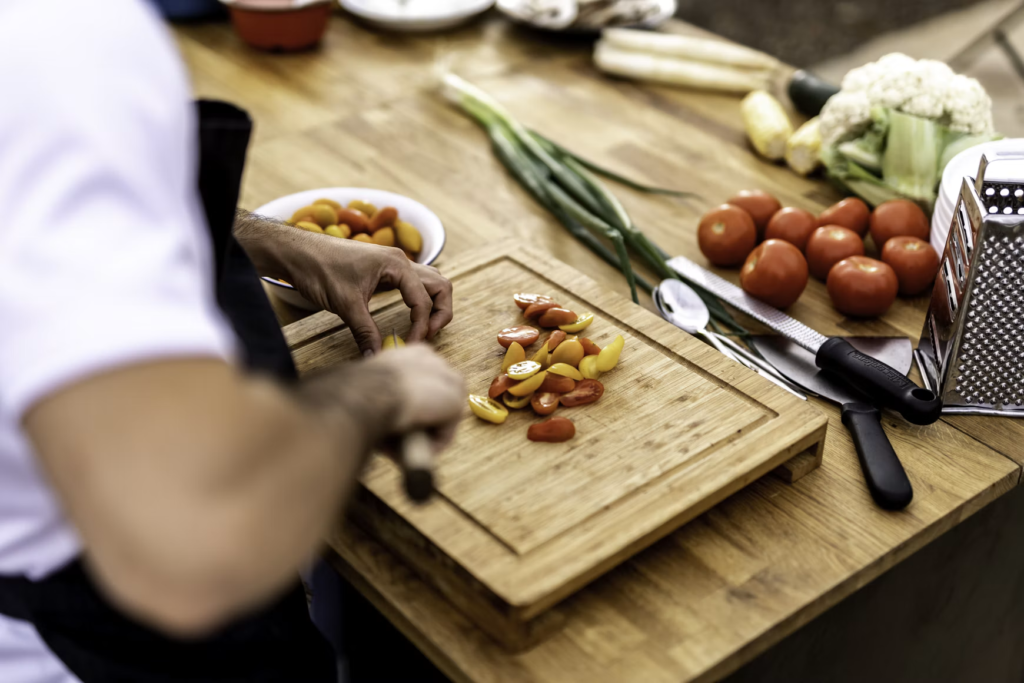
You may think your cutting board is clean after preparing your meal, but what if you cut raw chicken on it and then chopped some lettuce without washing it first??
Cross-contamination happens when harmful germs from raw food or dirty equipment spread to other food, often through a cutting board or knife. This can happen on any type of cutting board, wood or plastic.
By learning a few tips, you can limit your chances of this happening.
Contents:
- Why You Shouldn’t Rely On a Cutting Board’s Appearance
- How to Wash a Wood Cutting Board
- Be Cautious With Raw Meat
- Wood or Plastic Cutting Boards: Which is Better?
- Tips to Help Prevent Cross-Contamination
- When Do You Need a New Cutting Board?
- Create a Safe Habit
Why You Shouldn’t Rely On a Cutting Board’s Appearance
Just because your cutting board does not have stains or smell dirty doesn’t mean there aren’t harmful bacteria living on your board. Raw chicken, meat, fish, and their juices can transfer harmful bacteria to your cutting board. These bacteria can travel to your fruit, bread, etc that you may place on your plate without cooking.
Cross-contamination can happen when a knife rests on an unwashed board, a clean plate lands where raw juices spilled, or you use the board again without washing it.
A 2026 UK Food Standards Agency review reported that 20% of 140 meal occasions involving boards for raw or cooked meat, fish, or poultry included washing the board with detergent during the meal. The observations don’t show whether every board was cleaned later.
Always remember, just because your cutting board looks clean does not mean it has been cleaned.
How to Wash a Wood Cutting Board
A simple cutting board care routine starts with washing and drying after use. Another tip is to condition your cutting board with oil; however, it will not sanitize your cutting board.
Wash after each use:
- Clear off debris. Get any pieces of food off of your cutting board; this will prevent you from spreading them around.
- Wash both sides of the cutting board with hot, soapy water. Use a sponge or clean brush and make sure to get into crevices, around the edges, and on the handle.
- Rinse with clean water to remove soap and any debris that was left.
- Dry with a towel and allow your cutting board to air dry completely, preferably standing up to ensure it dries evenly on both sides.
Do not soak your cutting board in water for too long, as it may swell or crack. You should also wash most wooden cutting boards by hand; refer to your cutting board instructions if unsure.
If you cut onion or garlic on your cutting board, wash it before using baking soda to remove odor.
Be Cautious With Raw Meat
If you cut tomatoes on a board that previously had raw chicken, you could be putting yourself at risk.
Use one cutting board for all your raw meats, poultry, and fish, and a separate cutting board for foods that will be eaten without cooking.
This way, you will not need to constantly wash your cutting board; however, you will still need to wash your board after you use it. It can be helpful to label or use different colored cutting boards, and make sure to keep the raw meat board away from any salad, plates, or utensils. Once you are finished, place your raw meat cutting board off to the side.
If you only have one cutting board, make sure you prep the items you will be eating raw, then cut your meat, and wash your board, knife, and surrounding counter. If you will be using your cutting board for anything that you will be eating raw, sanitize your cutting board before using. Flipping over your board will not work, since your hands may have touched both sides.
Cleaning and sanitizing your cutting board are two different things. You will want to wash your board with soap and water, then use a suitable food-contact sanitizer to reduce harmful microorganisms on the cleaned surface.
The USDA describes one tablespoon of unscented liquid chlorine bleach per US gallon of water for a clean cutting board. Use a product suitable for food-contact surfaces and follow its label for dilution, contact time, and whether to rinse. Allow the board to dry fully. Do not use bleach with any other cleaner.
Lemon or vinegar is not a good substitute for sanitizer.
Wood or Plastic Cutting Boards: Which is Better?
There is no reason to discard a sound wooden cutting board simply because it is made of wood.
Plastic cutting boards can be easier to clean because of their non-porous nature. Some plastic cutting boards can go in the dishwasher; check with the manufacturer of your cutting board to see if it can go in the dishwasher. This is why many people prefer to use plastic cutting boards when working with raw meat.
Wood can work well too, provided it is cleaned promptly, dried completely, and kept in sound condition. As long as your cutting board is not split or cracked, wood can be a great option.
As mentioned earlier, oiling and waxing your board will not help with bacteria, only dryness. You can apply a wood-safe wax or oil to your board after it has been washed and completely dried; just follow the directions and wipe off any excess before using your board.
There is no need to compete; what type of cutting board you choose is up to you, as long as you wash it and have healthy food habits.
Tips to Help Prevent Cross-Contamination
Even if you wash your cutting board, you can contaminate it again if your environment is dirty.
Some things to watch out for:
- Dirty dish towels. If you use your dish towel on your cutting board, after wiping raw meat, do not use the same towel to dry your board or plates.
- Stacking your cutting boards: once you wash your boards, leave them out to dry, not on top of each other.
- Remember to wash your knife after cutting raw meat, especially if you plan on using that knife to cut something you will eat without cooking.
- Utensils: do not place a clean utensil on a dirty cutting board; they can also get contaminated.
- Water alone won’t cut it; wash your cutting board with dish soap.
Keep a brush, dish soap, and a place to dry your cutting boards by your sink.
Remember to wash your hands. If you touch raw meat or its packaging, you can contaminate your meal with dirty hands.
When Do You Need a New Cutting Board?
You may notice that your cutting board has knife marks; that does not mean you need to buy a new one.
Replace a board when deep cracks, splinters, or other damage make it hard to clean properly. Minor wear on a solid wooden board may sometimes be repaired. You can also sand down wooden cutting boards and oil them, but if your board is severely cracked, you will need a new cutting board.
Same goes for plastic; if your cutting board is severely scratched, it may be hard to wash, even in the dishwasher.
Inspect your cutting boards when washing to see if there are any small scratches.
Create a Safe Habit
Ensure that your cutting board is clean and dry before you begin preparing food. Separate raw foods, wash your utensils, and give yourself time to dry your boards.
Check your wooden cutting boards occasionally to ensure that your wood stays in good condition. Washing boards and following safe food-handling habits can help protect anyone who eats food prepared on them.
Other Articles You May Find of Interest...
- Is Your Cutting Board Making You Sick? A Hygiene Guide for Home Cooks
- The Impact of Sudden Weather Changes on Your Body and Overall Well-Being
- Where Is the Best Place to Buy Methylene Blue?
- Healthy Activities Outdoors: The Benefits of Water Activities for a Healthy Lifestyle
- The Treatment That Uses Water and Current: Can Iontophoresis Finally Help Sweaty Hands?
- What 116,382 Tennis Matches Say About Momentum After a Setback
- How to Recognize the Early Warning Signs of Kidney Disease





