




More Hair Care Articles
How Many Inches Does Hair Grow in a Year?
By Your Health Magazine Health Information Team
Most scalp hair grows about 4 to 6 inches in a year. A commonly used estimate is approximately half an inch per month, but your actual growth may be faster or slower. Breakage, haircuts, shedding, health conditions, and natural differences in the hair cycle can also affect how much additional length you see.
Average Hair Growth Over Time
If your hair grows at the often-cited average of half an inch per month and you do not cut it, the estimated increase in length would be:
| Time | Estimated Growth |
|---|---|
| 1 month | About 0.5 inch |
| 3 months | About 1.5 inches |
| 6 months | About 3 inches |
| 12 months | About 4 to 6 inches |
These figures are averages, not guarantees. Hair does not necessarily grow at an identical rate every month, and different follicles may be in different stages of the growth cycle.
Why Hair Growth Varies
Hair forms at the base of a follicle beneath the skin. During the active growth phase, new cells help create and lengthen the hair shaft. Scalp hair can remain in this phase for years, while other follicles are transitioning, resting, or releasing an older strand.
Several factors may influence growth, density, and the amount of length you retain:
- Genetics: Inherited traits help determine hair texture, density, growth-cycle length, and susceptibility to pattern hair loss.
- Age: Hair growth and density may gradually decrease with age.
- Hormonal changes: Pregnancy, menopause, thyroid disorders, and other hormonal changes can affect shedding and growth.
- Nutrition: Inadequate protein or certain nutrient deficiencies can contribute to thinning or increased shedding.
- Illness and stress: Fever, surgery, childbirth, major illness, or severe stress may trigger noticeable shedding several weeks or months later.
- Scalp and hair conditions: Inflammation, infection, pattern hair loss, and autoimmune conditions may interfere with normal growth.
- Hair-care practices: Heat, chemical processing, rough handling, and tight hairstyles can cause breakage or damage the follicles.
Curly and tightly coiled hair may also appear to gain less length because of shrinkage, even when it is growing normally.
Growth Is Not the Same as Length Retention
Your follicles may produce several inches of new hair while the ends break at nearly the same rate. When this happens, it can seem as though the hair is not growing.
Trimming does not make hair grow faster because scissors cannot affect the follicle beneath the scalp. However, removing split or severely damaged ends may keep splits from traveling farther up the strand, helping you retain more usable length.
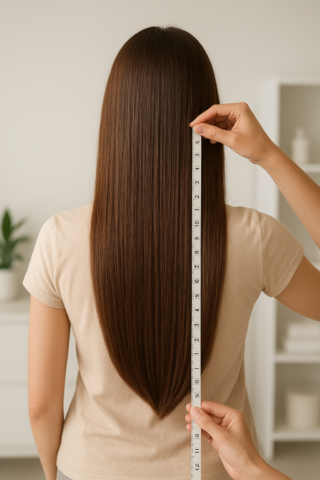
To measure your progress, select the same small section of hair and measure from the scalp under similar conditions every two or three months. For curly hair, compare it either stretched or unstretched each time rather than switching between methods. Photographs taken from the same angle and in similar lighting may be more useful than checking the mirror every day.
Can You Make Hair Grow Faster?
There is no reliable method that makes healthy scalp hair grow several extra inches within a short period. The practical goal is to support normal follicle function and reduce preventable breakage.
- Eat a balanced diet that provides adequate calories, protein, iron, zinc, and other essential nutrients.
- Avoid crash diets or prolonged, highly restrictive eating plans unless medically supervised.
- Manage underlying health conditions with appropriate medical care.
- Get sufficient sleep and use realistic strategies for managing ongoing stress.
- Discuss persistent shedding with a healthcare professional rather than trying multiple unproven products.
If you are changing your eating habits for weight management, understanding why weight-loss rates may differ between men and women can help you set realistic goals without relying on extreme restriction.
Be cautious with supplements marketed specifically for rapid hair growth. According to the National Institutes of Health’s consumer information about biotin, biotin deficiency can cause thinning, but deficiency is rare in the United States and there is little scientific evidence that biotin supplements improve hair in people who already get enough. High-dose biotin can also interfere with some laboratory test results. Ask a clinician whether testing is appropriate before treating yourself for a presumed deficiency.
How to Protect the Length You Grow
Gentler care will not change your genetically influenced growth rate, but it can reduce damage. The American Academy of Dermatology offers additional guidance on preventing hair breakage and damage. Helpful practices include:
- Apply conditioner after shampooing to reduce friction and tangling.
- Detangle gently with a wide-tooth comb, starting near the ends.
- Limit flat irons, curling irons, hot combs, and high-temperature blow-drying.
- Avoid repeatedly bleaching, relaxing, perming, or chemically processing fragile hair.
- Wear braids, ponytails, buns, extensions, and other styles loosely enough that they do not cause pain or pull at the hairline.
- Do not rub wet hair aggressively with a towel.
- Choose care techniques suited to your texture, since straight, wavy, curly, and tightly coiled hair may respond differently to brushing and handling.
When to Seek Care
Slow changes in length are not always a medical problem. Consider seeing a primary care clinician or dermatologist if you have sudden or patchy hair loss, rapidly increasing shedding, bald areas, scalp pain, itching, redness, scaling, sores, or broken hairs concentrated in one location. Evaluation is also appropriate when hair changes occur with fatigue, unexplained weight changes, cold intolerance, menstrual changes, or other new symptoms.
Tell the clinician about recent illnesses, major stress, dietary changes, supplements, and all medications you take. Do not stop a prescription medicine because you suspect it is affecting your hair without first speaking with the prescribing professional. For additional reliable consumer information on hair loss and related conditions, browse MedlinePlus health topics.
For most people asking how many inches hair grows in a year, a reasonable expectation is approximately 4 to 6 inches. Consistent gentle care cannot force unusually rapid growth, but it can help protect the hair you naturally produce.
Other Articles You May Find of Interest...
- How Many Inches Does Hair Grow in a Year?
- Hair Transplants Explained: What to Know Before Considering Surgery
- What Scalp Micropigmentation Can and Cannot Do for Visible Scalp and Hair Loss
- How Long Does Rosemary Oil Take to Grow Hair?
- How Alopecia Areata, Totalis, and Universalis Differ in Progression and Unpredictability
- Is a Hair Transplant Worth the Cost? What to Consider First
- Why Leg Hair Can Grow Curly, Kinked, or Suddenly Different





