






Your Health Magazine Contributor
4201 Northview Drive
Suite 102
Bowie, MD 20716
More Everyday Living Articles
Why Vancouver’s Humidity Can Make Leather Seats Sticky—and Why Interior Cleanliness Matters
Vancouver drivers notice it more than almost anyone else in the country. A leather seat that felt fine in the fall starts feeling faintly tacky by late spring, even in a car that gets cleaned regularly. The culprit is not always neglect. Vancouver’s damp climate can contribute to residue lingering on frequently touched interior surfaces, which matters not only for comfort and appearance but also for people with sensitive skin, fragrance sensitivity, or allergies.
The Climate Mechanism Nobody Talks About
Vancouver rarely goes more than a few days without rain or heavy humidity, and that moisture does not stop at the car door. Inside a closed cabin, humidity lingers far longer than it does outdoors, sitting against every surface including the seats. Body oils, lotions, sweat, and cleaning residue can build up on frequently touched leather surfaces. In humid conditions, those residues may dry more slowly and leave seats feeling tacky. For people with sensitive skin, repeated contact with fragranced cleaners or lingering residue may also be uncomfortable, which makes product choice and thorough drying more important.
- Consistent rain and coastal humidity keep cabin air damp far longer than drier regions
- Moisture from sweat and water-based products can dry more slowly in humid conditions, while body oils and lotion residue can remain on frequently touched surfaces
- Modern coated leather reacts differently to trapped moisture than older, uncoated hide
- A cleaner not built for this combination can make the tackiness worse, not better
Why the Usual Fixes Do Not Hold Up Here
A lot of general purpose wipes and household cleaners are formulated with the assumption that whatever is applied will dry out on its own fairly quickly. That assumption falls apart in a Vancouver garage or driveway, where ambient humidity means residue from the cleaner itself can linger right alongside the oils it was supposed to remove. The result is seats that feel clean for a day, then slide right back into that tacky texture.
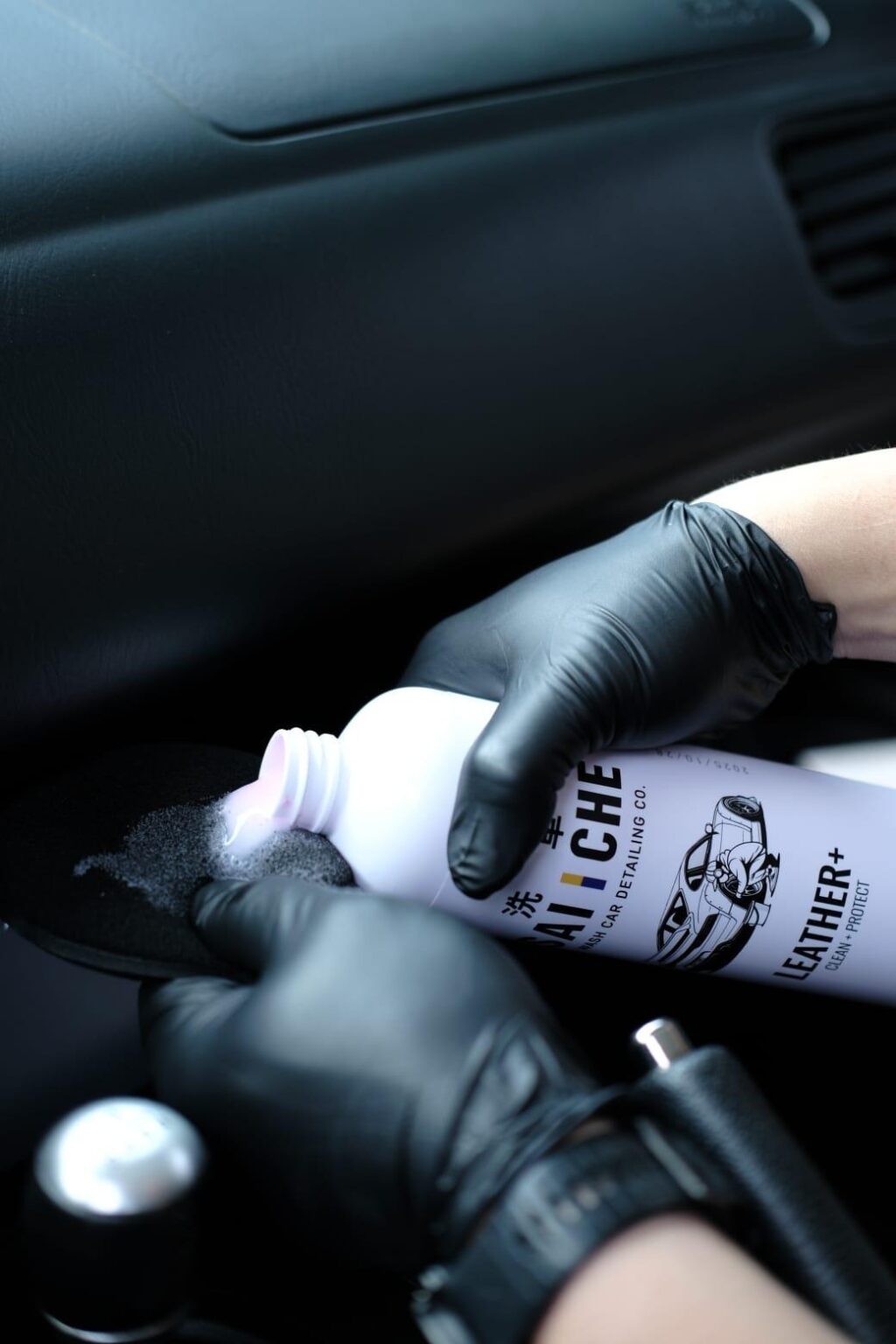
A cleaner formulated specifically for coated automotive leather may help remove body oils and residue without unnecessarily stripping the surface. SAI CHE Leather+ is marketed as a two-in-one clean-and-protect formula. As with any interior product, users with skin or fragrance sensitivities should review the ingredient and safety information and allow treated surfaces to dry fully before prolonged skin contact.
A Routine Built for a Wet Climate
- Wipe down high contact areas like the driver’s bolster weekly rather than monthly
- Buff dry with a separate clean towel instead of letting the seat air dry in damp cabin air
- Avoid parking with windows fully sealed for days at a time, since trapped humidity compounds the issue
- Check seats after particularly wet weeks, since a heavy rain spell often means more buildup than usual
- If you have sensitive skin, asthma, or fragrance sensitivity, choose interior products carefully and ventilate the vehicle during and after cleaning.
This is one of the more detailed breakdowns available on why leather reacts this way, and we’ve laid out the full explanation, including what actually causes the stickiness at a material level, in our article on why does my leather seat feel sticky. It is worth a read if you want the complete picture rather than just the quick fix.
The Payoff of Getting This Right
Regular cleaning and appropriate maintenance can help reduce residue buildup and keep leather surfaces more comfortable to use over time. Seats stay comfortable rather than uncomfortable to sit on during a warm, damp afternoon, and the coating itself lasts longer without the repeated cycle of buildup and stripping that a mismatched cleaner creates.
There is also a seasonal pattern worth watching for. Vancouver’s wettest months, typically late fall through early spring, tend to produce the most noticeable stickiness, since cabin humidity stays elevated for longer stretches without the drying benefit of a hot, dry summer day. Increasing cleaning frequency slightly during these wetter months, even just from every two weeks to once a week, tends to keep the problem from building up in the first place rather than needing to correct it once it is already noticeable.
It is also worth thinking about ventilation on the rare dry, sunny days Vancouver does get. Ventilating the vehicle on dry days can help reduce trapped humidity and allow recently cleaned surfaces to dry more completely. Good ventilation is also useful when using fragranced or chemical cleaning products, particularly for people who are sensitive to odors or airborne irritants. This small habit, combined with a proper cleaning routine, does more to prevent that sticky feeling from returning than either step would accomplish on its own.
Frequently Asked Questions
Is sticky leather more common in coastal cities like Vancouver?
Yes. Higher ambient humidity slows down how quickly body oils and residue evaporate from leather surfaces, which is why the issue tends to show up faster and more persistently in coastal climates.
Will running the air conditioning help reduce the stickiness?
It can help somewhat by reducing cabin humidity during a drive, but it does not remove the oils already on the seat. Regular cleaning with a proper leather formula is still necessary.
Should leather seats be conditioned separately from cleaning?
With a two in one clean and protect formula, a separate conditioning step is generally not needed for routine maintenance, though very worn or older leather may benefit from occasional extra conditioning.
For drivers who are sensitive to residue, odors, or fragranced cleaning products, interior-care choices should balance effective cleaning with comfort and ventilation. Product labels and safety instructions are worth reviewing before routine use.
Can car interior cleaners irritate skin or breathing?
Some cleaning products contain fragrances, solvents, or other ingredients that may bother people with sensitive skin, asthma, or fragrance sensitivity. Follow the product directions, avoid unnecessary overapplication, ventilate the vehicle, and let surfaces dry before prolonged contact.
About the Article Contributor
SAI CHE Detail Co. is a Canadian automotive detailing brand headquartered in Vancouver, British Columbia, offering car care products for washing, decontamination, wheel care, interior cleaning, and vehicle protection to customers across Canada.
Other Articles You May Find of Interest...
- Where Smelling Salts Are Sold and Why They Require Caution
- Why Vancouver’s Humidity Can Make Leather Seats Sticky—and Why Interior Cleanliness Matters
- Comfort Is a Design Decision: How Profile Shape Changes the Way a Ring Wears
- What’s Inside the Smelling Salts on Every Hockey Bench
- What Fresh Flowers Do for a Room (and a Mood), and How to Keep a Bouquet Alive Twice as Long
- Do Bed Bugs Bleed? The Stains on Your Sheets Explained
- How Shared Meals and Interactive Dining Can Create More Meaningful Social Gatherings





