






1350 Connecticut Ave NW
Suite 305
Washington, DC 20036
202-887-5441
More Dental Health Articles
Crestal & Lateral Wall Sinus Lifting for Implants
Ensuring Strong Foundations for Dental Health
Sinus lifting, also known as sinus augmentation, is a surgical procedure that aims to increase the amount of bone in the upper jaw, specifically in the area of the molars and premolars, by lifting the sinus membrane and placing a bone graft. This procedure is essential for patients who do not have enough bone height in the upper jaw for dental implants due to bone loss or the natural anatomy of their sinus cavity. A proper evaluation of the sinus, especially if the patient presents with a history of chronic sinusitis, must be conducted clinically and radiographically to see if one qualifies as a good candidate for this procedure. Xrays and a cone beam CT scan are required with a possible consultation by an ENT.
Crestal Sinus Lift
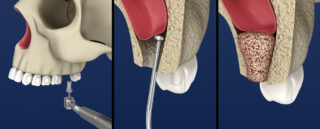
The crestal (or internal) sinus lift is a less invasive technique compared to the lateral wall approach. This method is ideal for patients who require a minor bone augmentation, typically less than 4-5 mm of additional bone height. The procedure begins with a small incision made in the gum tissue where the implant will be placed. A specialized osteotome or drill is then used to carefully create an opening in the bone, through which the sinus membrane is gently elevated. Bone graft material is then inserted through this opening to create the needed bone height and the dental implant is concurrently placed.
Advantages of the crestal sinus lift include a shorter recovery time and reduced surgical trauma. However, it is generally suitable only for cases where minor augmentation is needed.
Lateral Wall Sinus Lift
The lateral wall (or external) sinus lift is a more extensive procedure used for patients needing significant bone augmentation, typically more than 4-5 mm. In this technique, the oral surgeon makes an incision in the gum tissue to expose the lateral wall of the sinus cavity. A small window is then created in this wall, allowing the surgeon to lift the sinus membrane from the bottom. The bone graft material is then packed into the space created between the membrane and the existing bone.
This method allows for a larger volume of bone graft material to be placed, making it suitable for patients with significant bone loss. The recovery period may be longer, and the procedure involves more complexity, but it provides a stable foundation for dental implants in cases where the crestal approach is insufficient.
Importance of Sinus Lifting
Both crestal and lateral wall sinus lifting play crucial roles in dental implantology. They enable patients with inadequate bone structure to receive implants, which are vital for restoring function and aesthetics in edentulous areas. Without adequate bone height, implants cannot be securely placed, leading to potential implant failure.
Postoperative Care and Considerations
After either procedure, patients should follow their dentist’s postoperative care instructions closely to ensure proper healing and integration of the bone graft. This typically includes maintaining good oral hygiene, avoiding activities that could dislodge the graft ( ie, blowing one’s nose, hanging upside down, flying in an airplane, and/or swimming under water for several weeks), and attending follow-up appointments to monitor the progress of healing. Stuffiness of the nose, discomfort, swelling, headache or eye ache on that side of the surgery typically can occur afterwards for a limited amount of time.
Other Articles You May Find of Interest...
- How Clear Aligners Fit Into a Busy Work Schedule
- Overdue for the Dentist? Six Things to Expect
- How to Prevent Gum Disease: 7 Simple Ways to Keep Your Gums Healthy
- NHS vs Private Emergency Dentist
- Helping Kids Feel Better About Going to the Dentist
- Are Porcelain Veneers Suitable for Teenagers? What Parents Should Know
- Missing Teeth and Your Overall Health: What Adults in Woodbridge VA Should Know About Dental Implants




