Your Health Magazine Contributor
4201 Northview Drive
Suite 102
Bowie, MD 20716
More Dental Health Articles
How Long Do Dental Implants Last? Factors That Affect Their Lifespan
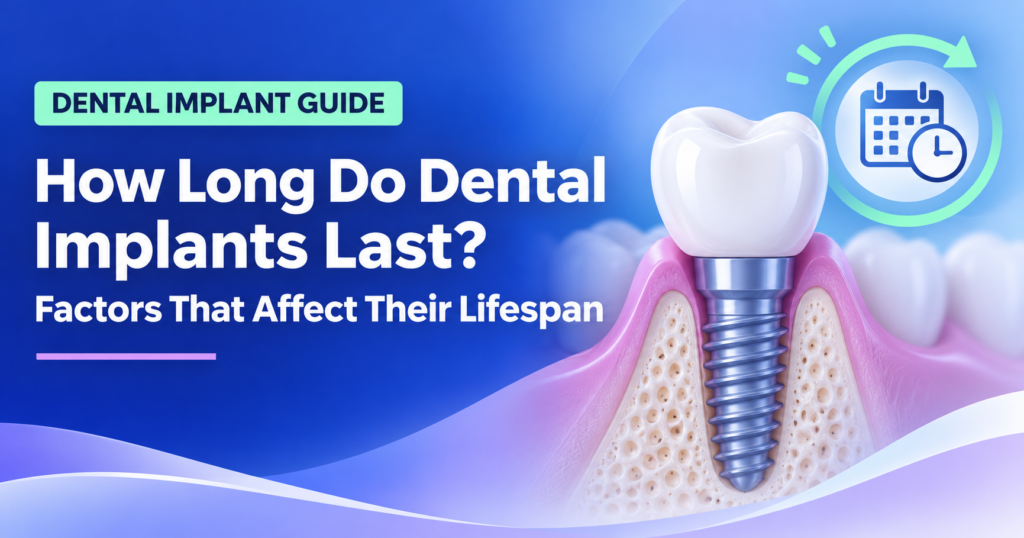
Ask ten people how long a dental implant lasts, and you’ll hear ten different answers, anywhere from “forever” to “about as long as a crown.” Neither is quite right, and the real answer depends on factors you control more than you might think.
If you’re researching dental implants in Tucson, here is the honest version: the titanium implant itself can last 25 years or longer, and in many patients it lasts a lifetime. The crown that sits on top typically needs replacing after 10 to 15 years. Where you land in those ranges depends on bone health, gum care, daily habits, and the skill behind the original placement.
The Quick Answer
- The implant post (the titanium root): commonly 25+ years, often lifelong with good care.
- The abutment (the connector): usually lasts as long as the post, though you may swap it if you replace the crown.
- The crown (the visible tooth): typically 10 to 15 years, sometimes 20, depending on wear.
- Overall success rate: long-term studies generally report implant survival of around 95% or higher at the 10-year mark.
Those numbers are encouraging, but they are averages. They describe a population, not you. The rest of this article explains what moves an individual implant toward the long end of the range, or the short one.
Why an Implant Has Two Different Lifespans
People often talk about “the implant” as if it were one object. It is really three parts working together, and each ages differently.
The titanium post is placed in the jawbone and, over a few months, fuses with it in a process called osseointegration. Once that bond is solid, the post is remarkably durable. Titanium doesn’t decay, and it doesn’t get cavities.
The crown is a different story. It’s made of porcelain or zirconia and takes the same daily punishment as a natural tooth: chewing, grinding, temperature swings, the occasional olive pit. Over time, porcelain can chip, wear thin, or loosen. Replacing a crown is a routine, relatively simple visit. It doesn’t mean the implant failed.
This distinction matters when you’re budgeting. Plan on the post as a one-time investment and the crown as a part you may renew once or twice over the decades.
The Factors That Shape How Long Your Implant Lasts
1. Gum health and peri-implantitis
This is the single biggest long-term threat, and it’s underestimated. Peri-implantitis is an infection and inflammation of the gum and bone around an implant. Research suggests it affects roughly one in five implant patients to some degree. It starts quietly, with bleeding or mild tenderness, and if it’s ignored, it can erode the bone that holds the implant in place.
The good news is that it’s largely preventable. The same plaque that causes gum disease around natural teeth causes it around implants, so the fix is the same: thorough daily cleaning and regular professional care.
2. Bone quality and quantity
An implant is only as stable as the bone around it. If you’ve lived with a missing tooth for years, the bone in that spot has often begun to shrink, because the jaw loses stimulation once the root is gone. Thin or soft bone can still support an implant, but it may call for a bone graft or sinus lift first.
Skipping that step to save time or money is one of the more common reasons implants fail early. A properly built foundation is worth the extra months.
3. Smoking and tobacco
If there is one habit that consistently hurts implant outcomes, it’s smoking. Tobacco restricts blood flow to the gums, slows healing, and raises the risk of both early failure and later bone loss. Studies repeatedly show a meaningfully higher failure rate in smokers compared with non-smokers.
That doesn’t automatically rule anyone out, but it’s a conversation worth having honestly before treatment, not after.
4. Medical conditions and medications
Some health conditions affect how your body heals and holds bone:
- Diabetes that is poorly controlled slows healing and raises infection risk. Well-managed diabetes is generally compatible with successful implants.
- Osteoporosis and certain bone-related medications can affect how the jaw responds to surgery and need to be reviewed beforehand.
- Autoimmune conditions and radiation therapy to the head or neck can also change the picture.
Share your full medical history, including supplements, with your dentist. It isn’t about disqualifying you. It’s about planning around your biology.
5. Teeth grinding and clenching
Bruxism puts heavy, repetitive force on implants. Natural teeth have a tiny cushion of ligament that absorbs some of that pressure, and implants don’t. Over the years, grinding can loosen screws, fracture porcelain, and stress the surrounding bone.
If you wake up with a sore jaw or tension headaches, mention it. A custom night guard is inexpensive protection for an expensive restoration.
6. Placement and restoration quality
Precision counts. The angle, depth, and position of the post, and how well the crown is shaped to distribute bite forces, all influence longevity. A crown that hits too hard on one side will quietly overload the implant for years.
This is where the provider’s experience and the quality of the planning (including 3D imaging to map bone and nerves) make a real difference. Cheaper isn’t automatically worse, but an implant is a procedure where cutting corners rarely stays hidden.
7. Follow-up care
Implants don’t need root canals or fillings, so some patients assume they need no maintenance. That’s the trap. Regular checkups let your dentist measure gum pockets, check bite balance, and catch bone changes on X-rays long before you’d feel anything.
Warning Signs Your Implant Needs Attention
See your dentist promptly, rather than waiting for your next routine visit, if you notice any of these:
- Bleeding, swelling, or redness around the implant
- A persistent bad taste or pus near the gumline
- Gums pulling back so the metal or crown margin shows
- Any wobble or movement in the crown or post
- Pain when biting that doesn’t settle within a few days
Caught early, most of these problems are treatable, often with a deep cleaning, a bite adjustment, or a simple tightening. If caught late, they can lead to bone loss and a much bigger repair.
How to Help Your Implant Last Decades
There’s no secret here, just consistency.
- Brush twice a day and clean between the implant and its neighbors daily. A water flosser or interdental brushes work well for the tight area around the abutment.
- Keep your cleaning and exam schedule, typically every six months, or more often if you have a history of gum disease.
- Don’t use your implant crown as a tool. Opening packaging or cracking ice is how good porcelain ends up chipped.
- Wear a night guard if you grind.
- Quit or cut back on tobacco, even partially, because every reduction helps healing and gum health.
- Manage chronic conditions like diabetes and keep your dentist informed of changes in health or medication.
What to Look for in a Provider
The long-term success of an implant starts well before the surgery. When you’re comparing a Dental Implants Clinic in Tucson, ask a few practical questions. Will they review your bone with 3D imaging before recommending treatment? Will they explain what happens if a graft is needed? Who restores the crown, and what follow-up care is included? How do they handle complications if one arises years later?
A good practice will answer these plainly and won’t rush you toward a quote. You should leave the consultation understanding not just the price, but the plan, the timeline, and the upkeep.
Frequently Asked Questions
Do dental implants last longer than bridges or dentures?
Generally, yes. A traditional bridge often lasts 10 to 15 years, and dentures typically need relining or replacing every 5 to 10 years as the jawbone changes shape. Implants also help preserve bone, which those options can’t do.
Can an implant fail after many years?
Yes, though it’s uncommon. Late failures are usually tied to peri-implantitis, heavy grinding, or major health changes. That’s why ongoing checkups matter even when everything feels fine.
Is replacing an implant crown a big procedure?
No. It’s usually a short visit that involves removing the old crown, checking the post and abutment, and fitting a new crown.
Does age affect how long implants last?
Age alone isn’t the deciding factor. Overall health, bone density, and oral hygiene matter far more. Many patients in their 60s, 70s, and beyond enjoy excellent long-term results.
What happens if an implant does fail?
In many cases, the site can be treated, allowed to heal, and a new implant placed, sometimes with bone grafting. The earlier the problem is spotted, the more options you have.
Final Thoughts
A well-planned, well-placed implant that’s properly cared for can serve you for decades, and the odds improve further when you stay on top of gum health and regular visits. The longevity you get isn’t random. It’s shaped by decisions made before surgery and habits you keep long after.
If you’re considering dental implants or wondering how an existing implant is holding up, consult your dentist about your oral health, expected longevity, maintenance needs, and available treatment options.
Other Articles You May Find of Interest...
- What Your Mouth Is Telling You About Your Health
- Orthodontic Treatment for Teens and Young Adults: What to Know Before You Begin
- How Long Do Dental Implants Last? Factors That Affect Their Lifespan
- Beyond Traditional Dentistry
- Dental Care Choices That Support a Balanced and Healthy Smile
- Itching Inside the Lip: Causes and Relief
- The Long-Term Effects of Untreated Tooth Loss