Your Health Magazine Contributor
4201 Northview Drive
Suite 102
Bowie, MD 20716
More Complementary & Integrative Healthcare Articles
THC Gummies for Pain and Inflammation in 2026: Effects, Safety, and Product Considerations
THC gummies for pain and inflammation are among the most searched hemp-derived products online and also among the most misunderstood. THC is the primary intoxicating cannabinoid in cannabis, and because individual responses to it vary widely, understanding how these edibles behave matters more than chasing the highest potency on the shelf. This guide explains what THC gummies are and what research has been done.
THC Gummies for Pain: Product Comparison Table
The table below summarizes information published by each manufacturer, including labeled cannabinoid content, reported onset and duration ranges, and stated lab-testing information.
| Brand | THC per Serving (as labeled) | Supporting Cannabinoids | Reported Onset | Reported Duration | Lab Tested |
| BudPop | 15 mg Delta-9 | CBC, CBG, CBN (2 mg each) | 45 to 90 min | 6 to 8 hours | Yes |
| Exhale Wellness | 10 mg Delta-9 | CBD (in some variants) | 45 to 90 min | 5 to 7 hours | Yes |
| TRE House | 10 mg Delta-9 | 10 mg full-spectrum CBD | 45 to 90 min | 5 to 7 hours | Yes |
| CBDistillery | 5 mg Delta-9 | 75 mg CBD | 45 to 90 min | 4 to 6 hours | Yes |
| Medterra | 5 mg Delta-9 | 50 mg CBD, plus melatonin | 45 to 90 min | 6 to 8 hours | Yes |
Key Takeaways
- Research on cannabinoids for pain is limited and mostly describes modest, uncertain effects, so realistic expectations matter more than marketing claims.
- Edibles have a delayed, sometimes deceptive onset (commonly 30 to 90 minutes) and a long duration (often 4 to 8 hours), so starting low and waiting before taking more helps avoid over-consumption.
- The cannabinoid blend and per-serving dose shape the experience far more than the brand name, which is why reading the label closely is useful.
- A current, third-party Certificate of Analysis (COA) is one of the most reliable tools for assessing a product’s quality and accuracy.
- Legality is changing. A new total-THC standard is scheduled to take effect on November 12, 2026, and state rules already vary, so verifying current law before buying is essential.
A Closer Look at Common THC Gummies for Pain
The brands below each take a slightly different approach to THC gummies for pain, from potency to the supporting cannabinoids they include. Here’s a closer look at how each one is formulated and what sets it apart.
BudPop: Higher-Potency THC Gummies
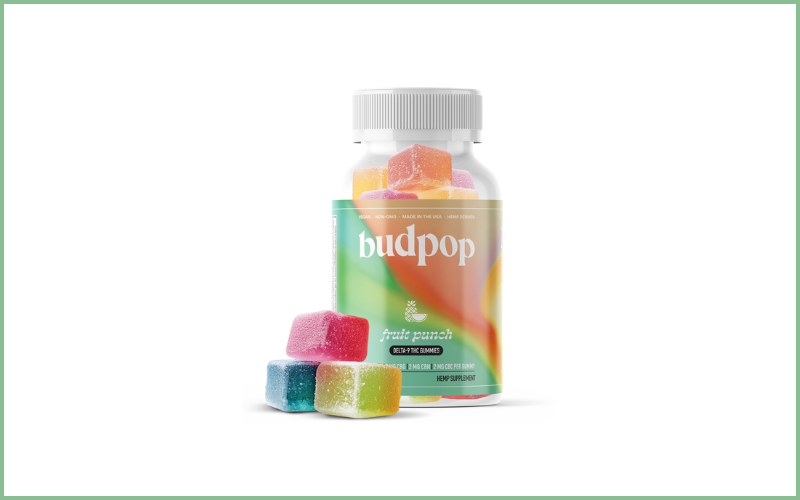
BudPop’s Delta-9 gummies are listed by the brand at 15 mg of Delta-9 THC per piece, paired with 2 mg each of CBC, CBG, and CBN. The brand describes them as full-spectrum and pectin-based, with a batch-specific COA accessible by QR code on each jar.
Pros
- Multi-cannabinoid formula (Delta-9 with CBC, CBG, and CBN), as labeled
- Batch-specific lab report linked on the packaging
- Vegan, pectin-based formulation
Cons
- At 15 mg, a higher per-serving dose that may be strong for new users
- Effects from a full-spectrum, higher-dose gummy can be sedating
Exhale Wellness: THC Gummies For Moderate, Flexible Dosing
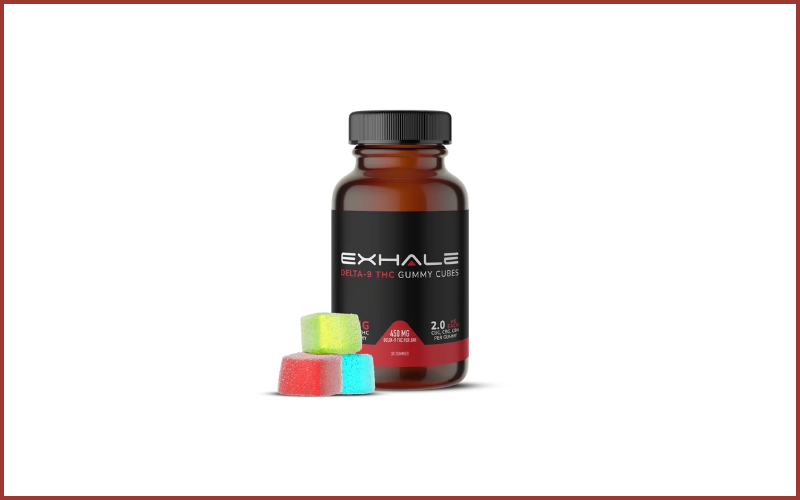
Exhale Wellness’s Delta-9 “cubes” are listed by the brand at 10 mg of Delta-9 THC per piece, with a separate variant that pairs a lower THC amount with CBD. The brand describes the hemp as organic and the formulation as vegan, and says lab reports are published on its website.
Pros
- Moderate 10 mg per-serving dose, as labeled
- Published third-party lab reports
- Vegan formulation with no artificial colors
Cons
- A lower-THC variant may feel mild for some users
- Marketing review counts cannot be independently verified
TRE House: Gummies For Pain With Balanced THC-CBD ratio
The brand lists TRE House’s gummies at 10 mg of Delta-9 THC plus 10 mg of full-spectrum CBD per piece. The brand describes the hemp as US-grown and compliant with the 0.3% Delta-9 standard, makes a COA available, and notes the product does not ship to certain states.
Pros
- Balanced THC-to-CBD ratio, as labeled
- Multiple flavor options
- Published COA
Cons
- Restricted shipping to several states
- Labeled potency may vary slightly from a given batch, as is common in the category
CBDistillery: THC Gummies For CBD-Forward Users
CBDistillery’s Enhanced Relief gummies are listed by the brand at 5 mg of Delta-9 THC and 75 mg of CBD per piece. The brand describes the hemp as Colorado-grown and references US Hemp Authority certification, with COAs available by QR code.
Pros
- CBD-forward, low-THC ratio, as labeled
- Third-party lab testing referenced
- Lower per-serving THC for a milder profile
Cons
- At 5 mg THC, it may feel light for those seeking a stronger effect
- Limited flavor variety
Medterra: THC Gummies Offering Nighttime Relaxation
Medterra’s nighttime gummies are listed by the brand as containing 5 mg of Delta-9 THC, 50 mg of CBD, and added ingredients such as melatonin, intended for evening use. The brand describes the hemp as US-grown and references US Hemp Authority certification.
Pros
- Sleep-oriented formula with added ingredients, as labeled
- Accessible lab reports referenced
- Lower per-serving THC
Cons
- The added melatonin makes it unsuitable for daytime use
- Individual responses to melatonin vary
Heavy Hitters: Gummies for Experienced Consumers
Heavy Hitters describes its gummies as delivering consistent potency and clean effects in an easy-to-enjoy format, aimed at experienced consumers looking for a repeatable edible experience. Its gummies range includes fast-acting options, sleep-oriented products, sugar-free gummies, and formulas featuring cannabinoids such as CBN or THCV. The brand’s category page presents product availability by state, so shoppers should verify local access and read the label before purchasing.
Pros
• Several formats and cannabinoid profiles, including fast-acting, sugar-free, CBN, and THCV options
• Brand emphasizes consistent potency and repeatable effects
Cons
• Availability varies by state
• Designed for experienced consumers, so newcomers should pay close attention to labeled serving guidance
What to Look For in a THC Gummy
Because the hemp market is loosely regulated, applying consistent evaluation criteria is more reliable than trusting marketing claims.
Product Selection Considerations
Products from US-based companies that publish current, publicly available third-party lab reports are generally easier to evaluate. Transparency about hemp sourcing and testing tends to be a useful signal of quality.
Lab Verification
A meaningful COA typically reports cannabinoid potency, screens for heavy metals (such as lead, arsenic, and mercury), and tests for pesticide residues and residual solvents. Confirming that the batch number on the COA matches the product packaging is a simple step that indicates whether a brand tests each batch rather than reusing older reports.
Consistency
Serving sizes should be consistent across a container. Reports of gummies varying in potency within the same bottle warrant caution, since inconsistent dosing makes it harder to find a stable, comfortable dose.
Considerations When Comparing Products
When comparing options, common factors include cannabinoid potency, label accuracy and consistency, lab transparency, company reputation and customer service, the cannabinoid blend, and value per milligram. Weighing these together gives a fuller picture than focusing on any single number.
Common THC Gummy Formulations
Products described as THC gummies for pain differ mainly in potency, cannabinoid blend, and the extract type used to make them. Understanding these categories helps clarify product labels.
Lower-Dose Formulations
Lower-dose products, often around 2.5 to 5 mg of THC per serving, are frequently marketed toward those new to edibles or wanting daytime use. They are generally described as offering a gentler, clearer experience and are easier to titrate. A slower onset is commonly reported, so patience is important before taking more.
Moderate-Dose Formulations
Mid-strength products, often around 10 mg, are typically aimed at users with some THC tolerance who want a more pronounced effect. Onset and duration tend to fall between the lower and higher tiers, and many of these products pair THC with CBD.
Higher-Dose and Multi-Cannabinoid Formulations
Higher-potency products, sometimes 15 mg or more per gummy, often add minor cannabinoids such as CBC, CBG, or CBN. They are generally intended for experienced users and are easy to overconsume, so splitting a gummy is a commonly suggested precaution.
Effects at this level are often described as stronger and longer-lasting, and such products are usually better suited to the evening.
Extract Types
Full-spectrum extract retains a range of cannabinoids, including trace amounts of THC; broad-spectrum retains multiple cannabinoids but removes THC; and isolate is a single, purified cannabinoid.
Many pain-focused products use full-spectrum extract on the theory of the entourage effect, the idea that cannabinoids may work together, which remains a working hypothesis rather than a fact.
What Are THC Gummies for Pain? The Science, Simply
THC gummies for pain offer edible doses of tetrahydrocannabinol that work with your body’s endocannabinoid system to influence how pain and inflammation signals are processed. Because they’re eaten rather than inhaled, they take longer to kick in but tend to produce stronger, longer-lasting, body-focused effects.
- How it works: THC binds to CB1 receptors (concentrated in the brain and nervous system) and CB2 receptors (linked to immune and inflammatory responses), which researchers believe may shape how the body handles pain signals — though the exact mechanisms are still being studied.
- Why edibles feel different: When swallowed, THC passes through the digestive system and liver before reaching the bloodstream, so onset is slower than inhaling.
- The 11-hydroxy-THC effect: The liver converts some THC into 11-hydroxy-THC, a metabolite thought to drive the longer, more body-focused effects edibles are known for.
- Stronger, for longer: This same process is why a gummy can feel more potent and last longer than an inhaled product at a similar dose.
What Research Suggests About THC for Pain and Inflammation
Research on cannabinoids for pain and inflammation remains limited and generally describes modest, uncertain effects. Readers should be cautious of any product or article that presents cannabinoids as a proven treatment.
The National Center for Complementary and Integrative Health summarizes the evidence as suggesting a possible small benefit for some types of chronic pain, while emphasizing uncertainty and side-effect risk. The Agency for Healthcare Research and Quality has published an ongoing review of cannabis and chronic pain that similarly reports small or modest effects for certain pain types, alongside concerns about study quality.
Is THC Legal in the US? (2026 Considerations)
Hemp-derived THC sits in a shifting legal landscape, and federal and state rules do not always align. Under the 2018 Farm Bill, hemp products containing no more than 0.3% Delta-9 THC by dry weight have generally been treated as federally legal, which is the basis that many companies use to sell Delta-9 gummies.
That standard is set to change. According to materials published through Congress.gov, appropriations legislation enacted in late 2025 redefines hemp using a broader “total THC” measure, a change scheduled to take effect on November 12, 2026.
THC vs CBD vs Delta-8: How They Differ for Pain
These cannabinoids interact with the body differently, which helps explain why similar-looking gummies can produce very different experiences. The comparison below describes general tendencies rather than endorsing any option.
| Compound | Intoxicating? | Reported Intensity | Legal Status | Commonly Associated With |
| Delta-9 THC | Yes | Moderate to strong | Federally allowed under hemp rules below 0.3%; varies by state | Stronger, longer effects |
| CBD | No | None (non-intoxicating) | Generally permitted; not FDA-approved as a treatment | Calm, no “high” |
| Delta-8 THC | Yes | Milder than Delta-9 | Grey area; restricted in many states | A gentler effect |
| Full-spectrum blend | Yes (trace to moderate THC) | Varies with dose | Follows the hemp THC threshold | The “entourage” approach |
THC Gummy Effects: What Users Commonly Report
The following describes commonly reported experiences. These accounts are subjective and vary considerably from person to person; they are not guaranteed outcomes.
Mental Effects
Users often describe a sense of relaxation or mild euphoria, and for some, reduced focus on discomfort. Higher doses can produce stronger intoxication, and people prone to anxiety sometimes report overthinking or unease, especially if the dose is misjudged.
Physical Effects
Body relaxation, a sense of eased muscle tension, and, at higher doses, sedation or “couch-lock” are commonly reported. Dry mouth, increased appetite, and red eyes are also frequently mentioned.
Duration
Onset is commonly reported in the range of 30 to 90 minutes, with peak effects often around the two-hour mark and total duration roughly 4 to 8 hours, depending on dose, metabolism, and whether the gummy was taken with food.
Variability
Responses depend heavily on tolerance and body chemistry. The same dose that feels mild to a frequent user can feel overwhelming to an occasional one, which is a key reason starting low is widely recommended.
THC Gummy Dosage and Safety Considerations
Because edibles are easy to overconsume, conservative dosing is important. The ranges below are general guidance, not a prescription, and a healthcare professional can give advice suited to your situation.
| Experience Level | Suggested Starting Dose | Cautious Single-Dose Ceiling | Frequency Note |
| New to edibles | 2.5 mg | 5 mg | Infrequent use |
| Some THC tolerance | 5 mg | 10 mg | Occasional use |
| Higher tolerance | 10 mg | 15 mg+ | Use mindfully |
A common approach is to start with half a gummy or a low-dose product and wait at least 90 minutes before considering more, since edibles can have a delayed onset, leading people to take additional doses too soon. Combining THC with alcohol is widely advised against, as it can intensify effects. Avoid driving or operating machinery for several hours after taking an edible, even if you feel fine.
Side Effects and Who Should Be Cautious
Commonly reported side effects include dry mouth, drowsiness, increased appetite, and dizziness. Higher doses can trigger anxiety, a faster heart rate, or impaired coordination that lasts several hours. The U.S. Food and Drug Administration notes that most cannabis-derived consumer products are not FDA-approved and that their safety, dosing, and quality are not federally evaluated.
Groups for whom caution or avoidance is generally advised include:
- Anyone pregnant or breastfeeding
- Anyone under the legal age (commonly 21)
- People with a history of psychosis, significant anxiety, or panic disorders
- People with heart conditions or high blood pressure, given the reported increases in heart rate
- People taking sedatives, blood thinners, or psychiatric medications without a healthcare provider’s guidance.
- Anyone subject to workplace drug testing, since THC can be detected well after use
THC products are not approved to treat, cure, or prevent any medical condition, including pain or inflammation. Consult a qualified healthcare professional before using cannabinoid products, especially if you take medication or have a health condition.
How to Evaluate THC Gummies
Because potency and quality vary across the market, careful product selection helps reduce the risk of buying poorly tested or mislabeled products.
COA Verification
Look for third-party lab reports showing cannabinoid potency, heavy metals, pesticides, and residual solvents, and confirm that the batch number on the COA matches the one on the product packaging.
Hemp Source
Products made from US-grown hemp with disclosed sourcing are generally easier to assess. Organic certification can be a plus, but it is not essential.
Extract Type and Method
Full-spectrum, broad-spectrum, and isolated behave differently, so the label should state which is used. CO2 extraction is often described as a clean approach; when other methods are used, residual-solvent testing on the COA is worth confirming.
Dosage Labeling
Clear per-serving cannabinoid amounts and consistent servings across a container are important. Vague “blends” without amounts, or inconsistent potency within a bottle, are meaningful warning signs.
Company Transparency
Accessible customer service, clear contact information, and a willingness to answer questions about sourcing and testing are reasonable signals of a legitimate company.
FAQs About THC Gummies for Pain
How long do THC gummies take to work?
Edibles are slower than inhaled products. Onset is commonly reported in the 30- to 90-minute range, and effects can last several hours, depending on the dose, the person, and whether the gummy was taken with food. This delay is why waiting before taking on more matters is necessary.
How much THC is in a typical gummy?
Per-serving THC commonly ranges from about 2.5 mg to 15 mg or more, and products differ widely. People new to edibles generally start at the low end. Always confirm the dose on the label and the matching lab report, since potency can vary between batches.
Will THC gummies show up on a drug test?
Yes, they can. THC and its metabolites can be detected on standard drug tests for a period of time after use, sometimes well after the effects have worn off. Anyone subject to testing should avoid THC products.
Are THC gummies a proven treatment for pain?
No. Research on cannabinoids and pain is limited, and reviews describe any benefit as modest and uncertain. THC gummies are consumer wellness products, not approved medical treatments, and they are not a substitute for care from a qualified clinician.
What is the difference between full-spectrum and broad-spectrum gummies?
Full-spectrum extract retains a range of cannabinoids and trace compounds, including a small amount of THC. Broad-spectrum retains multiple cannabinoids but is processed to remove THC. The choice affects the cannabinoid profile and, for some people, whether a product is suitable given drug-testing concerns.
Can THC gummies be combined with other pain approaches or medications?
Possibly, but only with professional guidance. THC can interact with certain medications, including sedatives and blood thinners. Anyone using prescription drugs or managing a health condition should speak with a healthcare provider before combining products.
Final Thoughts
THC gummies for pain and inflammation are widely available and heavily marketed, but the most useful takeaways for a consumer are about evaluation, not endorsement. Understanding the cannabinoids and extract types, reading the certificate of analysis, matching the dose to your experience level, and confirming the legal status for your state, especially with the total-THC standard arriving in November 2026, all matter more than any single product claim.
Keep expectations grounded. The research on cannabinoids and pain points to modest, uncertain effects rather than guaranteed relief, and individual responses vary. Anyone weighing THC gummies for pain and inflammation should treat it as one topic to raise with a qualified healthcare professional, who can account for personal health history, medications, and goals.
Disclaimer: This article is for informational and educational purposes only and does not constitute medical or legal advice. THC and hemp-derived products are not intended to diagnose, treat, cure, or prevent any disease or condition, including pain or inflammation. Statements about products reflect manufacturer claims that Your Health Magazine has not independently verified. Cannabis and hemp laws vary by state and country and are subject to change; products discussed may not be legal in your jurisdiction. Verify current local laws before purchasing. These products are intended for adults of legal age, which varies by jurisdiction. Consult a qualified healthcare professional before using any cannabinoid product, especially if you are pregnant or nursing, take medication, or have a medical condition.
Other Articles You May Find of Interest...
- Retreat in the Nepal Can Do More for Your Stress Than Another Vacation
- Could Mykonos After August Be an Ideal Base for a Wellness Retreat?
- Never Tried Sound Healing? Expert Reveals The Five Things Every Beginner Should Know Before Their First Session
- What Actually Happens in a Yagé Ceremony
- Understanding Pressure and Safety in Hyperbaric Therapy
- How to Support Your Immune System Naturally in Everyday Life
- Chinese Medicine and Western Medicine: Different Questions