Your Health Magazine Contributor
4201 Northview Drive
Suite 102
Bowie, MD 20716
More Dental Health Articles
What Goes Into Developing an Alcohol-Free Mouthwash Beyond the Ingredient List
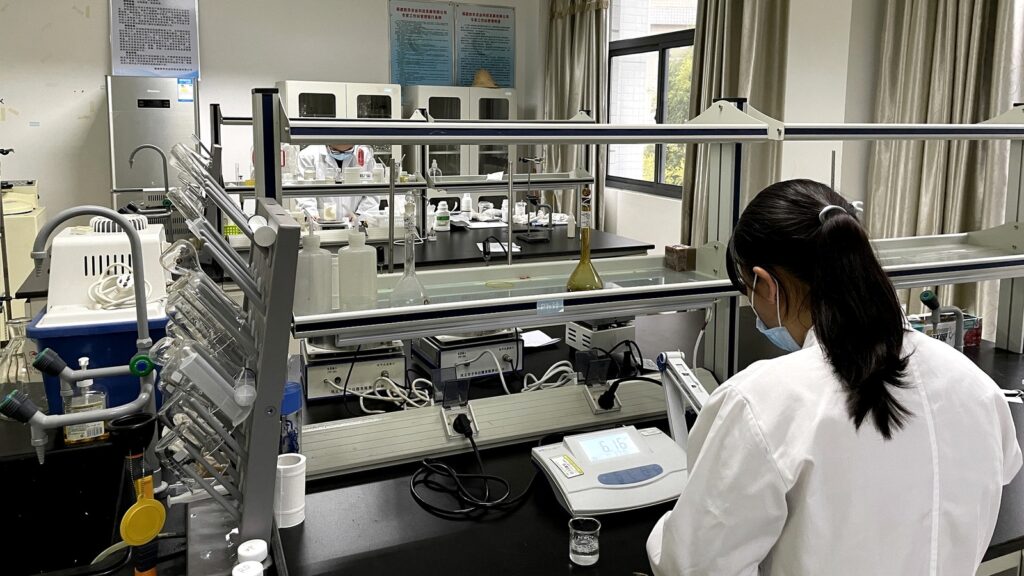
Formulation and pH checks during oral-care development.
The first issue is sensory balance. Alcohol can affect how a mouthwash feels, so an alcohol-free system needs its own balance of flavour, sweetness, cooling and aftertaste. A strong mint note may feel fresh for one user and too sharp for another. More cooling does not always mean a better product. During sample work, it helps to separate these points instead of giving one general comment such as “make it fresher.”
pH is another basic control point. A mouthwash contains several ingredients working in one liquid system. When the formula changes, the team needs to check whether the ingredients still remain compatible and whether the product stays clear and physically stable. The target pH also has to fit the formula and the intended product positioning. It should not be treated as an isolated number.
Stability work starts after the first attractive sample, not before it. A prototype may look good on day one and still need observation. Colour can shift. Sediment can appear. Aroma can change. A botanical material may behave differently after storage. A clear formula may become hazy. These are normal development questions. They are the reason a laboratory sample and a production-ready formula are not the same thing.
Preservation also has to be considered as part of the complete system. The exact approach depends on the formula, its pH, ingredients, packaging and intended market. If one of those elements changes, the preservation strategy may need to be reviewed as well. This is one reason manufacturers should avoid treating a formula as a collection of independent ingredients.
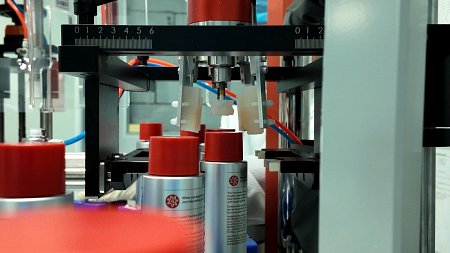
Automated capping during commercial mouthwash production at the Xiamen facility.
Packaging enters the discussion early. Bottle material, closure, liner and dispensing format can affect how the product performs in daily use. A mouthwash that is stable in a laboratory container still has to work in its commercial pack. If a brand wants an unusual bottle or a single-dose format, filling feasibility and packaging compatibility need to be checked before the project is considered ready.
The practical development sequence is usually straightforward. First, the brand brief is translated into a workable formula direction. Then prototype versions are made and compared. Sensory feedback is separated from technical feedback. The selected version is observed for stability and compatibility. Packaging and filling conditions are confirmed. Artwork and commercial specifications follow after the main technical decisions are settled.
This sequence can save time because it prevents late changes from reopening work that was already considered finished. For example, changing a bottle after the formula has been approved may create a new compatibility question. Changing a flavour oil late in the project may require another look at clarity or solubility. Small changes are not always difficult, but they should be made with a clear reason.
Consumers usually never see this work. They simply notice whether the mouthwash feels balanced, looks stable, pours cleanly and gives a consistent experience each time. That is the point. Good manufacturing work should disappear into the finished product.
For brands, the main lesson is simple: “alcohol-free” is a product direction, not a complete formulation brief. The final result depends on the whole system – flavour, pH, ingredient compatibility, stability, packaging and production control. A successful first sample proves that the idea can work. Commercial development proves that it can be made again and again.
One more point is consistency at filling. The formula must not only pass laboratory checks; it must also move through the production process cleanly and give the same appearance and user experience across the batch. This is where simple production controls become important.
Manufacturing perspective: Peter Xie works with ORALABX mouthwash manufacturing
Other Articles You May Find of Interest...
- What Goes Into Developing an Alcohol-Free Mouthwash Beyond the Ingredient List
- 6 Best Dentist Options in Reston, Virginia for Family, Cosmetic, and Emergency Care
- Why Comprehensive Dental Care Matters at Every Stage of Life
- Why Preventive Dental Care Matters at Every Stage of Life
- Colored Braces: A Practical Guide for Teens and Parents in the UAE
- Brushing Teeth for Kids: Secrets to Making Healthy Habits Actually Stick
- Why Preventive Dental Care Matters More Than Most People Realize