Your Health Magazine Contributor
4201 Northview Drive
Suite 102
Bowie, MD 20716
More Health Industry Insights Articles
How Digital Front Doors Reduce Patient Wait Times
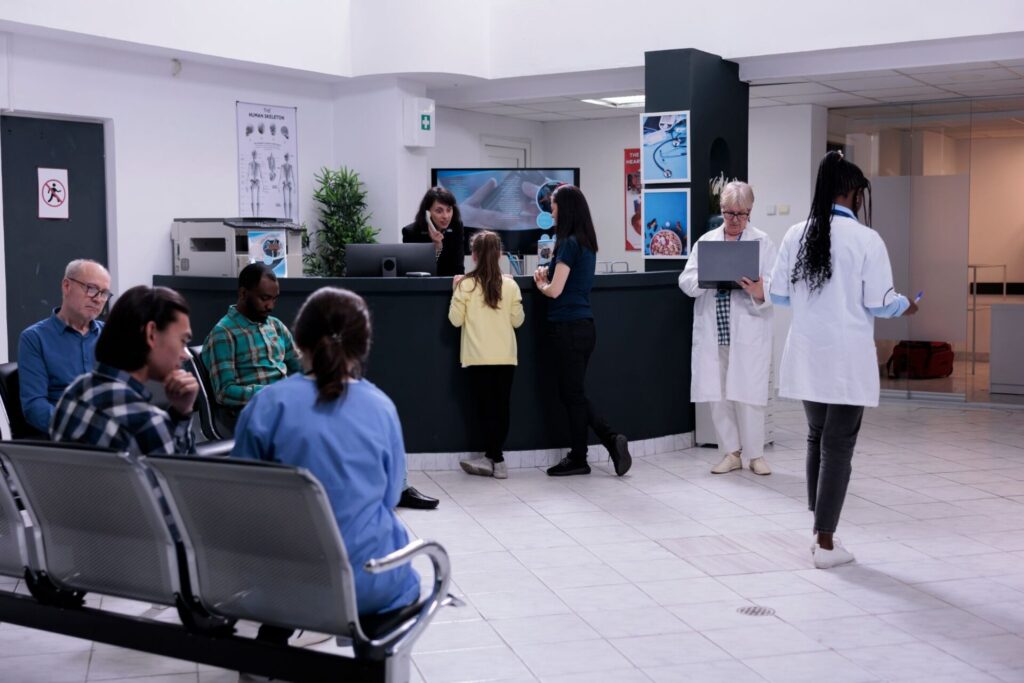
Every minute a patient spends waiting is a minute that erodes trust, strains staff, and quietly drains revenue. Yet across hospitals, labs, and clinics, waiting has become the default experience—weeks to secure an appointment, then more time lost in a crowded lobby. The digital front door flips this reality on its head. By unifying online booking, self-check-in, intelligent queuing, and real-time data into one connected journey, healthcare organizations can finally move patients through faster, recover lost capacity, and deliver the kind of access modern patients expect.
The Wait Time Crisis Is Costing More Than Time
The numbers paint a sobering picture. New-patient appointment wait times have climbed significantly in recent years. Once patients finally arrive, satisfaction can begin dropping sharply after spending too long in the waiting room.
The financial toll is significant. Patient no-shows place a substantial financial burden on the U.S. healthcare system, with every missed appointment resulting in lost revenue and wasted resources. Worse still, many patients report skipping care entirely because scheduling was too much of a hassle.
These are not isolated inconveniences—they represent a systemic breakdown in how patients access care. Platforms such as TSB HealthCare combine tools such as online booking, check-in, queue management, and patient-flow analytics within a connected system.
What Is a Digital Front Door in Healthcare?
A digital front door is the connected set of online tools patients use to find, book, and check in for care—everything from self-scheduling and automated reminders to arrival kiosks and live queue updates. Behind that front door sits an engine that keeps patients moving and gives leaders visibility into every step.
The demand is undeniable. 89% of patients say the ability to schedule appointments anytime via online or mobile tools is important to them. But provider capabilities haven’t caught up. Many providers still do not offer self-scheduling, leaving a gap between what patients expect and what practices deliver. This is exactly where organizations lose bookings, revenue, and loyalty.
How Smart Patient Scheduling Eliminates the First Bottleneck
The patient journey breaks down before anyone sets foot in a clinic. Phone-only booking means patients can only reach you during office hours, while many patients now prefer to schedule appointments outside traditional office hours. Millennials and Gen Z are leading this shift toward more flexible booking options.
Effective patient scheduling addresses this head-on with 24/7 self-service booking. Self-scheduling tools can help reduce patient no-shows, while long waits for initial appointments can increase the risk of cancellations and lost patients. By letting patients search every location at once for the soonest available slot, a digital front door removes friction at the exact moment patients are most likely to give up and go elsewhere.
Self Check-In Kiosks and Queue Management Transform the In-Clinic Experience
Booking is only half the battle. The lobby is where perception hardens. When patients wait longer than expected, they rarely distinguish between administrative, clinical, or provider delay—they simply feel the wait, and their satisfaction plummets.
Self check-in kiosks let patients register on arrival and join a live queue in seconds, clearing the front-desk line that used to wrap around the lobby by mid-morning. Paired with intelligent queue management, booked patients, walk-ins, and reserved slots blend into one fair, dynamically sequenced queue. Cancellations get automatically refilled, protecting revenue and clearing the waiting room. A virtual waiting room approach resonates with patients too. Real-world deployments show that virtual waiting rooms can significantly reduce check-in times and help lower no-show rates.
Healthcare Analytics: The Intelligence Behind Continuous Improvement
You can’t fix bottlenecks you can’t see. This is where healthcare analytics becomes the engine of lasting change. Live dashboards revealing utilization rates, wait times, and no-show recovery across every site turn guesswork into strategy—showing leaders exactly where the day slows down and why.
The results validate the approach. An MGMA snapshot found that 77% of practice leaders reported wait times improved or stayed the same in 2024, while the same report discussed strategies such as schedule redesign and updated systems for improving patient access. Similarly, a Mayo Clinic study of an automated waitlist system moved 24.6% of waitlisted appointments earlier, advancing visits by 22 to 23 days on average—without adding a single provider. Strong patient flow management doesn’t just react to problems; it uses every data point to make tomorrow more efficient than today.
From Single Clinic to Health Authority
The beauty of a unified digital front door is that it scales. Whether you are running a single lab or a province- or state-wide program, one connected platform delivers local control alongside a shared, organization-wide view. Every touchpoint—book, remind, check in, queue, serve, and analyze—is tracked and linked, so patients always know what’s next and administrators always know where the day stands. That end-to-end visibility is the foundation of effective medical practice management, turning fragmented systems into a single source of truth.
Reimagine Patient Access Today
Long waits can reduce patient satisfaction, contribute to lost appointments, and create avoidable operational and financial costs for healthcare organizations. But these delays are not fixed constraints—they respond to intentional strategy and the right technology. By combining smart scheduling, self-service check-in, dynamic queuing, and powerful analytics, a digital front door transforms patient access from a persistent pain point into a genuine competitive advantage.
Other Articles You May Find of Interest...
- How Digital Front Doors Reduce Patient Wait Times
- How Does an AI Medical Scribe Work During a Patient Visit?
- Magnesium Glycinate: What Supplement Labels Don’t Tell You
- How RPM Programs Are Helping Manage the Opioid Crisis
- What Is SD-WAN and How Does It Work for Healthcare Networking Teams?
- How Boutique Healthcare Consulting Firms Are Filling a Critical Compliance Gap
- 5 EHR Capabilities That Make Clinical Data Exchange Faster and Simpler