Your Health Magazine Contributor
4201 Northview Drive
Suite 102
Bowie, MD 20716
More Health Industry Insights Articles
Magnesium Glycinate: What Supplement Labels Don’t Tell You
How to compare elemental magnesium, understand buffered ingredients, and ask better questions about capsules, gummies and functional drinks.
Magnesium glycinate and magnesium bisglycinate commonly refer to the same ingredient: magnesium coordinated with two glycine molecules. But products carrying the name can use different ingredient compositions. A fully reacted chelate, a buffered blend containing another magnesium source, and a physical mixture of magnesium salts and glycine are not chemically identical. Understanding those differences helps explain why serving sizes vary and why a capsule and a magnesium drink may need different formulations.
For someone comparing supplements, the starting point is the Supplement Facts panel. For the brand making the product, it is the specification of the ingredient behind that panel.
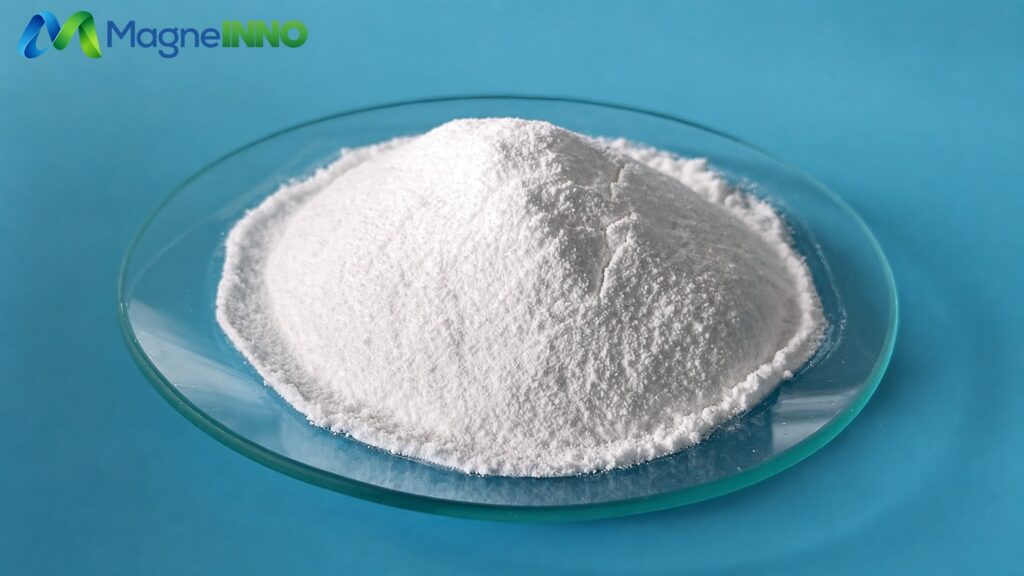
What do fully reacted and buffered mean?
In a fully reacted magnesium bisglycinate ingredient, magnesium and glycine have formed the intended chelate. Simply mixing a magnesium salt with glycine does not establish that the same chemical structure has formed.
Within this ingredient category, “buffered” commonly describes magnesium bisglycinate combined with another magnesium source, often magnesium oxide. Adding oxide can increase the material’s elemental magnesium percentage. “Non-buffered” or “unbuffered” indicates that another magnesium salt has not been added for that purpose.
| Ingredient description | What it describes | What needs clarification |
|---|---|---|
| Fully reacted, non-buffered bisglycinate | A reacted magnesium-glycine chelate without an added magnesium salt used to raise magnesium content | Complete composition, elemental magnesium and evidence of identity |
| Buffered bisglycinate | Bisglycinate combined with another magnesium source, commonly oxide | Which sources are present and their proportions |
| Physical blend of magnesium salt and glycine | Ingredients mixed together without necessarily forming the intended chelate | Whether reaction and chelation have actually been demonstrated |
These terms describe composition. They do not, on their own, establish that one finished product will produce better health outcomes. A buffered product can be a deliberate formulation choice; buyers should be able to understand what it contains.
Elemental magnesium is different from ingredient weight
The NIH Office of Dietary Supplements explains that the magnesium amount on a Supplement Facts panel represents elemental magnesium, rather than the total weight of the compound supplying it.
Consider an ingredient containing 12% elemental magnesium. A 1,000 mg quantity supplies 120 mg of magnesium. At 10%, the same ingredient weight supplies 100 mg; at 8%, it supplies 80 mg. These are examples of label arithmetic, not suggested doses.
A 12% magnesium figure does not mean that the remaining 88% is contamination. Glycine contributes much of the weight of magnesium bisglycinate. Water content and other declared components can also affect the percentage in a commercial material. Elemental magnesium content and ingredient purity answer different questions.
For the pure, anhydrous compound, the theoretical magnesium fraction is approximately 14.1%, calculated from the molecular formula and molecular weight listed in PubChem’s magnesium glycinate record. Commercial grades may have lower percentages depending on their composition. A percentage alone cannot verify chelation or explain why a particular grade has that value.
When comparing bottles, check the serving size as well. A label declaring 200 mg per two-capsule serving provides 100 mg per capsule. Comparing that with a one-capsule serving without adjusting the numbers can make two products seem more different than they are.
Why capsules, gummies and drinks need different ingredients
The amount of raw material required affects the space available in a finished product. To supply 100 mg of elemental magnesium, a formulator needs approximately 833 mg of a 12% material, 1,000 mg of a 10% material or 1,250 mg of an 8% material, before adding other ingredients. This helps explain why a magnesium serving may require several capsules or a larger scoop of powder.
For powders and stick packs, a useful evaluation includes taste and mixing instructions. Does the powder disperse when stirred in cold water? Does it leave an unpleasant aftertaste? Brands should assess those questions in the finished blend, including its flavors, sweeteners and other nutrients.
Gummies introduce a different set of design choices. Developers have to accommodate the mineral within a product that people expect to taste pleasant and have a consistent texture. A capsule specification cannot establish how that ingredient will behave in a gummy recipe.
Functional beverages need testing in the actual drink. Acidity, other ingredients, processing and storage conditions belong in that assessment. The team should check dissolution, appearance, taste and sediment over the intended shelf life. A clear solution in a supplier’s demonstration is useful background, but it does not establish that every finished beverage will remain clear.
For consumers, these differences explain why a higher magnesium percentage is not a complete product comparison. For brands, they explain why ingredient selection should start with the intended serving and format.
What documentation can tell you
A technical specification describes the requirements an ingredient should meet. A certificate of analysis, or COA, reports results for an identified batch. Readers should distinguish both from testing of the finished supplement or beverage.
For supplement and beverage teams evaluating an ingredient, useful documents include:
- A current specification identifying the grade and full composition.
- A COA tied to the supplied lot, including elemental magnesium results and test methods.
- Identity data supporting the stated ingredient form.
- Heavy-metal and microbiological results, with units and acceptance limits.
- Moisture, storage and shelf-life information.
- Relevant allergen statements and records connecting the ingredient to its source and batch.
An ingredient COA supports raw-material review. Finished-product testing still needs to address the complete formula. Consumers can ask whether a published report covers the product they are buying or only one of its ingredients.
An example of ingredient transparency
MagneINNO™ is a B2B magnesium bisglycinate ingredient brand operated by NutraINNO USA Inc., serving supplement brands, contract manufacturers and functional beverage companies. Its magnesium bisglycinate grades and product documentation describe fully reacted, non-buffered material, approximately 12%, 10% and 8% elemental magnesium grades, and lot-specific COAs. The company positions those grades for capsules and tablets, powders and stick packs, and gummies and beverages, respectively, with U.S. supply supported by California inventory.
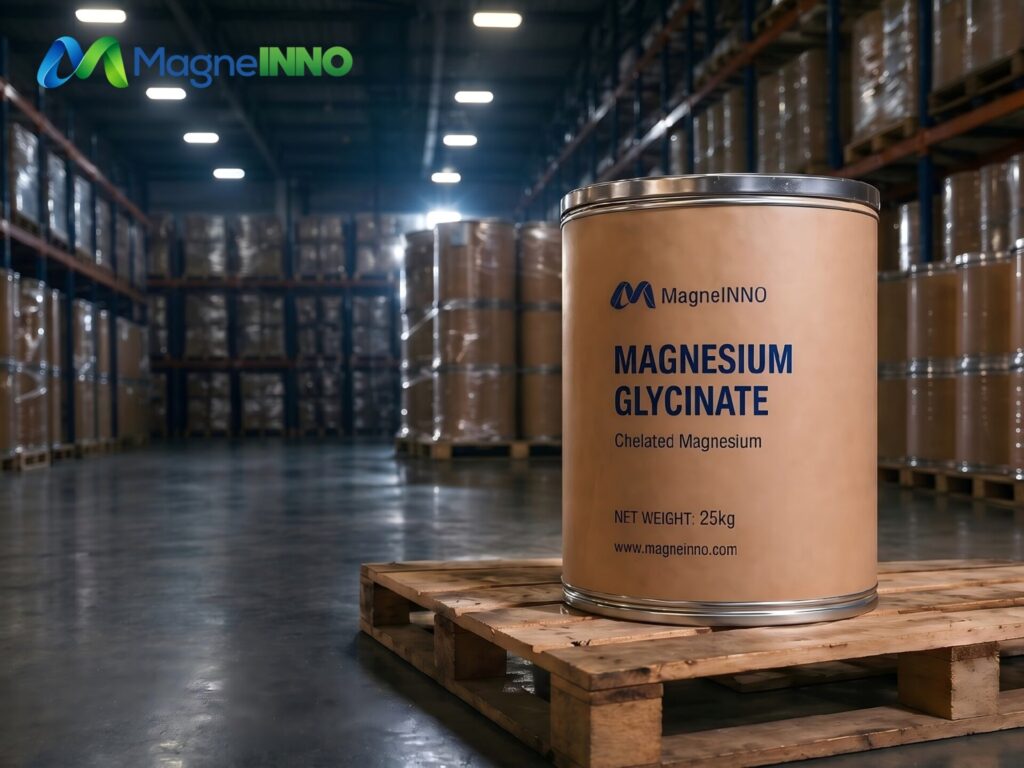
This gives a product developer specific information to check against a formulation brief. The next step is to request current documents for the selected grade and test it in the intended product. Published ingredient information supports that work; it does not establish clinical benefits for a finished supplement.
When comparing magnesium products, start with the magnesium source, the elemental amount per serving and the number of capsules, gummies or scoops in that serving. Then look for a brand that can explain its ingredient composition and testing. Those details make it easier to understand what you are buying and to compare products on the same basis.
Other Articles You May Find of Interest...
- Perfume Manufacturing: Quality Control, Regulatory Standards, and Skin Safety
- Why Wellness Brands Package Gift Sets in Lid-and-Base Boxes
- How to Choose a Pharmaceutical Products Manufacturer: A Practical Checklist for Buyers
- How Digital Front Doors Reduce Patient Wait Times
- Magnesium Glycinate: What Supplement Labels Don’t Tell You
- How RPM Programs Are Helping Manage the Opioid Crisis
- What Is SD-WAN and How Does It Work for Healthcare Networking Teams?