






More Vascular Health Articles
Black or Purple Skin Discoloration: Bruise, Blood Flow, or Emergency?
By Your Health Magazine Health Information Team
You notice a dark purple patch on your leg after bumping into a table and assume it is a bruise. But what if there was no injury—or the area is cold, numb, spreading, or turning black? If you are searching for answers about black purple skin discoloration, the most important clues are how quickly it appeared, where it is located, whether it hurts, and what other symptoms are present.
Many color changes are harmless and temporary. Others may signal reduced blood flow, low blood oxygen, bleeding beneath the skin, infection, tissue damage, or an abnormal skin growth. Color alone cannot identify the cause, especially because changes may look different across skin tones.
When It Is Probably a Bruise
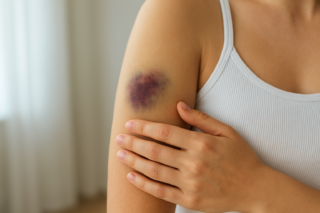
A bruise forms when an impact damages small blood vessels without breaking the skin. Blood leaks into nearby tissue, producing a tender patch that may look red, blue, purple, brown, or almost black. As the body clears the trapped blood, the bruise may fade through green or yellow shades.
A typical bruise usually:
- Appears after a bump, fall, injection, blood draw, or other minor injury
- Feels mildly tender or swollen at first
- Changes color and gradually becomes lighter
- Improves over approximately two weeks, although larger or deeper bruises can last longer
For a recent minor bruise, protecting the area, elevating it when practical, and using a cold pack wrapped in cloth may reduce discomfort and swelling. Ice should not be placed directly on the skin.
Medical evaluation may be appropriate when bruises repeatedly appear without a known cause, become unusually large, do not improve, or occur with frequent nosebleeds, bleeding gums, blood in urine or stool, or unusually heavy menstrual bleeding. Certain illnesses and medications can increase bruising, so do not stop a prescribed medicine without speaking with the clinician who manages it.
Purple Skin Can Reflect Blood Flow or Oxygen Problems
Skin may look blue or purple when blood is not carrying enough oxygen or when circulation through an area is reduced. This change is called cyanosis. On darker skin, it may appear gray, pale, or whitish rather than distinctly blue. Changes may be easier to recognize on the lips, tongue, gums, nail beds, palms, soles, or skin around the eyes.
Cold exposure can temporarily narrow surface blood vessels. Fingers and toes may look pale, blue, or purple and feel cold or numb before returning to their usual color after gentle warming. Raynaud phenomenon can cause similar episodes in response to cold temperatures or emotional stress. Repeated attacks, painful episodes, sores, or color that does not return to normal deserve medical attention.
Persistent circulation symptoms may also occur with peripheral artery disease, which limits blood flow to the legs or feet. Possible warning signs include pain or cramping during walking, one foot feeling colder than the other, slow-healing sores, reduced hair growth on the legs, and pale or blue discoloration. Because blood-vessel function can affect circulation, readers may also find this discussion of nitric oxide side effects and health useful. Supplements should not be used to self-treat unexplained skin discoloration.
Sudden Color Change in One Limb Is an Emergency
A sudden blockage of an artery can sharply reduce blood flow to an arm, leg, hand, or foot. This is known as acute limb ischemia, and treatment is time-sensitive. The affected area may initially look pale or bluish and can become darker as tissue is injured.
Call 911 for a sudden skin color change in one limb accompanied by:
- Severe pain, including pain while resting
- Coldness compared with the opposite side
- Numbness, tingling, or loss of sensation
- Weakness or inability to move the limb
- A weak or absent pulse
Do not wait to see whether these symptoms improve. Rapid evaluation may be necessary to restore blood flow and prevent permanent damage.
When Black Skin May Mean Tissue Damage
Skin that turns truly black—particularly around a wound, toe, finger, or pressure area—can represent tissue death, or gangrene. This can occur when blood supply is severely reduced, after a major injury, or when an infection damages tissue. People with diabetes, peripheral artery disease, reduced sensation, or impaired immune function may have greater risk.
Concerning features include worsening pain followed by numbness, swelling, blisters, a nonhealing sore, foul-smelling drainage, fever, or rapidly spreading discoloration. Black tissue is not a normal stage of an ordinary bruise and requires urgent medical assessment. A black or foul-smelling foot wound in someone with diabetes is especially concerning.
Could a Dark Spot Be Skin Cancer?
A dark mole or patch that stays in the same place and slowly changes is different from a bruise that fades. Melanoma and other skin cancers can appear brown, black, blue, purple, red, or mixed in color. They may develop on sun-exposed skin, but they can also occur on the palms, soles, scalp, between the toes, or beneath a nail.
Have a clinician or dermatologist examine a spot that shows one or more of the ABCDE warning signs:
- Asymmetry: one half does not resemble the other
- Border: edges are irregular, blurred, or jagged
- Color: several colors or uneven shades appear within one spot
- Diameter: the spot is relatively large, although melanoma can be smaller than a pencil eraser
- Evolving: it changes in size, shape, color, elevation, or symptoms
A growth that bleeds, itches, becomes painful, fails to heal, or looks noticeably different from your other spots also warrants attention. The MedlinePlus overview of skin cancer provides additional general information about common types and warning signs.
How to Assess a New Dark Area
When discoloration appears, note when it started and whether there was an injury, cold exposure, tight clothing, prolonged pressure, or a recent procedure. Compare the temperature and sensation with the opposite side of the body. Watch for swelling, drainage, breathing difficulty, fever, or rapid expansion.
Taking a clear photograph in consistent lighting can help document whether the area is fading or changing. However, photographs, online images, and color descriptions cannot replace an examination. Lighting and natural skin pigmentation can significantly alter how a mark appears.
When to Seek Care
Call 911 for blue or purple lips or skin with trouble breathing, chest pain, confusion, fainting, severe weakness, or inability to speak normally because of shortness of breath. Emergency care is also appropriate for a suddenly painful, cold, numb, weak, pale, or blue limb.
Seek urgent medical evaluation for skin that is turning black, a rapidly spreading dark area, foul-smelling drainage, fever with a wound, or severe unexplained pain. Contact a primary care clinician for unexplained or recurring bruising, persistent finger or toe color changes, slow-healing sores, or a dark spot that is evolving. Depending on the findings, care may involve a dermatologist, vascular specialist, hematologist, rheumatologist, podiatrist, or emergency physician.
Most bruises improve naturally, but black or purple skin should not automatically be dismissed. The pattern, timing, temperature, sensation, and accompanying symptoms can help distinguish a routine bruise from a circulation or oxygen emergency.
Other Articles You May Find of Interest...
- Black or Purple Skin Discoloration: Bruise, Blood Flow, or Emergency?
- Should You Exercise With a DVT? Movement and Safety
- Blood Clots in Pictures: What to Look For
- Venous Reflux: What It Is, Why It Happens, and What to Do About It
- Exploring the Anatomy and Functions of the Frontal Section of the Head
- Exploring the Fascinating Functions of Human Body Organs
- Can a 5 Day Juice Fast Lead to Effective Weight Loss?



