






Your Health Magazine Contributor
4201 Northview Drive
Suite 102
Bowie, MD 20716
More Disability Articles
How Community Participation Builds Confidence & Independence
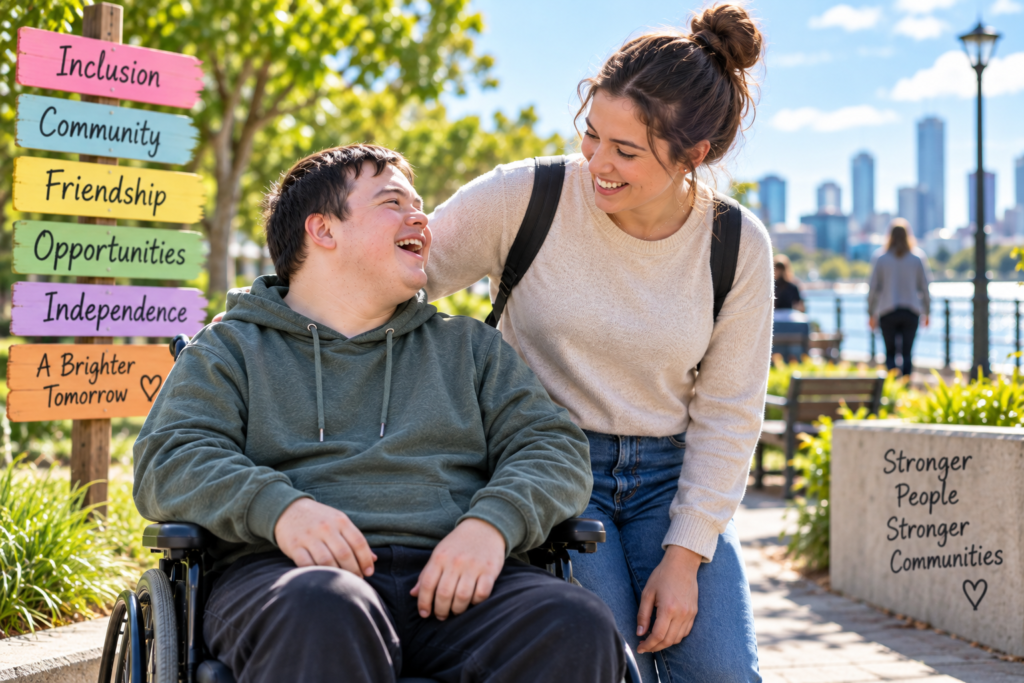
Being part of a community is about much more than simply leaving the house. It gives people opportunities to meet others, develop new skills, explore interests and feel a stronger sense of belonging.
For people with disability, meaningful community participation can play an important role in building confidence and becoming more independent in everyday life. Activities can be as simple as visiting a local café, joining a hobby group, going shopping, attending an event or participating in recreational activities.
What matters most is that the activity reflects the person’s interests, preferences and goals.
What Does Community Participation Mean?
Community participation refers to being actively involved in activities, places and experiences outside the home.
There is no single definition of meaningful participation because everyone has different interests and goals. For one person, it might mean joining a local sports program. For another, it could involve attending an art class, visiting the library or meeting friends for coffee.
Examples can include:
- Joining social or recreational groups
- Attending local events
- Participating in sports or exercise
- Going shopping
- Visiting libraries, cafés or community centres
- Taking part in creative activities
- Exploring hobbies and personal interests
- Volunteering in the community
- Spending time with friends
- Learning to navigate familiar community environments
The goal should not simply be to keep someone busy. Meaningful participation gives people opportunities to make choices, develop relationships and become more involved in the communities around them.
Why Community Participation Matters
Social connection is an important part of everyday life. People naturally benefit from opportunities to communicate, share experiences and feel included.
However, some people with disability may experience barriers that make community participation more difficult. These barriers can include accessibility challenges, limited transport options, communication difficulties, lack of confidence or uncertainty about unfamiliar environments.
Appropriate support can help reduce some of these barriers.
When people have opportunities to participate in activities they genuinely enjoy, community involvement can become an important part of developing confidence, practical skills and independence.
Building Confidence Through Real-Life Experiences
Confidence often develops through experience.
Someone who feels uncertain about entering a new environment may become more comfortable after visiting several times with appropriate support. As the environment becomes familiar, they may need less guidance and feel more confident making decisions independently.
For example, a participant who wants to visit a local café might initially need support with choosing a location, travelling there, ordering food and communicating with staff.
Over time, familiar activities can become easier.
This gradual progress can help people feel more comfortable trying other experiences as well.
Confidence does not always develop through major achievements. Small successes can be equally meaningful.
Ordering a meal independently, asking someone a question or choosing which activity to attend can all represent important personal progress.
Developing Practical Everyday Skills
Community participation also creates opportunities to practise everyday skills in real situations.
A shopping trip, for example, may involve:
- Preparing a shopping list
- Planning what to buy
- Finding products
- Comparing options
- Making decisions
- Communicating with staff
- Managing purchases
- Navigating the shopping environment
These are practical experiences that can support greater independence.
Similarly, participating in a cooking group might involve following instructions, communicating with others, preparing ingredients and working as part of a team.
Skills developed through community activities can often be useful in other areas of everyday life.
Creating Meaningful Social Connections
Community participation can provide natural opportunities to meet people with similar interests.
Friendships and social relationships often develop around shared experiences. Someone who regularly attends a sports club, art class or community group may begin recognising familiar faces and gradually become more comfortable interacting with others.
These connections can help create a stronger sense of belonging.
For people who have experienced social isolation, even small increases in regular interaction can make community life feel more welcoming.
The focus should not be on forcing social interaction. Instead, people should have opportunities to connect with others in ways that feel comfortable and meaningful to them.
Supporting Choice and Control
Meaningful participation should always involve personal choice.
People should have a say in:
- Which activities they participate in
- Where they go
- Who they spend time with
- How frequently they participate
- What new experiences they want to explore
Two people with similar support needs may have completely different interests.
One person may enjoy busy community events, while another may prefer quieter activities such as visiting a library, walking through a local park or attending a small creative group.
Respecting these preferences makes participation more personal and enjoyable.
It also gives people greater control over how they spend their time.
Encouraging people to participate in decisions about their own support is also closely connected with the broader concept of patient engagement, where individuals take a more active role in decisions that affect their wellbeing.
Community Participation and Greater Independence
Independence does not necessarily mean doing everything without assistance.
For many people, greater independence means having more control over everyday decisions and being actively involved in activities rather than having everything decided or completed for them.
Community participation can support this by creating opportunities to practise:
- Decision-making
- Communication
- Problem-solving
- Planning
- Time management
- Social interaction
- Everyday routines
Someone might initially attend an activity with considerable assistance and gradually require fewer prompts as their confidence develops.
Progress will look different for every person.
The important thing is that support encourages participation and builds on existing strengths.
Community-based support can also complement broader approaches to home and community care, particularly when the goal is to help people maintain independence and participate more actively in everyday life.
Trying New Activities and Discovering Interests
It is difficult to know whether you enjoy something without having the opportunity to try it.
Community participation can expose people to activities and experiences they may not previously have considered.
This might include:
- Photography
- Gardening
- Swimming
- Music
- Art and craft
- Cooking
- Fitness programs
- Local festivals
- Community groups
- Volunteering
Trying different activities can help people discover interests that eventually become part of their regular routine.
A new hobby can also create opportunities for learning, social interaction and personal achievement.
The Importance of Personalised Support
Community participation should never follow a one-size-fits-all approach.
Effective support starts by understanding the individual.
This includes considering their interests, communication preferences, abilities, support needs and personal goals.
For example, someone who wants to become more confident shopping independently may benefit from gradually taking responsibility for different parts of the activity.
Another person may want to improve social confidence by joining a regular community group.
The support required for these goals will be different.
Personalised assistance allows activities to be adapted around what the person actually wants to achieve.
For participants and families searching for an NDIS provider near them, it can be helpful to look for a provider that focuses on individual goals, meaningful community involvement and greater independence. We Empower Disability Services provides personalised NDIS support designed to help participants develop everyday skills, build confidence and become more involved in their community.
The Role of Support Workers
A good support worker does more than accompany someone into the community.
Their role may involve providing encouragement, practical assistance, communication support and guidance when needed.
Importantly, support workers should avoid taking over activities that participants can safely complete themselves.
For example, instead of automatically ordering at a café, a support worker might encourage the participant to place their own order if that aligns with their abilities and goals.
The appropriate level of support will vary between individuals.
The aim is to provide enough assistance for participation to be safe and positive while still creating opportunities for the person to make decisions and develop skills.
Removing Barriers to Participation
People with disability can face different barriers when accessing their communities.
These may include:
- Inaccessible environments
- Transport difficulties
- Communication barriers
- Social anxiety
- Lack of information
- Limited confidence
- Unfamiliar surroundings
Identifying these barriers can make it easier to find practical solutions.
An unfamiliar activity, for instance, might become more manageable by researching the location beforehand, choosing a quieter time to attend or visiting initially with someone the participant trusts.
Small adjustments can sometimes make a significant difference to how comfortable and accessible an experience feels.
Setting Realistic Community Participation Goals
Goals can help turn community participation into meaningful progress.
However, goals should be realistic and relevant to the individual rather than based on what other people think they should achieve.
Examples might include:
- Attending one community activity each week
- Ordering independently at a café
- Joining a local hobby group
- Learning a familiar public transport route
- Shopping for selected items
- Starting conversations with familiar people
- Trying one new recreational activity
- Participating more actively in an existing group
Large goals can also be broken into smaller steps.
If someone wants to attend a community group independently, the first step might simply be visiting the location with support. Later, they might participate in part of the activity before gradually becoming more comfortable.
This approach allows progress to develop naturally.
Families and Carers Can Encourage Participation
Families and carers can also play an important role in encouraging community involvement.
One of the most helpful approaches is allowing people to make choices and try activities for themselves while providing appropriate support when needed.
Encouragement can help, but participation should not become pressure.
Listening to the person’s preferences is essential.
If someone does not enjoy a particular activity, exploring another option may be more beneficial than repeatedly encouraging something that does not interest them.
Meaningful participation should ultimately reflect the person’s own life, interests and goals.
Progress Looks Different for Everyone
There is no universal measure of successful community participation.
For one person, success might mean attending a busy social event independently. For another, it could mean feeling comfortable visiting a familiar café with a support worker.
Both can represent meaningful progress.
What matters is whether the person is gaining confidence, making choices, developing useful skills and participating in activities that are important to them.
Progress may happen gradually, and some goals will take longer than others.
Recognising small achievements can help maintain motivation and demonstrate how much has already changed.
Building More Inclusive Communities
Community participation benefits more than individuals.
When people with different abilities regularly participate in workplaces, recreational programs, local events, clubs and public spaces, communities become more inclusive.
Inclusion becomes part of everyday life rather than something separate.
Local organisations and businesses also have an important role to play by considering accessibility, communication and different support needs when designing activities and services.
More accessible communities create more opportunities for everyone to participate.
Final Thoughts
Community participation can provide much more than an opportunity to get out of the house. It can help people with disability build practical skills, develop confidence, form meaningful relationships and become more involved in decisions about their everyday lives.
The most effective participation is personal. Activities should reflect the individual’s interests, strengths and goals rather than following a standard routine.
With appropriate support, patience and genuine opportunities to make choices, everyday community experiences can become important steps towards greater confidence and independence.
Other Articles You May Find of Interest...
- How Community Participation Builds Confidence & Independence
- Quadriplegic Cerebral Palsy: Daily Life and Care Needs
- How Social Security Disability Eligibility Decisions Are Reached
- How to Safely Transfer a Bedridden Patient at Home
- How Care Coordination Improves Outcomes for People With Disabilities
- Recognizing a Black Box Warning and Its Importance in Medication Safety
- How Custom Assistance Dog Training Enhances Independence for People with Disabilities




