Your Health Magazine Contributor
4201 Northview Drive
Suite 102
Bowie, MD 20716
More Disability Articles
How to Safely Transfer a Bedridden Patient at Home
A practical caregiver guide to safer repositioning, bed-to-chair transfers, equipment choices, and situations that need professional help.
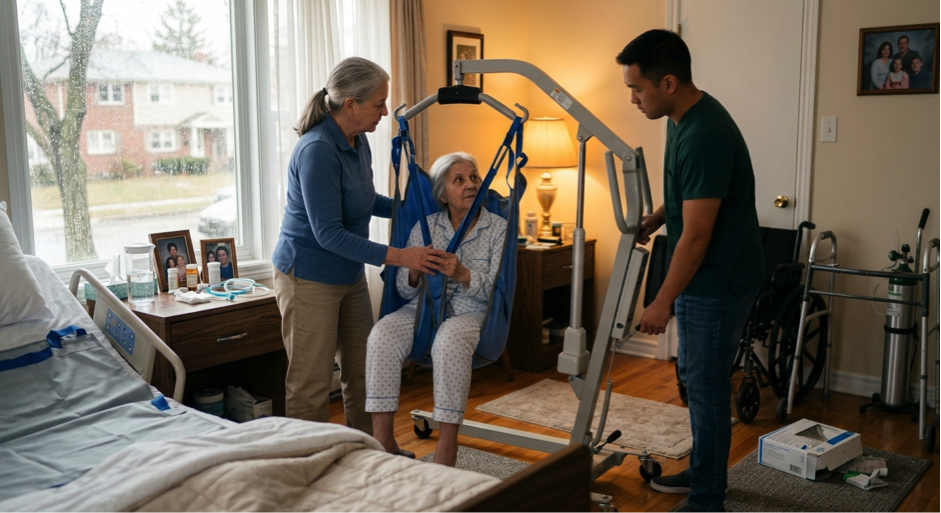
A Caregiver’s Guide to Safer Movement, Repositioning, and Transfer Equipment
Caring for a person who spends most or all of the day in bed can make everyday movement one of the most challenging parts of home care. Repositioning in bed, moving from bed to a wheelchair, or navigating a change in level may involve fall risk, skin injury, pain, and significant physical strain for the caregiver. The safest approach is not to rely on strength alone. It is to match the transfer method and equipment to the person’s current mobility, medical condition, and ability to participate.
Important safety note: This article provides general educational information, not individualized medical advice. A physical therapist, occupational therapist, nurse, or other qualified clinician should assess complex transfers, new mobility changes, recent surgery, spinal precautions, severe weakness, or any situation in which a caregiver is unsure how to move the person safely.
Why Safe Patient Transfers Need Planning
A transfer is any assisted movement from one position or surface to another, including turning in bed, moving toward the edge of the mattress, transferring to a chair, or changing floors. Patient handling is a well-recognized source of musculoskeletal strain, and current safety guidance emphasizes reducing manual lifting when assistive devices can do the work more safely.
Before choosing a technique, consider whether the person can:
- Bear full, partial, or no weight through the legs.
- Sit upright without losing balance.
- Understand and follow simple instructions.
- Use the arms safely without shoulder or upper-body restrictions.
- Tolerate the position required for the transfer without severe pain, dizziness, or breathing difficulty.
- Move without disrupting wounds, drains, catheters, oxygen tubing, braces, or other medical devices.
If any of these factors are uncertain, a professional assessment is safer than trying a new lift at home. A transfer method that works for one person may be inappropriate for another, even when their body size appears similar.
Prepare the Space Before You Move
A few minutes of preparation can remove many preventable hazards:
- Clear loose rugs, cords, clutter, and furniture from the transfer path.
- Lock the wheels on the bed, wheelchair, commode, or other wheeled equipment before the transfer begins.
- Position the receiving surface as close as practical and at a suitable height when adjustable.
- Use supportive, non-slip footwear when the person will stand or pivot.
- Check that footrests, armrests, tubing, blankets, and clothing will not catch during the move.
- Explain the plan in simple steps and agree on a clear cue, such as “ready, set, move.”
- Keep phones, pets, and unnecessary distractions away from the transfer area.
Good preparation is especially important when the patient fatigues easily. If the person becomes weaker, confused, light-headed, or unable to follow the plan, stop and reassess rather than trying to “finish the transfer” quickly.
Match the Transfer Method to the Person’s Mobility
If the person cannot bear weight
For a person who cannot safely support body weight through the legs, caregivers should avoid attempting a full manual lift whenever possible. A mechanical patient lift, appropriate sling system, friction-reducing device, or other transfer aid may be safer, depending on the person and the setting. The device should be selected and used according to professional guidance and the manufacturer’s instructions.
For in-bed movement, a slide sheet or draw sheet can reduce friction and make repositioning more controlled. In many cases, two trained caregivers are preferable when substantial assistance is required. The goal is to slide and reposition with the right equipment rather than lift the person’s full body weight by hand.
If the person can bear some weight
When a person can sit with reasonable balance and safely support part of their weight, a supported stand-and-pivot transfer may be appropriate after training. A transfer or gait belt can provide a secure handhold for some patients, but it is not a lifting strap and is not suitable in every clinical situation. Caregivers should never pull a patient up by the arms, shoulders, or clothing.
For repositioning in bed
Use small, controlled movements and protect the patient’s skin from dragging. A friction-reducing sheet can help move the shoulders, hips, and legs together. If the patient has spinal precautions, a recent fracture, major surgery, or severe pain, follow the exact positioning method given by the care team rather than using a generic “log roll” technique.
Choosing Safer Transfer Equipment for Home Care
The best device depends on weight-bearing ability, trunk control, the home layout, the number of trained helpers available, and the type of movement required. This quick comparison can help families understand the purpose of common options:
| Equipment | Often Used For | Key Safety Point |
| Slide or friction-reducing sheet | Repositioning a person who needs substantial help in bed | Reduces friction; use the technique recommended for the patient and device. |
| Transfer or gait belt | Selected patients who can participate and bear some weight | Provides a handhold; should not be used to hoist a fully dependent person. |
| Mechanical patient lift | Patients with little or no safe weight-bearing ability | Can reduce manual lifting; correct sling choice and user training are essential. |
| Wheelchair | Moving between rooms and receiving seated transfers | Lock brakes for transfers and position footrests safely out of the way. |
| Stair chair | Seated stair transport for suitable patients | Requires correct patient selection, trained operators, and use within the device limits. |
| Stretcher or carry/transfer device | Patients who need supported transport or cannot safely maintain a seated transfer position | Choose equipment for the specific scenario and follow trained handling procedures. |
For homes or care settings where stairs are a regular challenge, an electric stair chair may be one option for a person who can safely remain seated during stair transport. The correct choice depends on the staircase, patient size and posture, medical needs, device load rating, and the number of trained operators specified by the manufacturer.
Be Extra Cautious With Stairs
Stairs increase the consequences of a transfer error, so avoid unsupported manual carries unless emergency professionals direct otherwise. Before using any stair-transport device, confirm that the person can tolerate the required position and that the equipment is appropriate for the staircase and intended use. Practice should occur before an urgent situation whenever possible.
If the patient cannot safely sit upright, has an unstable medical condition, needs spinal immobilization, or cannot be secured according to the device instructions, a stair chair may not be appropriate. In those situations, ask a clinician, home-care service, or emergency transport professional what method should be used.
When a Stretcher or Transfer Device May Be More Appropriate
Some patients need more body support than a chair-based transfer can provide. In those situations, purpose-designed patient handling equipment—such as a carry sheet, transfer device, or stretcher system—may be considered for specific transport needs. Equipment selection should reflect the person’s condition, posture tolerance, load requirements, and the training of the people performing the move.
For routine home transfers, do not assume that hospital- or emergency-style equipment is automatically the best choice. An occupational therapist or physical therapist can often identify a simpler solution that fits the home environment and the patient’s ability more closely.
Protect Skin and Reduce Pressure-Injury Risk
People who spend long periods in bed are vulnerable to pressure-related skin damage, particularly over the heels, hips, sacrum, elbows, and other bony areas. Repositioning matters, but there is no single schedule that is correct for every patient.
Recent international pressure-injury guidance recommends individualizing repositioning frequency based on the person’s risk, ability to move, skin response, comfort, and support surface. For many people at risk who are using an appropriate pressure-redistribution surface, two- or three-hour intervals may be considered, while other people may need a different schedule. The 2025 International Guideline emphasizes reassessment rather than a rigid one-size-fits-all rule.
A practical home-care plan may include:
- Following the repositioning frequency recommended by the patient’s care team.
- Checking skin regularly for persistent redness, discoloration, warmth, firmness, moisture damage, or breaks in the skin.
- Keeping bedding smooth, clean, and dry.
- Using pressure-redistributing mattresses or cushions when recommended.
- Offloading pressure from the heels or other vulnerable areas according to the care plan.
- Reporting new skin changes early instead of waiting for an open wound to develop.
Reduce Fall Risk Around the Transfer Area
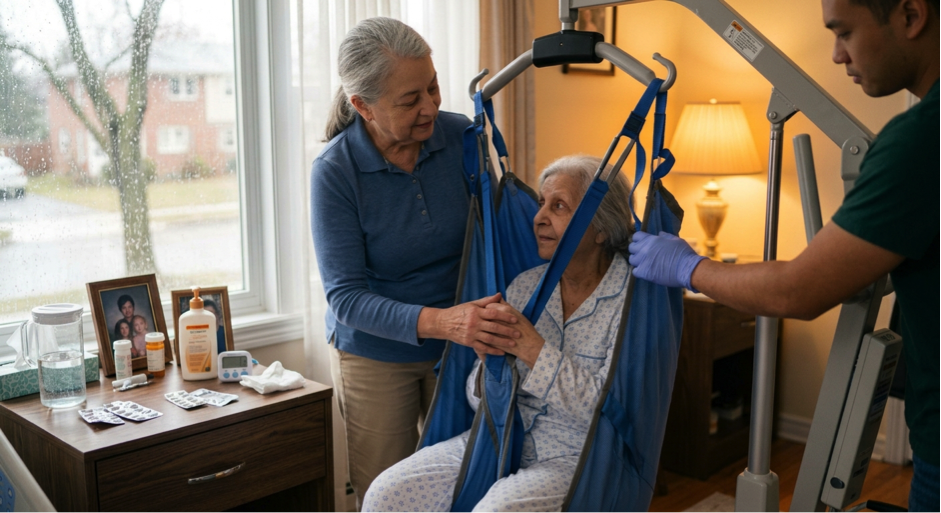
Equipment alone cannot compensate for an unsafe environment. Keep frequently used transfer paths well lit and free from clutter, and install properly secured grab bars where a clinician or qualified installer recommends them. Choose bathing, toileting, and seating equipment that is designed for the task, has an appropriate load rating, and can be stabilized correctly on the floor or surface where it will be used.
If the person has fallen, do not automatically try to lift them from the floor. Check for pain, head injury, bleeding, new weakness, or loss of consciousness and follow local emergency guidance when injury is possible.
Build a Transfer Plan With a Professional
A short home assessment by a physical therapist, occupational therapist, nurse, or other trained professional can be valuable when a patient’s mobility changes. They can assess strength, balance, cognition, pain, the height of transfer surfaces, doorway width, staircase layout, and caregiver capacity before recommending a technique or device.
For readers caring for someone who can participate in a seated transfer, this article on practical bed-to-wheelchair transfer guidance can help families understand how the environment and equipment affect everyday movement.
When to Stop and Get Help
Stop a planned transfer and seek appropriate professional or medical help if:
- The patient develops chest pain, significant shortness of breath, fainting, or sudden confusion.
- There is new severe pain, a suspected fracture, a head injury, or a recent fall with concerning symptoms.
- The patient is suddenly much weaker than usual or can no longer assist in the way they normally do.
- The caregiver cannot control the movement without pulling, catching, or lifting most of the person’s body weight.
- The required equipment is unavailable, damaged, incorrectly sized, or unfamiliar to the caregiver.
- The patient has new medical restrictions after surgery, hospitalization, or a change in condition.
Frequently Asked Questions
Can one caregiver safely transfer a bedridden patient alone?
Sometimes, but not in every situation. If the person cannot safely bear weight or participate, a solo manual lift is generally not a good approach. A mechanical lift or other assistive device may make some transfers possible for one trained caregiver, but the equipment instructions and the patient’s care plan determine what is appropriate.
Is a gait belt safe for every patient?
No. A gait belt may be useful for selected patients who can participate in the transfer, but it should not be used as a hoisting strap for a fully dependent person. Recent surgery, abdominal wounds, feeding tubes, certain medical devices, pain, or other conditions may change whether and how a belt should be used.
How often should a bedridden person be repositioned?
There is no universal schedule. Repositioning frequency should be individualized according to pressure-injury risk, skin condition, mobility, comfort, support surface, and the care team’s advice. Current international guidance notes that two- or three-hour intervals may be considered for many at-risk individuals on an appropriate support surface, but reassessment is important.
What is the safest way to move a patient on stairs?
There is no single safest method for every patient. A stair chair may be appropriate for some people who can safely tolerate seated transport, while others may require a different device or professional transport support. Patient condition, staircase design, equipment instructions, and operator training all matter.
Do family caregivers need hands-on transfer training?
Formal certification is not always required for family care, but hands-on instruction can be extremely useful. A physical therapist, occupational therapist, nurse, or home-care professional can demonstrate the safest method for the specific patient and home environment.
Final Thoughts
Safe patient movement is less about lifting harder and more about planning better. The right method begins with an honest assessment of what the person can do, removes environmental hazards, uses appropriate assistive equipment, and stops when the transfer exceeds the caregiver’s safe capability.
For families managing long-term bed care, repeated transfers, or difficult stairs, professional training and purpose-designed equipment can reduce unnecessary manual handling and make daily care more predictable. When in doubt, choose a slower, supported approach and get advice before attempting a transfer that feels unsafe.
Other Articles You May Find of Interest...
- How Modern Therapies Are Changing Disability Treatment
- Quadriplegic Cerebral Palsy: Daily Life and Care Needs
- How Social Security Disability Eligibility Decisions Are Reached
- How to Safely Transfer a Bedridden Patient at Home
- How Care Coordination Improves Outcomes for People With Disabilities
- Recognizing a Black Box Warning and Its Importance in Medication Safety
- How Custom Assistance Dog Training Enhances Independence for People with Disabilities