






More Pain Management & Rehabilitation Articles
Gout or Bursitis? Why Joint Swelling Can Look the Same
By Your Health Magazine Health Information Team
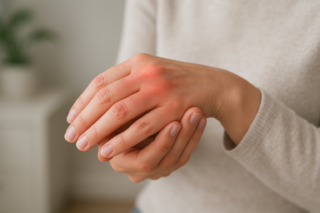
You wake up with a hot, swollen joint that hurts when you walk, bend, or even brush it against clothing. Is it gout, bursitis, or something else? The confusion is understandable. Both conditions can cause redness, warmth, tenderness, swelling, and limited movement—and they can affect some of the same areas.
Although gout and bursitis may look alike, they involve different structures and often require different treatment. Adding to the confusion, gout can sometimes inflame a bursa, meaning a person may have gout-related bursitis rather than one condition or the other.
What Is the Difference Between Gout and Bursitis?
Gout is an inflammatory form of arthritis caused by deposits of needle-shaped urate crystals in or around a joint. Urate can accumulate when the body produces too much or the kidneys remove too little. Not everyone with a high blood urate level develops gout, but crystal deposits can trigger sudden, intense inflammation.
Bursitis is inflammation of a bursa—a small, fluid-filled sac that reduces friction between bones and nearby tendons, muscles, or skin. Bursae are located near many joints. Repeated motion, prolonged pressure, an injury, infection, and inflammatory diseases can irritate them.
The key anatomical distinction is that gout commonly affects the joint itself, while bursitis affects a cushioning sac beside the joint. However, gout crystals can also collect in a bursa, especially around the elbow or knee. This overlap is one reason symptoms alone cannot always settle the gout bursitis question.
Clues That May Point Toward Gout
A gout flare frequently begins abruptly, sometimes overnight. Pain may become severe within hours, and the area can be so sensitive that pressure from a sock, shoe, or bedsheet is difficult to tolerate.
- The first episode often involves the base of the big toe.
- The ankle, knee, foot, wrist, fingers, or elbow may also be affected.
- Pain is often intense even when the joint is resting.
- The skin may appear red, shiny, or tight over the swelling.
- Previous episodes may have improved and then returned after symptom-free periods.
- Repeated or longstanding gout may produce firm deposits called tophi under the skin.
Factors associated with gout include kidney disease, family history, certain medications, metabolic conditions, alcohol use, and diets containing large amounts of some purine-rich foods. These factors may raise suspicion, but none confirms gout by itself.
Clues That May Point Toward Bursitis
Bursitis is often connected to pressure or repeated movement. Examples include kneeling while gardening, leaning on the elbows, repeatedly lifting overhead, running, or suddenly increasing a physical activity.
- Pain may be concentrated over a specific spot beside a joint.
- Direct pressure on the swollen area often makes the pain worse.
- Movement that compresses or stretches the bursa may hurt.
- A visible, soft swelling may develop over the kneecap or point of the elbow.
- Symptoms may appear gradually after repeated activity, although injury can cause sudden swelling.
- Common locations include the shoulder, elbow, hip, knee, heel, and areas near the foot.
Some deeper bursae, such as those near the hip or shoulder, do not create an obvious lump. Instead, the main symptoms may be aching and difficulty with activities such as climbing stairs, lying on one side, reaching overhead, or getting dressed.
Why Appearance and Pain Patterns Are Not Enough
A red, hot, swollen area may also be caused by an infected bursa, an infected joint, an injury, another type of crystal arthritis, or an inflammatory condition such as rheumatoid arthritis. These problems can closely resemble gout bursitis symptoms but may require very different care.
Healthcare professionals usually ask how quickly the symptoms began, whether there was an injury or repetitive activity, which movements hurt, and whether similar episodes have happened before. They may also review medications and medical conditions that affect infection or gout risk.
Blood testing can measure urate, but a high level does not prove that gout is causing the current swelling. When the diagnosis remains uncertain, a clinician may remove fluid from the joint or bursa with a needle. Laboratory examination can look for urate crystals and signs of infection. Ultrasound or other imaging may also help identify fluid, inflammation, crystal deposits, or another source of pain.
Readers who want a broader overview of possible causes can review this information about joint disorders, injuries, and inflammation.
How Treatment May Differ
For a gout flare, treatment generally focuses on controlling inflammation and pain. Depending on the person’s health history, a clinician may recommend an anti-inflammatory medicine, colchicine, or a corticosteroid. People with recurring flares, tophi, or gout-related joint damage may also need long-term urate-lowering treatment to reduce future crystal accumulation. These medicines require professional guidance and monitoring.
Noninfectious bursitis is often managed by temporarily reducing the activity or pressure that irritated the bursa. Padding, physical therapy, and changes in body mechanics may help prevent repeated irritation. Persistent cases may require aspiration, imaging, an injection, or another procedure after the underlying cause has been evaluated.
Infectious bursitis is different and may require antibiotics and drainage. It should not be treated as an ordinary overuse injury. Likewise, lifestyle changes alone are not a substitute for appropriate gout medication when long-term urate control is medically indicated.
What Can You Do While Awaiting Evaluation?
Until the cause is clear, protect the area and avoid activities that increase pain. A cold pack wrapped in cloth may help reduce discomfort, and elevating a swollen arm or leg may be useful. Do not puncture or attempt to drain a swollen bursa yourself.
Avoid starting, stopping, or changing prescription medicines based only on the assumption that the problem is gout. Some pain relievers may not be suitable for people with kidney disease, stomach bleeding risks, cardiovascular conditions, or medication interactions. For more information about reducing future gout problems after a diagnosis, see this guide to managing gout, relief, and prevention.
When to Seek Care
Arrange an evaluation if joint-area swelling is new, severe, recurring, worsening, or interfering with walking, sleep, work, or normal movement. A primary care professional can begin the assessment. Depending on the location and suspected cause, care may also involve a rheumatologist, orthopedist, sports medicine clinician, or podiatrist.
Seek prompt medical attention for fever, chills, feeling generally ill, rapidly increasing redness, drainage, a nearby cut or wound, inability to bear weight, or severe difficulty moving the joint. Sudden intense swelling—particularly during a first episode—also deserves timely evaluation because infection and gout can appear similar. Correctly identifying the inflamed structure and its cause is the safest way to choose effective treatment and protect everyday mobility.
Other Articles You May Find of Interest...
- Gout or Bursitis? Why Joint Swelling Can Look the Same
- Broken Kneecap Recovery: How Long Healing Usually Takes
- The Thumb Grind Test: What Pain During It Can Mean
- Choosing a Trigger Thumb Splint That Actually Supports Healing
- Can Tendons Heal on Their Own? What Recovery Requires
- How Chronic Knee Pain Can Be Treated Without Joint Replacement
- What ‘Gnawing Pain’ Tells Your Doctor




