






More Workplace Health & Safety Articles
Healthy Habits at Work: Why Hydration and Coffee Balance Matter?
Most offices treat hydration and coffee as two separate habits, one healthy and one indulgent. In reality they work together, and getting the balance wrong is one of the quietest productivity leaks in any workplace. This guide breaks down what the research actually says about water intake, caffeine limits, and how a well placed break room setup helps employees get both right without thinking about it.
The Hidden Cost of a Dehydrated Workforce
Dehydration is easy to dismiss because it rarely looks like a medical event. It shows up instead as slower thinking, shorter tempers, and more mistakes. Research summarized by workplace hydration studies found that a body water loss of just 1 percent can lower productivity by around 12 percent, and by the time a person feels thirsty they may already be 2 to 3 percent dehydrated, a point at which performance can fall by 25 percent or more.
The comparisons get more striking from there. At around 3 percent dehydration, reaction time slows to roughly the same degree as a blood alcohol content of 0.08, and a driver at that BAC level is about five times more likely to cause an accident. Several industry sources also estimate that a large share of adults, some put it at 75 to 80 percent, walk around mildly dehydrated on any given workday.
| Dehydration Level | Effect on Employees |
| 1 percent | Around 12 percent drop in productivity, reduced focus |
| 2 to 3 percent | Noticeable thirst, memory and concentration decline |
| 3 to 4 percent | Productivity can fall 25 percent or more, slower reaction time |
| 3 percent, reaction time | Comparable to 0.08 blood alcohol content |
Office air conditioning makes this worse, not better. Climate controlled air is typically low in humidity, which increases water loss through skin and breathing even when nobody feels like they are exerting themselves. That is one reason dehydration is not just a warehouse or outdoor labor issue, it affects desk based teams just as much.
Where Coffee Fits Into the Picture
Coffee is not the enemy of hydration, but it is not a substitute for water either. Caffeine has a mild diuretic effect at higher doses, and the real risk at work is less about coffee itself and more about how much of it stacks up across a long day of back to back cups. The FDA states that healthy adults can generally consume up to 400 milligrams of caffeine a day without adverse effects, roughly the amount in four cups of brewed coffee, without it being linked to negative health outcomes.
In practice, most people fall well under that ceiling. Average adult intake in the United States runs from about 110 milligrams a day for younger women up to roughly 260 milligrams a day for older men, and the bulk of that caffeine, somewhere between 70 and 90 percent, comes from coffee and tea rather than energy drinks or soda.
| Beverage | Approx. Caffeine |
| Brewed coffee, 8 oz | 70 to 100 mg |
| Espresso shot | 30 to 50 mg |
| Black tea, 8 oz | Around 28 to 47 mg |
| Decaf coffee, 8 oz | Around 7 mg |
The takeaway for an office is simple: coffee is a legitimate and useful part of the workday, it just needs to sit alongside water rather than replace it.
Building a Realistic Balance at Work
- Keep water visibly accessible near desks and break areas so drinking it does not require a special trip.
- Pair every coffee run with a glass of water, especially after the second cup of the day.
- Front load caffeine earlier in the day and taper off after early afternoon to protect sleep quality.
- Treat afternoon slumps as a hydration check first, coffee second. Tiredness is often thirst in disguise.
- Offer decaf and tea options alongside regular coffee so employees who are near their caffeine limit still get a break ritual.
Why Break Room Equipment Matters More Than People Expect
None of this works as a policy memo. Hydration and sensible coffee habits stick when the equipment in the break room makes the easy choice the convenient one. Companies looking to improve workplace break rooms may consider solutions from Healthy Vending Machines which supplies vending equipment for a variety of workplace environments.
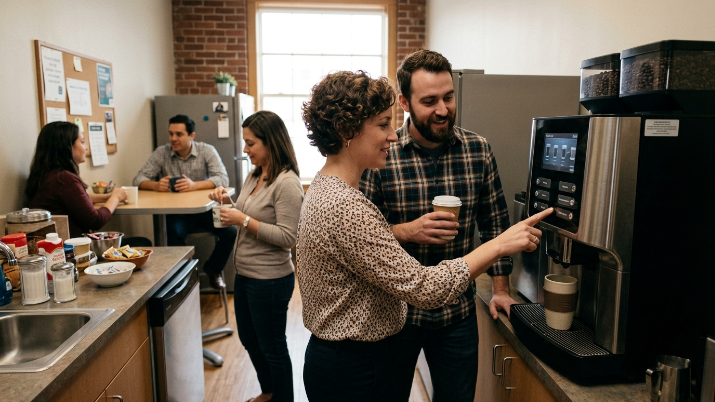
For coffee specifically, a self serve machine removes the friction of a coffee run entirely. Browsing the Coffee Vending Machines lineup shows a range of options including options designed for workplaces of different sizes.
A countertop coffee vending machine fits into a break room without needing a large footprint. Some even offer a touch screen for quick selection, giving employees a consistent cup without a barista line. Placing a unit like this next to a water station, rather than instead of one, is what actually turns the hydration and coffee balance from an idea into a daily habit.
Frequently Asked Questions
Here are 10 tailored FAQs based directly on the key insights and research from your article:
Hydration & Workplace Performance
1. How much does mild dehydration actually impact work productivity?
Even mild dehydration has a surprisingly massive impact. A body water loss of just 1% can lower productivity by roughly 12%. By the time employees feel thirsty, they are often 2% to 3% dehydrated, which can drop overall performance by 25% or more and cause significant drops in focus, memory, and reaction time.
2. Can desk workers in air-conditioned offices really get dehydrated without exerting themselves?
Yes. Office air conditioning significantly lowers humidity in climate-controlled spaces. This low humidity accelerates fluid loss through your skin and breathing—meaning desk-bound employees dehydrate quickly even if they aren’t sweating or doing physical labor.
3. How does dehydration affect a worker’s reaction time and safety?
At around 3% dehydration, an employee’s reaction time slows to a level comparable to a 0.08% Blood Alcohol Content (BAC). In real-world terms, driving or operating machinery at that level makes a person about five times more likely to cause an accident.
4. How much water should an office worker consume during a workday?
While individual needs vary by body mass and activity, a standard guideline is 0.5 to 1 ounce of water per pound of body weight daily. You should increase this amount if your office is especially dry or warm, or if you drink multiple cups of caffeinated coffee throughout your shift.
Coffee & Caffeine Management
5. Does drinking coffee actually dehydrate you at work?
Not at normal levels. While caffeine has a mild diuretic effect at higher doses, moderate coffee intake still contributes positively to your overall daily fluid intake. It isn’t an enemy to hydration—the main risk is simply replacing water with coffee all day long.
6. What is the safe daily limit for caffeine at work?
According to FDA guidance, healthy adults can generally consume up to 400 milligrams of caffeine per day without adverse health effects. This equals approximately four standard 8-ounce cups of brewed coffee.
7. How much caffeine is typically in common office beverages?
Caffeine content varies across beverages:
- Brewed Coffee (8 oz): 70 to 100 mg
- Espresso Shot: 30 to 50 mg
- Black Tea (8 oz): 28 to 47 mg
- Decaf Coffee (8 oz): ~7 mg
8. How can employees prevent afternoon slumps without overdoing caffeine?
Treat afternoon fatigue as a hydration check first and a coffee check second. Exhaustion late in the day is frequently mild thirst in disguise. Front-load your caffeine in the morning, taper off by early afternoon to safeguard sleep quality, and try drinking a full glass of water before reaching for another cup.
Office Environment & Break Room Setup
9. What daily habits help employees balance coffee and water intake naturally?
- Keep water visibly accessible directly at desks and in meeting spaces.
- Adopt a rule to pair every coffee run with a glass of water.
- Offer decaf coffee and herbal tea so employees near their caffeine limit can still enjoy a break ritual.
- Use hydration as the first line of defense against mid-day tiredness.
10. How does break room equipment influence healthy employee habits?
Wellness policy memos rarely change behavior on their own; convenience does. Placing modern, low-friction equipment—like a countertop bean-to-cup coffee vending machine right alongside a dedicated water station—makes the healthier choice the effortless default for employees during busy workdays.
Other Articles You May Find of Interest...
- How Workplace Health Programs Support Business Growth
- How Walking Pads Can Help People Stay Active at Work
- Safety and Skill at the Heart of Australia’s Construction and Logistics Industries
- Building Safer Workplaces: Why High-Risk Equipment Training Matters in Australia
- How Commercial Kitchen Organization Can Support Food Safety and Reduce Workplace Injury Risk?
- How to Remove Odors from Offices in Singapore
- Why Does Your Ebike Feel Uncomfortable? Check These Things Before You Blame the Bike




