






Your Health Magazine Contributor
4201 Northview Drive
Suite 102
Bowie, MD 20716
More Workplace Health & Safety Articles
First Aid Certification Levels in Ontario: Which One Do You Need in 2026?
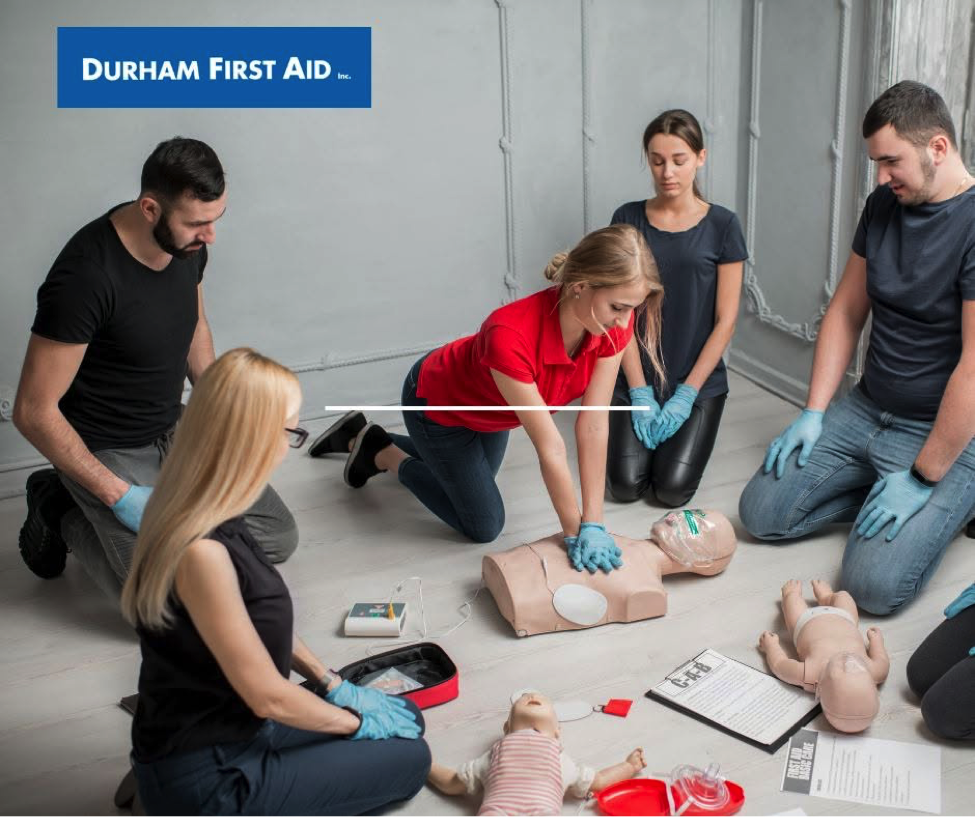
The “new” Ontario first aid map was altered in 2026. Prior to this, it was easy to associate familiar course names with each certificate. However, Ontario updated those names in 2026. Emergency First Aid is now called Basic First Aid, while Standard First Aid is now Intermediate First Aid. These changes were introduced as the Workplace Safety and Insurance Board (WSIB) aligned Ontario’s first aid training standards with the national Canadian Standards Association (CSA) Z1210:24 standard.
Although equivalency keeps compliance intact, the new labels create confusion for employers, parents, childcare staff, security personnel, and anyone booking a course for work or personal readiness.
In this article, you’ll learn what each level covers, how WSIB workplace rules apply based on shift size, and how to pick the right training in 2026. No matter what you do, whether you’re running a small business, supervising a construction crew, or working in childcare, the distinctions matter.
What Changed in 2026? Ontario’s New First Aid Names (CSA Z1210:24)
On June 22, 2026, the Workplace Safety & Insurance Board (WSIB) updated Ontario’s First Aid Program to align with the Canadian Standards Association (CSA) Z1210:24 standard. As part of this change, first aid course names were updated to match the national standards used across much of Canada:
- Emergency First Aid = Basic First Aid
- Standard First Aid = Intermediate First Aid
Although Regulation 1101 still uses the terms Emergency and Standard First Aid, WSIB recognizes the new course names as equivalent. Employers who meet the required number of trained workers per shift will remain compliant. While the courses themselves have not changed significantly, the majority of updates involved new terminology and consistent training standards across approved providers.
Certificates issued before June 22, 2026, are valid until they expire, which means you won’t need to retake your training just because the course name changed.
Recertification is also more flexible. Intermediate First Aid certificate holders are able to recertify once with any WSIB-approved provider, and not just their original training provider.
If you hold a first aid certificate from another Canadian province that meets the CSA Z1210 standard, you may be able to recertify in Ontario before it expires. However, for Basic First Aid, you’ll be required to take the full course again when your certification expires.
These changes make it easier for individuals who move between provinces or change jobs. Workers can provide proof of their current first aid certification without having to start their training over again.
| Until 21 June 2026 | From 22 June 2026 | Meets Regulation 1101? |
| Emergency First Aid | Basic First Aid | Yes – equivalent |
| Standard First Aid | Intermediate First Aid | Yes – equivalent |
For official details on the program, approved providers, and badges, see WSIB’s First Aid Program.
First Aid Certification Levels Explained
In Ontario, the WSIB workplace First Aid Program has two main certification levels: Basic First Aid and Intermediate First Aid. Additional advanced courses, such as Advanced First Aid, First Responder, and Emergency Medical Responder, may be offered separately for roles requiring more extensive training.
1. Basic First Aid (formerly Emergency First Aid)
Basic First Aid is an entry-level course that teaches you the essential skills for responding to workplace emergencies and typically takes a full day, or about 6.5 to 8 hours to complete, depending on the training format.
You’ll learn how to:
- Perform CPR and use an AED
- Respond to choking and severe bleeding
- Recognize and manage shock
- Handle common medical emergencies
- Provide care until emergency help arrives
Under Regulation 1101, businesses with five or fewer employees per shift should have at least one person holding a valid Basic First Aid certificate.
2. Intermediate First Aid (formerly Standard First Aid)
Intermediate First Aid builds on Basic First Aid with more in-depth training. It typically takes two days, or about 14 to 16 hours, depending on the training format.
You’ll learn how to respond to:
- Burns, wounds, and severe injuries
- Bone, joint, and suspected spinal injuries
- Seizures and diabetic emergencies
- Anaphylaxis and poisoning
- Strokes and other medical emergencies
- Heat and cold-related illnesses
Under Regulation 1101, a workplace that has six or more employees per shift must have at least one person holding a valid Intermediate First Aid certificate.
This course is good for a wide range of Ontario workplaces, including manufacturing, warehouses, hospitality, and education, enabling you to respond to a larger range of injuries and medical emergencies until professional help arrives.
3. Advanced First Aid / First Responder / EMR
Advanced First Aid (AFA), First Responder (FR) and Emergency Medical Responder (EMR) certifications offer increased first aid knowledge. These certification levels are frequently used in areas that include remote work environments, high risk workplaces, wilderness settings and as an emergency responder.
Training for these certifications requires a higher level of education and understanding than required by most workplaces in Ontario for meeting the requirements of Regulation 1101.
The AFA, FR and EMR certifications typically go above and beyond the basic skills taught at a CPR/AED/First Aid Level C and can include such topics as; advance patient assessment, the proper use of oxygen and how to care for someone if emergency medical services are unavailable.
How CPR Levels A, C, and BLS Fit In
Nearly all First Aid Courses in Ontario include CPR/AED Training. The CPR portion of training does not have a standalone certification requirement for the majority of Workplaces. Therefore, three designations appear on certificates as follows:
- Level A provides Adult CPR and AED only. This designation is adequate when the predominant hazard involved is that of adults and there is no exposure to children or families.
- Level C provides Adult, Child, Infant CPR plus AED and Choking Response. Level C is the most requested due to its ability to prepare Respondents for the entire range of ages they will likely be exposed to while working or within their communities.
- Basic Life Support (BLS) also known as Healthcare Provider or HCP, offers additional Team Resuscitation Skills and Advanced Airway Consideration that can be applied to clinical and healthcare environments.
Level C typically satisfies nearly all workplace, childcare, education, fitness, community etc. BLS has a shorter valid period because Annual Refresher Training is required by employers who provide Healthcare Services and regulatory colleges to assure the provider remains competent.
| CPR Level | Age Groups Covered | Typical Validity | Common Users |
| Level A | Adult only | 3 years | Some workplaces with adult-only risk |
| Level C | Adult, child, infant | 3 years | Most workplaces, childcare, general public |
| BLS / HCP | Adult, child, infant + team skills | 1 year | Healthcare providers, students in clinical programs |
For additional context on Canadian Red Cross programming, visit the Canadian Red Cross CPR & First Aid pages.
WSIB Workplace First Aid Requirements in Ontario
The certification requirements for Workplace first aid (Regulation 1101) are based on how many employees are present in the workplace at any given time (i.e., per shift), not how many employees may work at the workplace during the week.
Workplace first aid training certification requirements for Ontario businesses are as follows:
At least one worker has been trained in:
- Basic first Aid if there are 5 or less workers in the workplace on each shift.
- Intermediate first aid if there are six or more workers in the workplace on each shift.
If a business has 16 to 199 workers in the workplace on each shift, then a stretcher, two blankets, and other required first aid supplies will need to be available;
If a business has 200 or more workers in the workplace on each shift, then an equipped first aid room will need to be available. For the full text of the Act, consult Ontario’s Occupational Health and Safety Act.
How Long Does a First Aid Certificate Last in Ontario?
Certificates for Basic First Aid (First Aid), Intermediate First Aid (First Aid), and CPR (Level A/C) expire after 3 years from their issue date. BLS certifications expire after one year of issuance.
After updates to the system as of 2026:
- Basic First Aid Certificate will expire after 3 years. Since there is no renewal/ recertification course; you would need to take the whole first aid course again prior to expiration of your current certificate.
- Intermediate First Aid Certificate will expire after 3 years. Before your certificate expires, you may recertify once by completing an approved recertification course with a WSIB-approved provider. After one recertification, you must complete the full course again to earn a new certificate.
- CPR Level A/C Certificate will expire after 3 years.
- BLS Certification will expire after one year and require annual renewal.
- Expired Certificates: There is no “grace period” when an individual’s certification has expired. As soon as that certificate has expired, the individual must take the entire course again.
If you need to recertify, try to schedule your recertification class or the full course 2 – 4 weeks prior to your certification expiring to ensure you do not have any lapse in certification.
Which First Aid Level Do You Need? (By Situation)
The type of first aid training needed for your job will be based on several factors including; your place of employment, size of your workplace and the nature of your responsibilities. Although Basic or Intermediate First Aid meets the needs of most employers in Ontario, there are also many industries that require specific training.
Use the following chart to determine what is generally the required first aid level for your position.
| Situation | Recommended Level | Notes |
| General public / family | Basic or Intermediate + CPR-C | CPR-C preferred for children |
| ≤5 workers per shift | Basic First Aid | Regulation 1101 minimum |
| 6+ workers per shift | Intermediate First Aid | Regulation 1101 minimum |
| Childcare (CCEYA) | Standard First Aid or its recognized equivalent, including infant and child CPR | Infant/child CPR mandatory – See the Child Care and Early Years Act for details. |
| Healthcare | BLS | Annual renewal |
| Construction / higher risk | Intermediate First Aid | Often preferred over Basic |
Choosing a WSIB-Approved Training Provider
Only WSIB-approved training organizations can issue certificates that meet Ontario Regulation 1101 requirements. Look for the Official WSIB Certified First Aid Badge and confirm the organization is listed as an approved WSIB provider.
Most Canadian Red Cross Training Providers continue to be accepted because their training meets the CSA Standard Z1210-24, including standardized skill assessment.
All levels require participants to demonstrate their skills in person. Blended training (Online Theory with a Skills Day) is accepted when provided by a WSIB-approved organization, but online-only training is not.
The in-person skills demonstration ensures participants can perform CPR/AED, bleeding control, and other lifesaving techniques under the supervision of an instructor.
When choosing a training provider, also consider class sizes, instructor qualifications, certificate availability, location, scheduling flexibility, and workplace group rates. Individuals in the Durham Region area can get certified through CPR & First Aid Certification, a Canadian Red Cross training partner in Oshawa that delivers WSIB-approved Basic and Intermediate courses.
Frequently Asked Questions
How long is a first aid certificate valid in Ontario?
Basic and Intermediate First Aid certificates, along with CPR Level A or C, last three years from the date of issue. BLS lasts one year and must be renewed annually.
Can I take a first aid course entirely online?
No. Online theory is permitted in blended courses offered by approved providers, but every certificate requires a successful in-person skills demonstration. Fully online programs do not meet WSIB or CSA requirements for workplace certification.
What is the difference between Basic and Intermediate First Aid?
Basic focuses on immediate life threats, CPR, choking, severe bleeding, and shock, and runs roughly one day. Intermediate adds injury and medical emergency care such as fractures, burns, spinal concerns, seizures, and environmental illness, and runs approximately two days. Intermediate meets the higher workplace threshold of six or more workers per shift.
Do I need CPR-C or CPR-A?
CPR-C covers adults, children, and infants and is the most common requirement for workplaces, childcare, and community roles. CPR-A covers adults only and is accepted in limited adult-only settings where child and infant skills are not needed.
Is first aid the same as CPR?
No. First aid covers a broader range of injuries and illnesses, including bleeding, burns, fractures, and medical emergencies. CPR is the specific component that addresses cardiac arrest and is included in virtually every first aid course.
Can I recertify Intermediate First Aid with a different provider?
Yes. After the 2026 update you may recertify once with any WSIB-approved provider before the certificate expires. Basic First Aid does not have a recertification pathway.
Does my pre-2026 certificate still count?
Yes. Certificates issued on or before 21 June 2026 by previously approved providers remain valid until their original expiry date. When renewal is due, the new certificate will carry the updated Basic or Intermediate name.
Key Takeaways
A quick recap of Ontario’s new first aid training requirements:
- Ontario renamed Emergency First Aid to Basic First Aid and Standard First Aid to Intermediate First Aid on 22 June 2026 to align with CSA Z1210:24; equivalency under Regulation 1101 remains unchanged and existing certificates stay valid until expiry.
- Workplaces with five or fewer workers per shift need Basic First Aid; six or more need Intermediate First Aid. Childcare settings require Intermediate with infant and child CPR.
- Certificates last three years for Basic, Intermediate, and CPR A/C (one year for BLS). Intermediate holders may recertify once before expiry with any approved provider.
- Only WSIB-approved providers issuing certificates that meet CSA Z1210:24 satisfy workplace legal requirements.
If your workplace is covered by Ontario Regulation 1101, workplace first aid certification must be obtained through a WSIB-approved training provider. To ensure compliance, identify what level of certification you are eligible for based on your workplace size, industry standards or your personal needs, and register with a current WSIB-accepted provider so you can maintain up-to-date recognition throughout Ontario.
Other Articles You May Find of Interest...
- Asbestos Removal Immediately in Commercial Properties: Managing Workplace Safety and Business Disruption
- The Long-Term Health Effects of Repetitive and Physically Demanding Work
- Create Extra Office Space in the Garden for Employee Well-Being
- Chemical Exposure at Work: The Symptoms You Shouldn’t Ignore
- Garfield DTF Shops: Before Installing Equipment Check List
- How Remote Work Benefits Employee Wellbeing: What The Remote Work Statistics Really Say
- How Classic Car Restoration in South Florida Can Bring Your Vehicle Back to Life





