




More Women's Health & Beauty Articles
Period 3 Days Late: Possible Reasons and When to Test
By Your Health Magazine Health Information Team
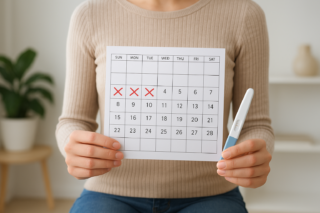
A period that is 3 days late is often due to normal cycle variation, but pregnancy is possible if you have had sex that could result in pregnancy. You can take a home pregnancy test now. If the result is negative and your period still does not begin, repeat the test in several days because testing early can produce a false-negative result.
Is a Period 3 Days Late Normal?
Menstrual cycles do not always follow an exact schedule. A cycle is counted from the first day of one period to the first day of the next. For many adults, cycles between 21 and 35 days are considered typical, and the timing can vary somewhat from month to month.
Whether your period is one day late, your period is 2 days late, or your cycle is 4 days late, the delay may simply mean that ovulation occurred later than expected. This is especially likely if your periods are not consistently regular. However, if pregnancy is possible, symptoms and cycle-tracking apps cannot confirm or exclude it—only testing can.
When Should You Take a Pregnancy Test?
If your period is 3 days late, you can use a home urine pregnancy test today. Pregnancy tests detect human chorionic gonadotropin, or hCG, which begins increasing after a fertilized egg implants. According to the FDA’s guidance on home pregnancy tests, some pregnant people will not get a positive result on the first day of a missed period because there is not yet enough hCG for the test to detect.
- Check the expiration date and follow the specific instructions included with the test.
- Use first-morning urine when possible, particularly when testing only a few days after the expected period.
- Read the result during the instructed time window. Reading it too early or too late may cause confusion.
- Repeat a negative test after several days if your period has not started.
If your cycles are irregular and you do not know when your period was due, consider testing about four weeks after the sexual activity that may have resulted in pregnancy. A healthcare professional can perform additional urine or blood testing if results remain unclear.
| How Late the Period Is | Reasonable Next Step |
|---|---|
| 1–4 days late | Test now if pregnancy is possible, or monitor for a few more days if it is not. |
| 6–10 days overdue | Take or repeat a pregnancy test. Contact a clinician if results are unclear or the delay is unusual for you. |
| More than one missed cycle | Arrange a medical evaluation, particularly if tests remain negative or other symptoms are present. |
| Three months without a period | Seek evaluation even if pregnancy has been excluded. |
Possible Reasons for a 3-Day Delay
Pregnancy
Pregnancy is an important possibility whenever sperm could have entered the vagina, including after contraceptive failure or inconsistent contraceptive use. A missed period may be an early sign, although breast tenderness, fatigue, nausea and cramping can also resemble premenstrual symptoms. MedlinePlus provides additional pregnancy information and resources for people who receive a positive test.
Stress and Changes in Routine
Emotional stress can affect the hormones that regulate ovulation. If ovulation happens later, the next period will also arrive later. Significant sleep disruption or other physical stressors may contribute to a temporary change, although a recurring pattern deserves medical attention.
Weight, Nutrition and Exercise Changes
Rapid weight loss, low body weight, eating disorders and prolonged intense exercise can interfere with normal ovulation. Significant weight gain may also be associated with irregular periods. A single delay does not identify the cause, but repeated changes should be discussed with a healthcare professional.
Hormonal Contraception
Birth control pills, injections, implants and hormonal intrauterine devices can make bleeding lighter, irregular or absent. Starting, stopping, missing or changing hormonal contraception may also alter the timing of bleeding. If you use an IUD, a late or absent period alone does not prove that it has stopped working. People using that specific device can learn more about signs that Mirena might be wearing off.
Breastfeeding or Perimenopause
Periods may be irregular or absent while breastfeeding. Changes also become more common during perimenopause, the transition leading up to menopause. Pregnancy can still occur while periods are irregular, so testing may remain appropriate when there is a possibility of conception.
Underlying Health Conditions
Polycystic ovary syndrome, thyroid disorders, problems affecting the pituitary gland and certain chronic illnesses can cause delayed or missed periods. These are more likely to be considered when delays recur or occur with symptoms such as major weight changes, unusual facial hair growth, persistent acne, milky nipple discharge, headaches or vision changes. The American College of Obstetricians and Gynecologists’ information on absent periods explains how clinicians may evaluate ongoing amenorrhea.
What to Do While You Wait
- Record the first day of each period rather than relying only on an app’s prediction.
- Note recent stress, illness, exercise changes, weight changes and contraceptive use.
- Take a pregnancy test if pregnancy is possible, even if contraception was used.
- Repeat an early negative test if bleeding does not begin.
- Do not start, stop or change prescription hormones based only on a late period without consulting the prescribing clinician.
A period that was 7 or 9 days late and then began may still reflect a temporary cycle variation. However, if 8 days pass with no period, a period is 10 days late, or delays repeatedly occur, testing and a conversation with an OB-GYN or primary care clinician are reasonable.
When to Seek Care
Contact a healthcare professional if pregnancy tests give conflicting results, a test is positive, you miss more than one period, your cycles suddenly become persistently irregular, or the delay occurs with significant weight changes, nipple discharge or symptoms suggesting a hormonal problem.
Seek emergency care for a possible pregnancy accompanied by sudden or severe abdominal or pelvic pain, one-sided pain, shoulder pain, weakness, dizziness, fainting or heavy bleeding. These can be warning signs of an ectopic pregnancy or internal bleeding. Review the ACOG guidance on ectopic pregnancy symptoms for additional safety information.
For most people, a 3-day delayed menstruation is not an emergency. The practical first step is to take a pregnancy test if pregnancy is possible, repeat it if necessary, and seek evaluation if the delay continues or concerning symptoms develop.
Other Articles You May Find of Interest...
- Period 3 Days Late: Possible Reasons and When to Test
- How to Compare Treatment Options for Heavy Menstrual Bleeding
- Lower Right Abdominal Pain in Women: Causes and Warning Signs
- Fibroids vs Adenomyosis: Why an Accurate Diagnosis Matters
- Is It Normal to Have White Vaginal Discharge Every Day?
- Why Urinary Leakage Can Persist Years After Childbirth, Even Without Another Pregnancy
- Light Brown Vaginal Discharge: What It Can Mean





