




More Weight Control, Nutrition & Exercise Articles
Oolong Tea Guide: Types, Taste, Benefits and Brewing Tips
If you enjoy tea but want something more layered than green tea and lighter than black tea, oolong tea is one of the most rewarding categories to explore. It can taste floral and fresh, roasted and warm, fruity and aromatic, or mineral and deep depending on where it is grown and how it is processed.
For wellness-minded tea drinkers, oolong also has an easy place in daily life. It is usually enjoyed without sugar, it contains natural caffeine, and it offers a slower, more ritual-like alternative to sweet drinks or another cup of coffee. But oolong is not one single flavor. Understanding the main styles will help you choose a tea that actually fits your taste.
This guide explains what oolong tea is, how it differs from green and black tea, what the main Chinese oolong styles taste like, what benefits are reasonable to expect, and how to brew loose leaf oolong tea without making it bitter.
What Is Oolong Tea?
Oolong tea is a traditional tea made from the leaves of Camellia sinensis, the same plant used to make green tea, black tea, white tea, and pu-erh tea. What makes oolong different is its level of oxidation and the way the leaves are shaped, rested, and often roasted.

Green tea is heated early to keep oxidation very low. Black tea is allowed to oxidize much more fully. Oolong sits between the two. Some oolongs are lightly oxidized and taste close to green tea, while others are darker, more roasted, and closer to black tea in body.
That middle position is why oolong can be so diverse. A light Tie Guan Yin may taste floral and creamy. A Wuyi rock tea may taste roasted, mineral, and full. A Phoenix Dan Cong may carry strong natural fruit or flower aromas without added flavoring.
Why Oolong Feels Different From Green or Black Tea
The easiest way to understand oolong is to think of it as a tea category built around transformation. The leaves are withered, gently bruised or shaken, partially oxidized, heated, rolled, and sometimes roasted. Small changes in any of these steps can change the final cup.
Compared with green tea, oolong often has more body and a longer aftertaste. Compared with black tea, it can feel more aromatic and less heavy. This is why many tea drinkers use oolong as a bridge: it gives more complexity than a simple daily green tea, but it does not always feel as strong as a breakfast-style black tea.
Main Types of Chinese Oolong Tea
Chinese oolong tea is not one style. The best way to choose is by flavor direction rather than by name alone.
Light and floral oolong
Light oolongs are usually greener in appearance and more floral in aroma. They can taste fresh, smooth, and slightly creamy. This style is a good starting point for people who like gentle teas, flower aromas, or a clean finish.
Tie Guan Yin is one of the best-known examples. Modern light Tie Guan Yin often has orchid-like fragrance, soft sweetness, and a rounded mouthfeel.
Roasted oolong
Roasted oolong has a warmer, deeper profile. The roast can bring notes that remind people of toasted grain, baked fruit, nuts, cocoa, or caramel. These teas often feel smoother and less sharp than very green oolongs.
For people who enjoy coffee, roasted nuts, dark chocolate, or warm dessert-like aromas, roasted oolong can be easier to appreciate than a very grassy green tea.
Wuyi rock oolong
Wuyi rock tea comes from the Wuyi Mountains in Fujian. These teas are known for a distinctive mineral character, roasted aroma, and long finish. Da Hong Pao and Rou Gui are famous examples.
This style is usually not the lightest beginner tea, but it is one of the most memorable oolong experiences once you enjoy deeper, roasted flavors.
Phoenix Dan Cong oolong
Phoenix Dan Cong comes from Guangdong and is famous for strong natural aromas. Different cultivars can suggest honey, orchid, magnolia, almond, peach, or other fruit and flower notes.
Dan Cong can be beautiful, but it can also become bitter if brewed too aggressively. It rewards careful brewing and is best for people who enjoy aromatic teas with personality.
What Does Oolong Tea Taste Like?
Oolong tea can taste very different from one style to another, but most good oolongs share three traits: aroma, texture, and aftertaste.
A light oolong may smell like orchids, fresh flowers, or sweet cream. A roasted oolong may feel warmer, with notes of toasted grain, nuts, dried fruit, or cocoa. A rock oolong may have a mineral edge, while a Phoenix Dan Cong may feel almost perfume-like because of its natural fragrance.
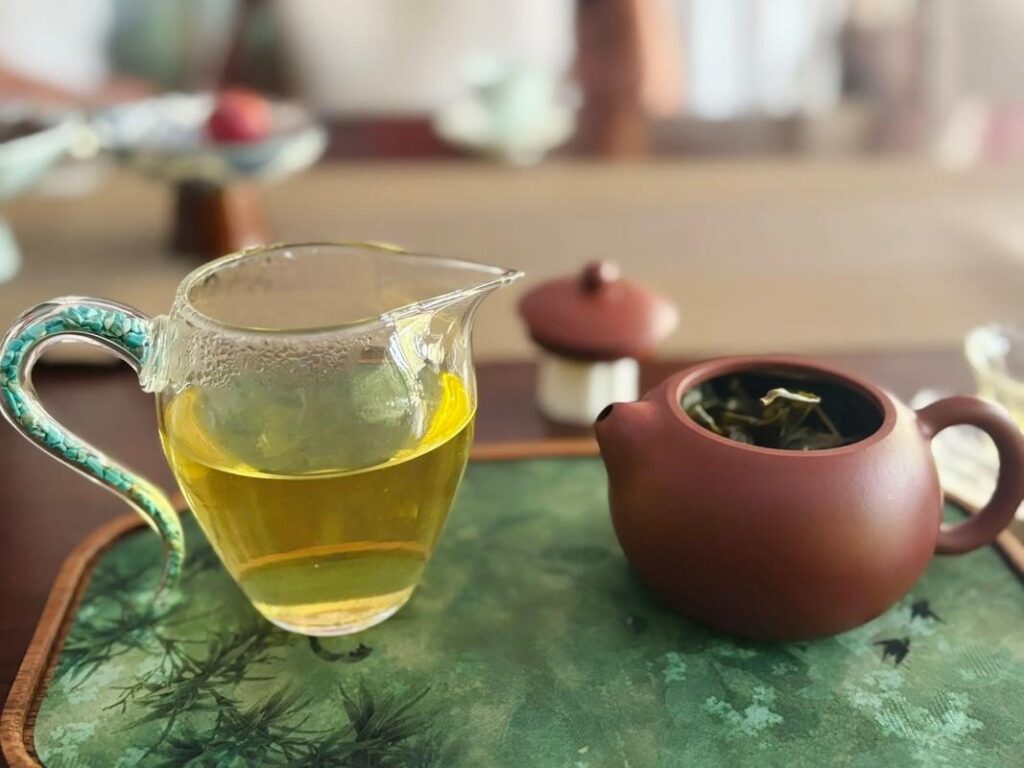
If you are new to Chinese tea, do not expect oolong to taste like sweet bottled tea. It is usually unsweetened, layered, and subtle. The enjoyment comes from aroma, mouthfeel, and the way the flavor changes across several infusions.
Potential Wellness Benefits of Oolong Tea
Oolong tea is often discussed in wellness spaces, but it should be approached realistically. It is not a medicine and should not be treated as a cure for weight loss, heart disease, blood sugar problems, or any medical condition.
What oolong can do well is support a healthier daily drinking habit. Unsweetened tea can replace sugary drinks. Its natural polyphenols contribute antioxidant activity. Its caffeine may support alertness, while the slower brewing ritual can help some people build a calmer routine.
Many people also enjoy oolong after meals because roasted or aromatic styles feel clean and refreshing. That does not mean it “detoxes” the body; it simply makes a pleasant, unsweetened drink that can fit into a balanced lifestyle.
Does Oolong Tea Have Caffeine?
Yes. Oolong tea naturally contains caffeine because it is made from the tea plant. The exact amount depends on the cultivar, leaf maturity, processing, amount of tea used, water temperature, and steeping time.
In general, oolong sits somewhere between many green teas and black teas, but there is no single fixed number. A strong gongfu-style session with lots of leaf can deliver more caffeine than a lightly brewed mug. If you are sensitive to caffeine, drink oolong earlier in the day, use slightly less leaf, and avoid very long steeps.
How to Brew Loose Leaf Oolong Tea
Loose leaf oolong is usually best when the leaves have enough room to open. A small teapot, gaiwan, or roomy infuser works better than a tiny tea ball.
For a simple Western-style cup, use about 2-3 grams of tea for 250 ml of water. Use water around 185-203°F, depending on the tea. Light oolongs usually prefer slightly cooler water, while roasted oolongs can handle hotter water. Steep for 2-3 minutes, then adjust based on taste.
For gongfu-style brewing, use more leaf, less water, and shorter infusions. This method is especially good for Tie Guan Yin, Wuyi rock tea, and Phoenix Dan Cong because it lets you taste how the aroma changes across multiple rounds.
If your oolong tastes too bitter, the most likely causes are too much leaf, water that is too hot, or steeping too long. Shorten the next infusion before assuming the tea itself is bad.
How to Choose Oolong Tea as a Beginner
The easiest way to choose oolong is to start with the flavor you already like.
If you like floral and gentle tea, start with light Tie Guan Yin or another light oolong. If you like roasted flavors, try Wuyi rock tea or a roasted Tie Guan Yin. If you like very aromatic teas, explore Phoenix Dan Cong. If you are not sure, a small sampler is usually safer than buying a large bag of one unfamiliar tea.
For readers who want to compare several styles side by side, a Chinese oolong tea collection may provide an opportunity to sample floral, roasted, and aromatic oolongs before deciding which styles they prefer.
What to Look for When Buying Oolong Tea
Good oolong should smell clean and natural. The dry leaves should not smell stale, sour, musty, or heavily perfumed. Whole or mostly intact leaves are usually better than broken fragments, especially for teas meant to be brewed multiple times.
Be careful with vague labels such as “premium oolong” without origin, cultivar, roast level, or tasting notes. Oolong is a broad category, so better sellers usually explain what type of oolong it is, where it comes from, and how it tastes.
Price alone does not guarantee quality. For beginners, freshness, clarity of information, and a style that matches your taste matter more than buying the most expensive tea.
Frequently Asked Questions
Is oolong tea green tea or black tea?
Neither. Oolong is its own tea category. It is partially oxidized, which places it between green tea and black tea in processing, but it should not be treated as simply a blend of the two.
Is oolong tea good for beginners?
Yes, if you choose the right style. Light floral oolong is usually easy to drink, while heavily roasted rock tea or strong Dan Cong may be better after you have more experience.
Does oolong tea help with weight loss?
Oolong tea is not a weight-loss treatment. It can be part of a healthy routine, especially if it replaces sugary drinks, but diet, activity, sleep, and overall lifestyle matter much more.
Can you drink oolong tea every day?
Many people drink oolong daily. If you are sensitive to caffeine, start with a lighter brew and avoid drinking it late at night.
How many times can oolong tea be brewed?
Good loose leaf oolong can often be brewed several times. Gongfu-style brewing may produce many short infusions, while a larger mug-style brew may give fewer rounds.
Conclusion
Oolong tea is one of the most expressive tea categories in the world. It can be floral, roasted, fruity, mineral, creamy, or full-bodied depending on the region and processing style.
For health-conscious tea drinkers, its biggest value is not a dramatic medical promise. It is a flavorful, unsweetened, naturally caffeinated drink that may be used as an alternative to sugar-sweetened beverages as part of a balanced diet and healthy lifestyle.
If you are new to oolong, start by choosing a flavor direction: floral, roasted, mineral, or aromatic. Once you find the style you enjoy, oolong becomes much easier to understand and much more enjoyable to brew.
Other Articles You May Find of Interest...
- What a Weight Loss Clinic in Melbourne Can Do Before and After Your Surgery
- Cold Plunge or Sauna? What the Recovery Research Actually Shows
- How Personalized Weight Loss Programs Help Achieve Sustainable, Long-Term Results
- High-Fructose Foods to Limit and Lower-Sugar Alternatives
- Best High-Fiber Foods Chart for Better Digestive Health
- How Many Carbs Are in Turkey Bacon?
- 9 Healthiest Mushrooms to Eat





