Your Health Magazine Contributor
4201 Northview Drive
Suite 102
Bowie, MD 20716
More Weight Control, Nutrition & Exercise Articles
Dried Fruit vs Fresh Fruit: Nutrition, Calories and Key Differences

Dried or fresh fruit can be a part of a healthy diet. Fresh fruit is typically more filling at fewer calories because it takes up more volume. Dried fruit is low in water and more compact, easier to store, and higher in calories, natural sugar, fiber, and certain minerals.
To choose dried vs fresh fruit, the healthier option is really based on your requirements. Fresh fruit is better for hydration, weight loss, and quick energy, whereas dried fruit is great when a portable snack, longer shelf life, or quick energy is needed. The amount of portion and additional ingredients is more important than one form or another.
Dried vs Fresh Fruit at a Glance
Let us take a quick look at dried fruit vs fresh fruit:
| Feature | Fresh Fruit | Dried Fruit |
| Water content | High | Low |
| Calories per 100 g | Usually lower | Usually higher |
| Natural sugar per 100 g | Less concentrated | More concentrated |
| Fiber per 100 g | Moderate | More concentrated |
| Vitamin C | Usually higher | May decrease during drying |
| Minerals per 100 g | Less concentrated | Often more concentrated |
| Serving volume | Larger | Smaller |
| Shelf life | Shorter | Longer |
| Best use | Hydration and filling snacks | Travel, storage and quick energy |
What Happens When Fruit Is Dried?
Most of the water is removed from fruit when it is dried. Carbohydrates, natural sugars, fiber, and minerals are concentrated in a smaller food volume as fruit size and weight decrease.
The important thing to realize about dehydrated fruit vs fresh fruit is this: Drying does not necessarily increase sugar or calories. It packs the fruits with nutrients and calories. Only when manufacturers use sugar, syrup, or sweetened coatings during processing is added sugar a concern.
The method of drying also influences the nutritional properties. Sun drying, hot-air drying and freeze-drying do not yield the same effects. The level of heat-sensitive nutrients that can be retained can vary based on temperature, drying time, and storage conditions.
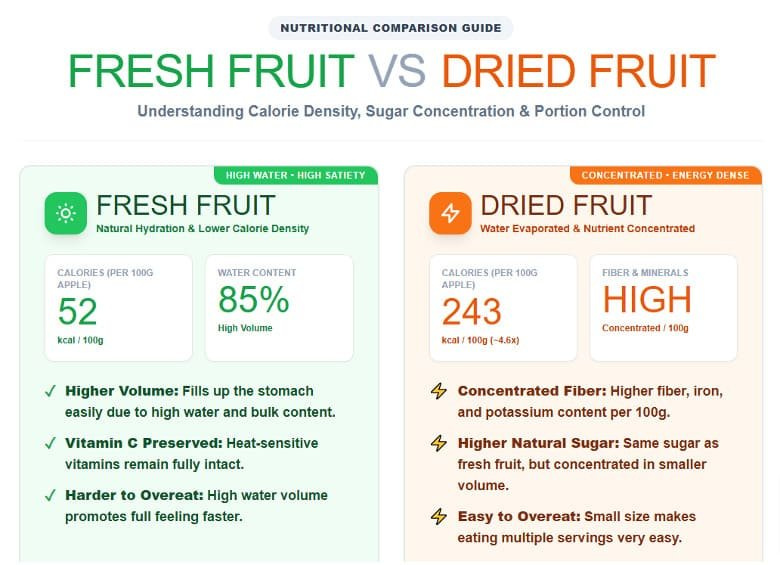
Fresh Fruit vs Dried Fruit Calories
When the two forms are compared, by equal weight, the difference in fresh fruit vs dried fruit calories becomes apparent. The USDA nutrient data shows that 100 grams of fresh apple with skin has approximately 52 calories. Dried apple – 100 g contains approximately 243 calories compared with 178 calories per 100 g of fresh apple.
Dried apple is not unhealthy; this is just a matter of personal preference. A hundred grams of dried apple is a lot more apple than 100 grams of fresh apple because most of the water has been evaporated.
This is the same in apricots, grapes, plums and other fruits. A dried product typically has several times the calories per 100 g of the fresh product. These are actual and will depend on the variety of fruit used, the moisture in the fruit and any added ingredients.
Dried Fruit vs Fresh Fruit Nutrition
There are many nutrients in dried fruit vs fresh fruit nutrition; although some are common in both, the levels of the nutrients are different.
Fiber
Fiber is typically left behind after washing. So, dried fruit is usually higher in fibre per 100g. Dried apricots provide the same amount of fiber and minerals, but in less volume than fresh apricots.
Minerals
The concentrations of potassium, copper, and iron may also be higher per 100 g due to the concentration during dehydration.
But higher concentration doesn’t necessarily mean better nutrition. Fresh fruits provide you with significantly greater amounts of food and water. This can help to make fuller and make fresh fruit more easily incorporated into a less caloric diet.
Vitamin C
Vitamin C is heat-, air-, and storage-sensitive. Studies on fruit preservation indicate that the drying process can lead to some degree of meaningful losses of vitamin C, depending on the drying process and fruit being used. However, it is not correct to assume that these other compounds either boost or reduce in content during processing.
Does Dried Fruit Have More Sugar?
Dried vs fresh fruit does not always have more sugar in it than the original fruits used to make it.
The real challenge is portion size. One fresh apricot will be enough for a person, but several dried apricots can be eaten rapidly. This means eating more fruit, carbohydrates, and calories without feeling full.
When purchasing dried fruit, be sure to read the ingredients. Fruit should be the primary (or only) component. Avoid cranberries, mangoes, pineapples, and banana products with added sugar, syrup, or oil.
Which One Should You Choose?
When snacking for a refreshing, high-volume snack or when you need more watery fruit, select fresh fruit. Apples, oranges, berries, peaches, and fresh apricots are helpful choices when it comes to controlling appetite.
Dried fruit vs fresh fruit can be more convenient to take on hikes, travels, school lunches, and in the workplace where fresh fruit is hard to keep.
Who Should Be Careful?
Individuals on a diet that require to track calories or carbs need not give up dried fruit. Use the portion size and include nuts, seeds, or unsweetened yogurt to make a more balanced snack.
People with diabetes, kidney disease, or other medical conditions who are following a medical diet should use the advice of a qualified health care provider.

How Much Dried Fruit Equals Fresh Fruit?
To choose dried vs fresh fruit, the USDA food pyramid considers about half a cup of dried fruit to be 1 cup of fruit. This is an indication of the concentration of dried fruit after the water has been removed. It is not that the two portions have the same number of calories or the same amount of all the nutrients.
Instead of using a large bowl, use the serving size on the package to guide snack amounts. Slowly chewing and swallowing food also helps you to feel full quicker.
How to Choose Better Dried Fruit
Look beyond attractive color and packaging. Check the ingredient list, nutrition label, serving size, and added sugar content. For bulk or wholesale purchases, buyers should also confirm the fruit variety, crop year, moisture level, grade, preservatives, packaging, shelf life, and storage requirements.
Sulfur dioxide is sometimes used to protect color and extend shelf life, especially in apricots. It is different from added sugar, but people with sulfite sensitivity should check the label carefully.
Conclusion
In the dried fruit vs fresh fruit comparison, neither option is always healthier. Fresh fruit contains more water, offers a larger serving volume, and is generally lower in calories by weight. Dried fruit is more compact, has a longer shelf life, and provides concentrated energy, fiber and minerals. For everyday hydration and appetite control, fresh fruit may be the better choice.
Other Articles You May Find of Interest...
- Do Avocados Contain Vitamin C?
- How to Appeal a Wegovy Insurance Denial: Coverage, Exceptions and Next Steps
- How to Get Abs: The Ultimate Guide to a Leaner Body
- Plate-Loaded vs Pin-Loaded Strength Machines: What’s the Difference?
- Meal Planning With Hashimoto’s: A Week of Thyroid-Friendly Eating Without the Stress
- How Can I Get More Magnesium in My Diet?
- Is a Personal Trainer Worth It After 50?