






Your Health Magazine Contributor
4201 Northview Drive
Suite 102
Bowie, MD 20716
More Weight Control, Nutrition & Exercise Articles
How Strength Training Apps Can Support Progressive Overload and Workout Planning
Most strength training apps are built around workout logging, but lifters who care about progressive overload, periodization, and improving their major lifts may need more than a basic record of completed workouts.
Strength training apps can serve very different purposes. Some primarily record workouts, while others help organize training plans, track progressive overload, monitor performance trends, or adjust workouts over time. Understanding those differences can make it easier to choose tools that fit your training style and goals.
Different Types of Strength Training Apps
Program-Planning and Progression Apps
Alpha Progression

Platform: iOS, Android
Price: Free trial available; from $12.99/month or $79.99/year
Alpha Progression is designed to take the guesswork out of making progress in the gym. Unlike apps that only log what you’ve done, it helps you decide what to train and how to progress over time.
The Plan Generator creates personalized workout plans based on your goals, experience, available equipment, schedule, and muscle priorities, so the output reflects how you train rather than pulling from a generic template.
During workouts, the app provides set-specific weight and rep recommendations based on your previous performance. The periodization engine handles volume, intensity, and deload weeks automatically, which means you’re not stuck manually bumping numbers and hoping for the best. The exercise library covers 795 movements, all with demonstration videos, spanning everything from the main barbell lifts to cable accessories and bodyweight work.
For lifters on a hypertrophy block or running linear progression, these features can make it easier to determine when and how much to add.
The free trial gives you time to see how the app works. The full feature set requires a subscription.
Key features:
- Automatic set-specific weight and rep recommendations based on logged performance
- Plan Generator builds personalized programs around goals, equipment, and schedule
- 795 exercises with demonstration videos
- Periodization with automatic deload scheduling
- Tracks volume and intensity trends over time
Considerations:
- No meaningful free tier beyond the initial trial
- Social and community features are limited compared with some workout-tracking apps
- May take some time to learn for lifters used to simpler trackers
Pricing: Short free trial, then subscription required. Annual plan is around $79.99.
Workout Logging Apps
Hevy
Platform: iOS, Android
Price: Free / Pro at $2.99/month
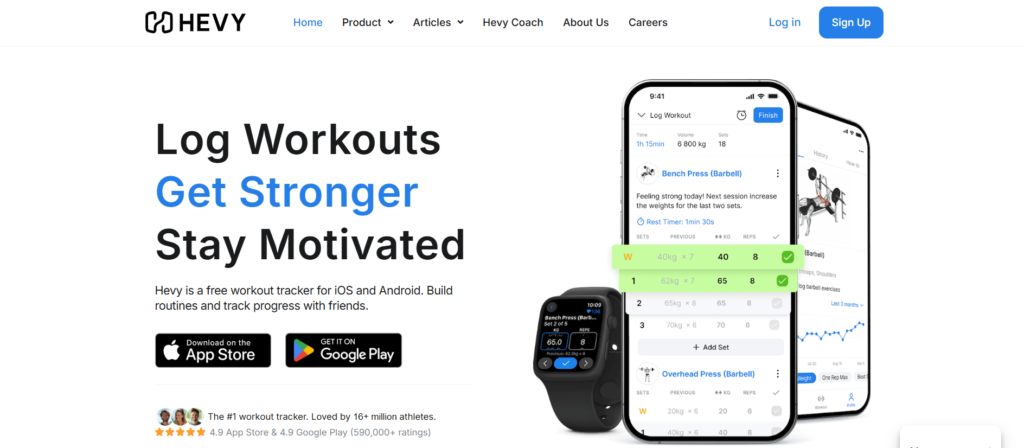
Hevy offers a free lifting tracker with custom routines, workout logging, progress charts, and a social accountability feed.
Where Hevy differs from a programming-focused app is planning. It’s primarily a logger rather than a program generator. The app records what you do and shows how your numbers trend, but it does not build a program or automatically tell you when to increase your squat.
If you’re already following a structured program such as a 5/3/1 cycle, GZCLP, or your own push-pull-legs split, it provides a place to record and monitor that work.
The Pro tier at $2.99/month unlocks additional analytics and features.
Key features:
- Custom routines and workout logging on the free plan
- Fast set logging with a built-in rest timer
- Social feed for accountability and routine sharing
- Apple Watch integration
Considerations:
- No AI-driven programming or automatic progression
- Exercise library is smaller than some dedicated planning apps
- Advanced analytics require the Pro upgrade
Pricing: Free tier available. Pro at $2.99/month for additional statistics.
Adaptive Workout-Generation Apps
Fitbod
Platform: iOS, Android
Price: Around $12.99/month or $79.99/year
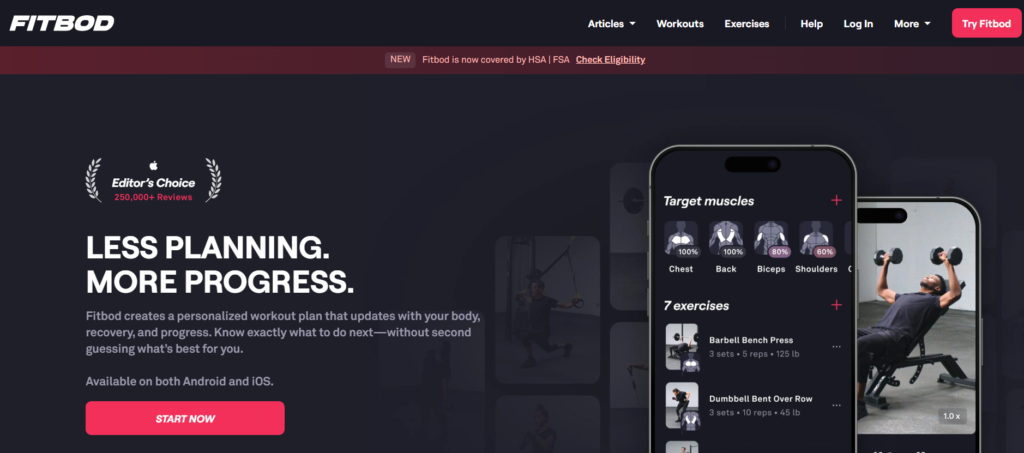
Fitbod generates workouts based partly on your recent training history. Each time you log a session, the app considers which muscles you worked, how hard you trained, and how much time has passed before generating another workout.
For lifters who train several days per week, this approach can help organize training around recent muscle use and recovery.
The workout generator supports barbell, dumbbell, cable, and bodyweight movements. Users can set their available equipment, whether they train in a home gym, commercial gym, or with minimal equipment, and the app adjusts exercise selection accordingly.
Fitbod also logs training volume and estimated one-rep-max trends and adjusts load recommendations as training progresses.
There is no permanent free tier. Users receive a limited trial before a subscription is required.
Key features:
- Adaptive workout generation based on recent training
- Large exercise library with equipment filtering
- Adjusts load recommendations as strength changes
- Built-in workout logging and rest timer
Considerations:
- No permanent free tier
- Subscription required for ongoing use
- Less specifically focused on strict powerlifting or competition peaking
Pricing: Limited trial followed by a subscription of about $12.99/month or $79.99/year.
Strength-Sport Programming Apps
JuggernautAI
Platform: iOS, Android
Price: Around $29.99/month
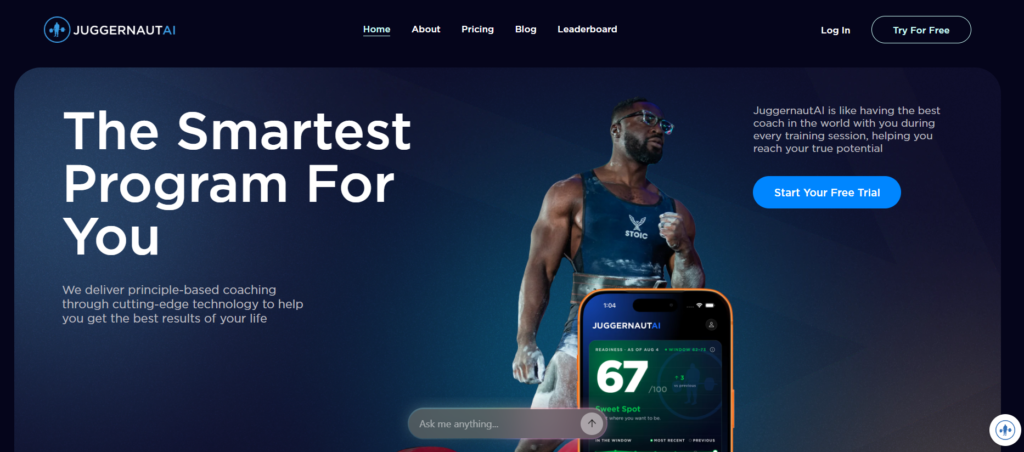
JuggernautAI is designed primarily for powerlifters and serious barbell athletes. Built by powerlifting coach and athlete Chad Wesley Smith, the platform uses programming principles centered on the squat, bench press, and deadlift.
The system builds periodized programs around a user’s main lifts and uses measures such as RPE and session performance to adjust training intensity and structure.
The onboarding process asks for current maxes, competition schedule, and training history. Sessions include detailed programming and explanations that may be especially relevant to lifters already familiar with concepts such as RPE, mesocycles, and competition preparation.
At around $29.99 per month, it is more expensive than many general workout apps and is designed for a more specialized strength-training audience.
Key features:
- Auto-regulation based on RPE and session performance
- Programming centered on squat, bench press, and deadlift
- Handles training blocks that include peaking and deloads
- Detailed session explanations
Considerations:
- Higher monthly price than many general training apps
- Designed primarily for serious strength athletes and powerlifters
- Steeper learning curve for users unfamiliar with RPE and periodization
- No meaningful permanent free tier
Pricing: Subscription at around $29.99/month.
Apps With Coaching and Education
Caliber
Platform: iOS, Android
Price: Free self-guided tier / Paid coaching tiers available
Caliber combines strength training programs, exercise instruction, form cues, and workout logging with the option to add human coaching.
The free self-guided tier gives users access to structured strength programs and educational information designed to explain the reasoning behind different exercises and training decisions.
Users can also upgrade to work with a human coach inside the app. The coach can review workout logs, adjust programming, and provide feedback on form videos.
The free programs are structured, which may be useful for people who want more guidance but may feel restrictive to advanced lifters who prefer extensive customization.
Key features:
- Free self-guided strength programs
- Exercise instruction and form guidance
- Option to add human coaching
- Educational explanations of training principles
Considerations:
- Free programs have limited customization
- One-on-one coaching requires a paid tier
- Progressive overload tracking is more manual than in some automated planning apps
Pricing: Free self-guided tier available. Coaching tiers are priced separately.
What to Look For in a Strength Training App
When comparing strength training apps, consider whether you need workout programming or simply a logging tool, whether the app supports progressive overload, how much customization it allows, what performance data it tracks, whether coaching or educational guidance is important to you, and whether its cost makes sense for the features you will actually use.
Do you need a program or just a log?
If you already follow a structured program such as 5/3/1, GZCLP, or the Texas Method, a straightforward logging app may be enough. If you want an app to help construct workouts and manage progression, look for tools that include program generation and automatic progression features.
Are you training for strength sports or general fitness?
Powerlifters and competitive athletes may need features such as RPE tracking, peaking blocks, and competition-oriented programming. People training for general strength or hypertrophy may prefer broader exercise libraries and more flexible workout generation.
How important is cost?
Free tiers may provide enough functionality for workout logging and basic programming. Paid apps typically add features such as automated progression, advanced analytics, adaptive programming, or personal coaching.
Consider which features you will actually use before deciding whether a subscription adds enough value.
Do you want education or automation?
Some apps explain programming principles and exercise technique, while others are designed to make more of the training decisions automatically. Which approach makes sense depends on how involved you want to be in planning your own workouts.
Tracking Progress Beyond an App
Consistent training, a structured program, and progressive overload matter more than any single app feature. Technology can make those habits easier to organize, but it does not replace the fundamentals of strength training.
Strength numbers are also only one way to monitor progress. Depending on your goals, you may track measurements, body weight, workout consistency, or other body-composition indicators. This easy BMI calculation tool takes under a minute to use. BMI has limitations and does not distinguish between muscle and body fat, so it should be considered one general screening measure rather than a complete assessment of fitness or body composition.
Frequently Asked Questions
What features are useful in a strength training app?
Useful features may include workout logging, progressive overload tracking, program planning, exercise demonstrations, performance analytics, equipment filtering, rest timers, and options for coaching or educational guidance.
Can a free strength training app track progressive overload?
Some free apps allow you to record weights, reps, and workout history so you can manage progressive overload yourself. Automated weight or repetition recommendations are more commonly included in paid planning features.
What should powerlifters look for in a workout app?
Powerlifters may benefit from tools that support squat, bench press, and deadlift programming, RPE tracking, training blocks, deloads, readiness adjustments, and competition preparation.
Do I need a paid app to get stronger?
No. Consistent training, a structured program, adequate recovery, and progressive overload matter far more than app features. A paid app may add convenience, automation, analytics, or coaching, but it does not replace the fundamentals.
Are strength training apps useful for beginners?
They can be. Beginners may benefit from apps that provide structured programming, exercise demonstrations, form guidance, and explanations of basic training principles. More advanced features such as RPE-based programming or competition peaking may be unnecessary when someone is first learning how to train.
Final Thoughts
Strength training apps range from simple workout logs to platforms that generate programs, adjust training variables, provide coaching, or monitor long-term performance trends.
The most useful option depends on what you need help with. Someone who already has a training program may primarily need an efficient way to record workouts, while another lifter may want guidance with progressive overload, exercise selection, recovery, or overall program structure.
The app itself is only a tool. Long-term progress still depends on consistent training, appropriate progression, recovery, and a program that matches your goals.
Other Articles You May Find of Interest...
- How Strength Training Apps Can Support Progressive Overload and Workout Planning
- How to Calculate Your Target Heart Rate Zones for Fat Burning and Cardio Fitness
- How to Choose the Best Weight Loss Medication for You
- Bariatric Surgery: Understanding the Commitment
- How Healthy Fats Fit Into a Balanced Weight Management Plan
- Ebike Health Benefits: How Electric Cycling Improves Fitness
- Why Pineapple Makes Your Tongue Sting





