Your Health Magazine Contributor
4201 Northview Drive
Suite 102
Bowie, MD 20716
More Vision & Eye Care Articles
Beyond Cataract Surgery: A Midyear Review of Changing Eye Care
Key Takeaways
- Cataract care increasingly emphasizes careful planning, individualized lens discussions, and attentive follow-up.
- Cataracts do not always cause blurred vision, so a complete eye exam remains important.
- Surgery is the established way to remove a cataract, while drops and other nonsurgical approaches remain research topics rather than routine replacements.
- Recovery instructions, realistic visual goals, and long-term eye health habits can all affect the patient experience.
Cataracts are a common age-related eye condition in which the eye’s natural lens becomes cloudy. Vision changes may appear gradually, making them easy to explain away as normal aging or a need for stronger glasses. Recognizing possible Cataract symptoms can help people decide when it is time to schedule an eye exam. In 2026, cataract care is still centered on a straightforward goal: helping people see well enough to do the things that matter to them. That may mean reading labels, driving more comfortably, working at a computer, seeing loved ones clearly, or moving through low-light spaces with more confidence.
Why Cataract Care Still Matters
Cataracts remain a major cause of vision impairment worldwide. The more than 94 million people affected globally reflect both the widespread nature of cataracts and the ongoing need for timely access to eye care. Vision loss can limit independence, social activity, work, balance, and everyday safety, particularly when glare or poor night vision becomes a problem.
Early Signs That Deserve An Eye Exam
Only an eye-care professional can determine what is causing a vision change, but the following symptoms should not be ignored:
- Cloudy, hazy, or blurred vision
- Headlights, lamps, or sunlight that feel unusually bright
- Difficulty seeing in dim rooms or at night
- Colors that seem faded, yellowed, or less vivid
- Frequent changes to glasses or contact lens prescriptions
- Double vision in one eye
- More difficulty reading signs, medication labels, or small print
Why A Routine Eye Exam Can Reveal More Than Cataracts
Blurred vision can also be related to dry eye, corneal conditions, glaucoma, diabetic eye disease, macular degeneration, or a refractive error. A full exam gives the clinician a chance to look beyond a standard letter chart and assess the health of the eye. Recent research on lower-contrast vision testing also suggests that some real-world visual difficulties may be missed when testing relies only on high-contrast letters.
Helpful questions to ask during an appointment include:
- What is most likely causing my vision change?
- Are both eyes affected in the same way?
- Could another eye condition affect my vision or treatment results?
- Is this changing slowly, or does it need closer follow-up?
- How often should I return for monitoring?
What Has Changed In Cataract Care in 2026
Many advances are refinements of established care rather than entirely new procedures. Preoperative imaging and eye measurements can support more detailed surgical planning. Clinicians are also paying close attention to dry eye and corneal surface health, because unstable measurements may complicate lens planning and affect comfort before or after surgery. Lens selection has become more closely tied to daily visual priorities. Some patients mainly want distance vision, while others value computer-range vision, reading vision, astigmatism correction, or reduced reliance on glasses. Each option may involve trade-offs. For example, some lens designs may not suit every eye and can be associated with visual effects such as glare, halos, or reduced contrast in certain settings. Research continues into ways to simplify postoperative drops, manage inflammation, and explore nonsurgical treatments. Those investigations are worth watching, but they should not be confused with proven alternatives to cataract removal.
Proven Treatment And Early Research Are Not The Same
Cataract surgery removes the clouded natural lens and replaces it with an artificial intraocular lens. It is the standard treatment when cataracts interfere with daily activities. By contrast, eye drops, supplements, exercises, and light-based approaches marketed as cataract cures may be investigational, unsupported, or inappropriate for a particular patient. Before considering a newer option, ask whether it has regulatory approval, peer-reviewed research, meaningful safety data, clear eligibility criteria, and known side effects. A promising early study does not guarantee that a treatment will become routine clinical care.
How To Prepare For A Cataract Consultation
- Write down when the vision changes began and which activities are harder.
- Bring a list of medicines, vitamins, allergies, and current eye drops.
- Share health conditions such as diabetes or high blood pressure, as well as prior eye surgery or injuries.
- Explain your priorities for driving, reading, screen use, hobbies, and nighttime activities.
- Ask for a clear discussion of expected benefits, limitations, risks, lens choices, and recovery needs.
What Recovery May Look Like
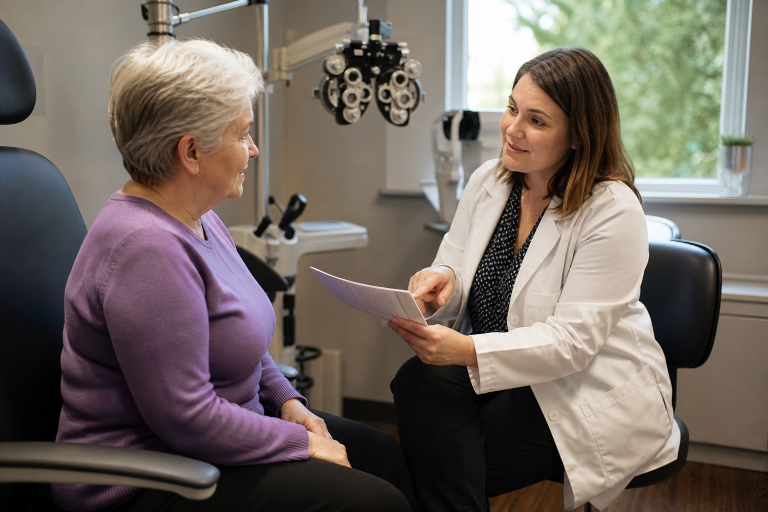
Recovery differs among patients and depends on the procedure, the health of the eye, and whether another condition is present. Early blur, light sensitivity, or mild irritation can occur. The first day usually focuses on rest and following protection instructions. During the first week and first month, follow-up visits help the care team monitor healing and adjust guidance about driving, exercise, swimming, makeup, and other activities. Use prescribed drops exactly as directed, avoid rubbing the eye, and do not resume activities until the surgeon says they are appropriate to do so. Contact the eye-care team promptly for sudden vision loss, severe or worsening pain, increasing redness or swelling, new flashes, a sudden shower of floaters, a curtain-like shadow, or nausea and headache with eye pain.
Daily Habits That Support Long-Term Eye Health
- Wear sunglasses that block ultraviolet rays.
- Avoid smoking and secondhand smoke when possible.
- Manage diabetes and blood pressure with the care team’s guidance.
- Eat a balanced diet that includes leafy greens, colorful produce, fish, nuts, and whole grains.
- Use protective eyewear for yard work, repairs, and sports.
- Discuss long-term corticosteroid use and other medication concerns with a clinician.
Common Questions
Can Cataracts Be Prevented Completely?
No. Aging is the leading risk factor, so cataracts cannot always be prevented. Healthy habits and regular eye care may still reduce avoidable risks and support overall eye health.
Do Cataracts Always Need Surgery?
No. Mild cataracts may be monitored, and updated glasses, brighter lighting, or glare reduction may help for a time. Surgery is generally considered when vision affects daily life.
Can Eye Drops Remove A Cataract?
Lubricating and prescription drops may treat other eye concerns, but they do not remove an established cataract. Discuss any product promoted as a cataract cure with a qualified eye-care professional.
A Practical Checklist
- Schedule an exam when vision changes disrupt normal tasks.
- Do not assume every vision problem is simply aging.
- Ask which choices are established care and which are still under study.
- Share realistic visual goals before choosing a lens.
- Follow postoperative instructions and seek urgent help for severe symptoms.
Cataract care in 2026 is increasingly personalized, but the foundation remains the same: a complete eye exam, an informed discussion of goals, and follow-up that protects both vision and long-term eye health.
Conclusion
Cataract care in 2026 continues to focus on accurate diagnosis, individualized treatment planning, and appropriate follow-up. Because blurred or changing vision can have several causes, a complete eye examination is important before assuming that cataracts are responsible. When a cataract significantly interferes with daily activities, surgery remains the established treatment, while proposed nonsurgical approaches should be evaluated based on available clinical evidence and regulatory status. Patients can also benefit from discussing their daily visual priorities, lens options, potential limitations, and expected recovery with their eye-care professional. Following postoperative instructions and maintaining healthy eye care habits can support recovery and long-term vision health. With realistic expectations and informed communication, patients can better understand their options and make decisions that reflect their individual vision needs and overall eye health.
Other Articles You May Find of Interest...
- Can You Have Laser Eye Surgery With Glaucoma?
- Why Are Contact Lens Users Asked to Stop Wearing Lenses before Laser Eye Surgery Tests?
- What Credentials to Look for When Searching for the Right Eye Doctor in New York
- New Flashes, Floaters, or a Shadow in Your Vision: When to Seek Prompt Eye Care
- Still wearing contacts every day? When it may be worth asking about LASIK
- What a LASIK consultation can tell you about your eyes
- Can You Use Biotrue Contact Solution as Eye Drops?