Your Health Magazine Contributor
4201 Northview Drive
Suite 102
Bowie, MD 20716
More Sleep Articles
Why Is It So Hard To Get Out Of Bed? What Sleep Science Says
Most of us treat the morning struggle as a willpower problem. You set the alarm with good intentions, and at 6:30 a slower, more stubborn version of you bargains for ten more minutes. It’s easy to call that laziness. Sleep researchers have a different name for it, and the name changes what you should do about it.
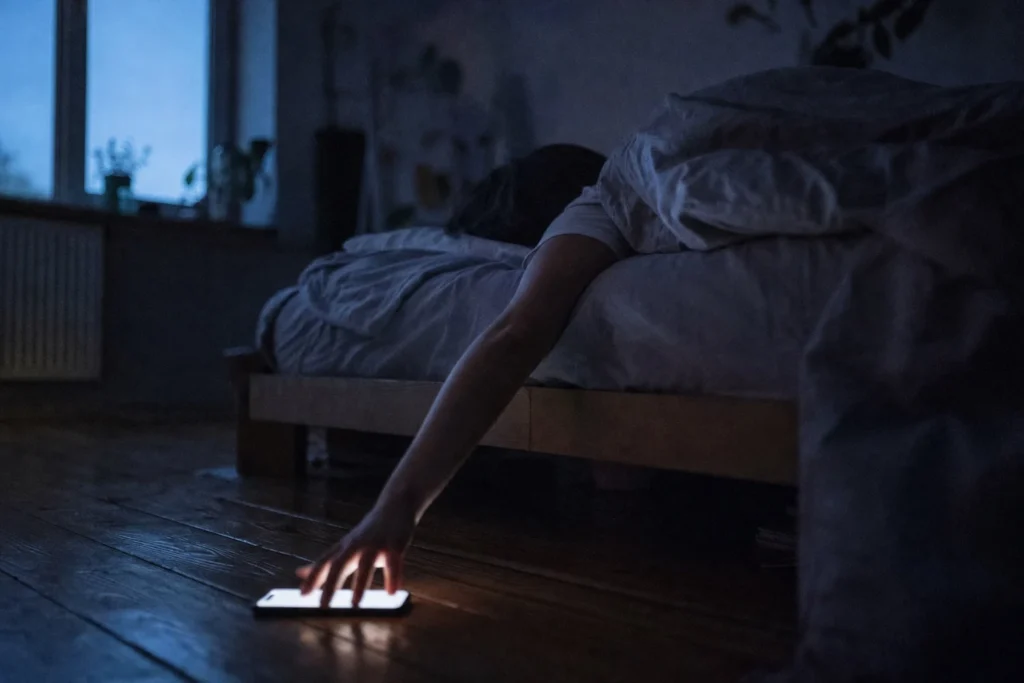
The groggy state has a name: sleep inertia
The heavy, confused feeling in the first minutes after waking is called sleep inertia. It’s the normal transition between sleep and full alertness, and it can be measured. In a review in Nature and Science of Sleep, Cassie Hilditch and Andrew McHill describe it as usually lasting 15 to 60 minutes, and as worst when you’re woken out of deep sleep.
The impairment is bigger than most people assume. In a 2006 study in JAMA, Adam Wertz and colleagues tested people’s thinking in the minutes right after waking and found it was worse than after 26 hours without sleep. For a few minutes, the person holding your phone at 6:30am is in worse cognitive shape than someone who stayed up all night.
At the far end sits what clinicians call sleep drunkenness, or confusional arousal. A 2017 review in Sleep Medicine Reviews by Lynn Marie Trotti notes that in population data, about one adult in seven reported an episode in the previous year.
For most people none of this is a disorder. It’s how the brain boots up. It also explains why mornings feel like a negotiation: the decision to get up lands at the moment your judgement is weakest.
Is the snooze button making it worse?
The snooze button has a bad reputation online. You’ve probably read that snoozing “restarts a sleep cycle” and leaves you groggy all day. In 2024, a team at Stockholm University put it to the test.
Tina Sundelin, Shane Landry and John Axelsson published two studies in the Journal of Sleep Research. In a survey of 1,732 adults, 69% said they used the snooze button or several alarms at least sometimes. Snoozers skewed young, and they skewed toward evening types. In the lab study, 31 habitual snoozers slept under two conditions: 30 minutes of snoozing, or uninterrupted sleep until the same final wake-up time. Snoozing cost them about six minutes of sleep and did not hurt their scores on cognitive tests taken right after getting up. The sample was small and limited to regular snoozers, so it says nothing about long-term effects for everyone. Risly’s review of the snooze research goes through what the study can and can’t tell you.
So snoozing may not be hurting your brain. It does show up on the clock. In a 2022 study in SLEEP, Stephen Mattingly and colleagues followed 450 workers wearing fitness trackers. 57% of them snoozed. They didn’t sleep less or feel sleepier than the others, but they took about 27 minutes on average to get from the first alarm to standing up. Non-snoozers took about 8.
The habit is everywhere. A 2025 analysis in Scientific Reports by Rebecca Robbins and colleagues looked at more than three million nights logged by 21,222 users of a sleep-tracking app. 55.6% of those nights ended with a snooze, and 45% of users snoozed on more than 80% of their mornings.
Snoozing isn’t dangerous, as far as we know. The cost is that you make the same decision again and again, with a brain that isn’t ready to make decisions.
Three reasons mornings feel impossible
If getting up is a daily fight, one of these is usually behind it.
1. You’re not getting enough sleep
It’s the least exciting explanation and the most common. The American Academy of Sleep Medicine and the Sleep Research Society recommend at least seven hours a night for adults. A CDC analysis in MMWR found that about 35% of US adults report less than that. If you’re carrying a sleep debt, no morning routine will make up for it.
2. Your body clock and your calendar disagree
People run on different internal schedules, often called chronotypes. Evening types feel alert later and have a harder time with early alarms, and the 2024 survey above found they snooze more. That’s biology. It won’t move your 7am shift, but it does mean “just try harder” is a weak plan.
3. You’re asking a half-awake brain to decide
Every alarm with a snooze option asks you to make a choice during sleep inertia. Most of us lose that negotiation. The version of us doing the negotiating is temporarily impaired, and discipline has little to do with it.
What helps
None of the following is medical treatment. These are low-risk habits that fit how waking up works.
Start with your bedtime
Count back at least seven hours from the time you really need to be up, then add the time it takes you to fall asleep. If the bedtime you land on looks unrealistic, that tells you something: the alarm time is the problem, more than your mornings are.
Keep the same wake time every day
The CDC’s healthy sleep advice includes going to bed and getting up at the same time every day, weekends included. On a steady schedule, the alarm stops coming as a shock.
Set one alarm, for the real time
A lot of people set the alarm for 6:00 because that’s who they’d like to be, then get up at 6:40. One alarm set for the time you’ll actually get up ends the snooze cycle with no extra effort.
Take the decision away from your morning self
Sleep inertia weakens judgement, so the fixes that hold up are the ones that remove the choice: putting the phone across the room, or using an alarm that asks for a small physical or mental task before it goes quiet. They work because they don’t depend on willpower at 6am, and they matter most for people who sleep through ordinary alarms. This comparison of alarms that actually make you get out of bed shows how the different options work.
Give yourself a buffer
Sleep inertia can last up to an hour, so keep important decisions, hard conversations and driving out of the first minutes after you wake. Getting up, moving around and switching on a bright light all help the transition along.
When to talk to a doctor
Morning grogginess is normal. Exhaustion that won’t lift is a different matter. If you regularly sleep seven hours or more and still struggle to wake, feel very sleepy during the day, have been told you snore loudly or stop breathing in your sleep, or have episodes of confusion after waking, see a healthcare professional. Sleep apnea and other sleep disorders are common and treatable, and many people who have one don’t know it.
The short version
If you can’t get out of bed, look at three things before you blame your character: how many hours you sleep, how far your alarm sits from your natural wake time, and how many times your alarm lets you say no. Most of the fix happens the night before, when you pick a bedtime and set the alarm.
References
- Hilditch, C. J., & McHill, A. W. (2019). Sleep inertia: current insights. Nature and Science of Sleep, 11, 155–165.
- Wertz, A. T., Ronda, J. M., Czeisler, C. A., & Wright, K. P. (2006). Effects of sleep inertia on cognition. JAMA, 295(2), 163–164.
- Trotti, L. M. (2017). Waking up is the hardest thing I do all day: sleep inertia and sleep drunkenness. Sleep Medicine Reviews, 35, 76–84.
- Sundelin, T., Landry, S., & Axelsson, J. (2024). Is snoozing losing? Why intermittent morning alarms are used and how they affect sleep, cognition, cortisol, and mood. Journal of Sleep Research, e14054.
- Mattingly, S. M., et al. (2022). Snoozing: an examination of a common method of waking. SLEEP, zsac184.
- Robbins, R., et al. (2025). Snooze alarm use in a global population of smartphone users. Scientific Reports.
- Watson, N. F., et al. (2015). Recommended amount of sleep for a healthy adult: a joint consensus statement of the American Academy of Sleep Medicine and Sleep Research Society. Sleep, 38(6), 843–844.
- Liu, Y., et al. (2016). Prevalence of healthy sleep duration among adults, United States, 2014. MMWR, 65(6), 137–141.
Other Articles You May Find of Interest...
- The 15-Minute Rule: How Long to Lie on a Mattress Before Deciding
- Why Is It So Hard To Get Out Of Bed? What Sleep Science Says
- Why Sleep Consistency Matters More Than Chasing the Perfect Night’s Sleep
- How Quality Bedding Can Help You Sleep Better
- What Does It Mean When Someone Dreams of You?
- How to Choose a Sleep Mask That Feels Comfortable Night After Night
- How Static Sound Frequency Profile Aids White Noise For Sleep