






Your Health Magazine Contributor
4201 Northview Drive
Suite 102
Bowie, MD 20716
More Sleep Articles
How Bedroom Temperature, Airflow, and Lighting Affect Sleep Quality
Small changes to the bedroom can make a noticeable difference in how comfortable the night feels. Temperature, air movement, light, humidity, and noise all work together to shape the sleep environment.

A comfortable bedroom does not guarantee perfect sleep, but an uncomfortable one can make winding down much harder. A room that feels too warm, stagnant, bright, humid, or noisy can keep a person tossing, turning, or waking more often. That is why the physical environment deserves as much attention as familiar bedtime habits such as limiting caffeine or keeping a regular schedule.
Temperature, airflow, and lighting are especially important because they affect both physical comfort and the cues the body uses to prepare for rest. The goal is not to create one “ideal” bedroom that works for everyone. It is to understand what each factor does, then adjust the room in a way that suits the sleeper, the climate, the season, and the space.
Why the Bedroom Environment Matters for Sleep
Sleep happens in a sensory environment. Even when someone is tired, the brain and body continue to respond to heat, light, sound, air movement, and changes in comfort. A warm room can make bedding feel oppressive. A bright room can signal that it is still time to be alert. Still, humid air can feel heavy even when the thermostat setting looks reasonable.
These factors also interact. A slightly warm room may feel comfortable when air is moving, but muggy when the air is still. Dim lighting may help a person relax before bed, yet the same room can feel disruptive if a bright overhead fixture remains on. Thinking about the bedroom as a complete environment is often more useful than focusing on any single setting.
How Bedroom Temperature Affects Sleep Comfort
Body temperature changes naturally across the day and night. As bedtime approaches, the body begins shifting toward a cooler internal state. A bedroom that feels excessively warm can work against that sense of comfort, particularly when heavy bedding, high humidity, or poor air movement are also present.
Many people prefer a cooler room for sleeping, but there is no single thermostat number that fits every adult. Comfortable conditions depend on climate, clothing, bedding, age, humidity, individual preference, and whether a person tends to sleep hot or cold. The practical target is a room that feels comfortably cool without causing shivering, cold hands and feet, or a need for excessive bedding.
Signs the Room May Be Too Warm
· Waking up feeling hot or sweaty without another obvious cause.
· Kicking off blankets repeatedly during the night.
· Feeling restless when the room is closed up or humid.
· Needing strong cooling late at night after the room has stored heat all day.
When heat is the problem, lowering the thermostat is only one option. Shading the room from late-afternoon sun, using lighter bedding, improving ventilation when outdoor conditions allow, and increasing gentle air movement can all change how the room feels.
Why Airflow Changes How a Bedroom Feels
Moving air can make a warm bedroom feel more comfortable even when the actual room temperature changes very little. Air passing across the skin supports convective and evaporative heat loss, which is why a breeze often feels cooler than still air at the same temperature.
This is one reason fans can be useful during sleep: they can create steady air movement without requiring a dramatic drop in thermostat temperature. The effect is about perceived thermal comfort rather than refrigeration. A fan does not cool an empty room in the same way an air-conditioning system lowers indoor air temperature.
Air Circulation Is Not the Same as Ventilation
The terms are often used together, but they are not interchangeable. A fan circulates the air already in the room. Ventilation brings in outdoor air or exhausts indoor air, depending on the system. Opening a suitable window, using a mechanical ventilation system, or operating an exhaust system can exchange indoor and outdoor air; a ceiling fan by itself cannot.
That distinction matters in a closed bedroom. Air movement may improve comfort, but it does not remove indoor pollutants or replace stale air with fresh air. When air quality is a concern, circulation should be considered alongside appropriate ventilation rather than as a substitute for it.
Can a Ceiling Fan Help Create a More Comfortable Sleep Environment?
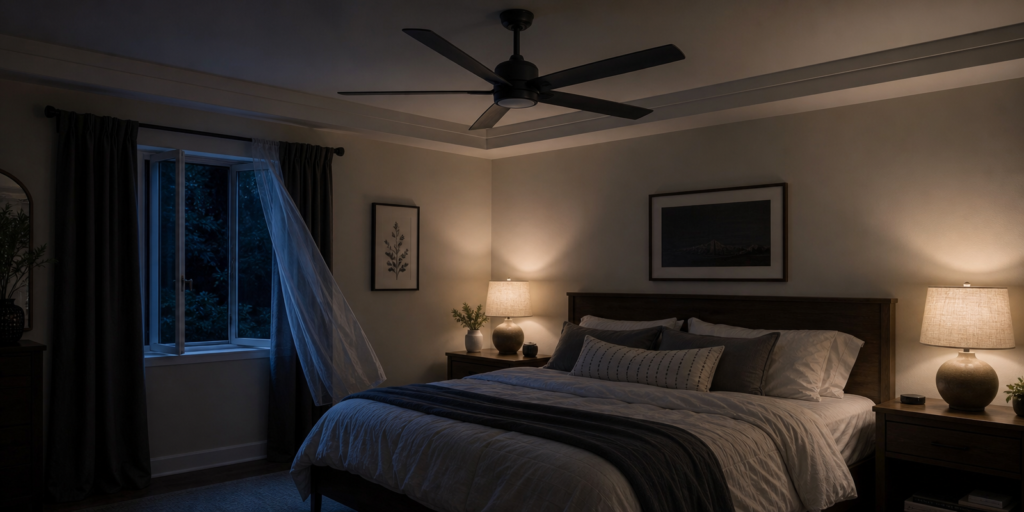
A ceiling fan can provide broad, consistent air movement without using floor space. In a bedroom, the most useful features are usually not the most dramatic ones. Quiet operation, several speed settings, suitable placement, and a fan size that matches the room can matter more than maximum speed alone.
Large rooms and high ceilings may need a different fan size or mounting arrangement than compact bedrooms. The final installed height, blade clearance, airflow, and the sleeper’s sensitivity to drafts should all be considered. Some people enjoy noticeable air movement throughout the night, while others prefer a low setting that simply keeps the room from feeling still.
In bedrooms where both air movement and overhead illumination matter, ceiling fans with lights can combine these two functions in a single fixture, provided the fan size, airflow, lighting controls, and installation height are appropriate for the room.
Placement also matters. A fan should be installed according to the manufacturer’s instructions and with adequate clearance from walls, furniture, and other fixtures. For sloped or high ceilings, the correct mounting hardware and downrod length may be just as important as the blade span.
How Lighting Affects the Sleep-Wake Cycle
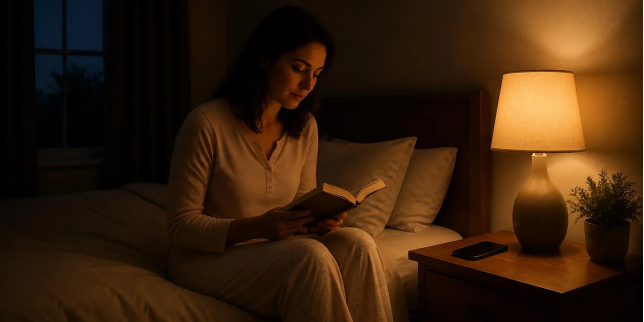
Light is one of the strongest environmental cues for the body clock. Bright light during the day supports alertness, while lower light in the evening helps create a clearer transition toward rest. That is why a bedroom that remains brightly lit until the moment the lights go out can feel very different from one that gradually becomes dimmer before bedtime.
The issue is not that all artificial light is harmful. Timing, brightness, duration, and color all matter. Phones, tablets, televisions, and bright overhead fixtures can contribute to a stimulating evening environment, especially when used close to bedtime. A calmer approach is to lower overall brightness, reduce unnecessary screen exposure, and use only as much light as the activity requires.
What to Look for in Bedroom Lighting
· Dimming, so the room can be bright when needed and softer later in the evening.
· Independent controls, so air movement can continue after the light is turned off.
· A comfortable color temperature for evening use rather than an overly harsh appearance.
· Good task lighting for reading, so the entire room does not need to be brightly illuminated.
· The ability to make the sleeping area truly dark once it is time to sleep.
A bedroom can therefore benefit from flexible lighting rather than simply more light. The best arrangement often supports bright, practical use earlier in the day and a lower, softer setting as bedtime approaches.
Humidity Can Change Thermal Comfort
Humidity affects how temperature feels. When the air is humid, sweat evaporates less easily, so the same thermostat setting can feel warmer and stickier. In dry conditions, the room may feel cooler but can also become uncomfortable for the nose, throat, or skin.
Air movement can improve comfort in humid conditions, but a fan does not remove moisture from the air. If indoor humidity is consistently high, a dehumidifier, air-conditioning system, or improvements to ventilation and moisture control may be more appropriate. The most comfortable bedroom usually comes from balancing temperature, humidity, and airflow rather than pushing one setting to an extreme.
Noise and Air Movement During Sleep
Sound is another part of the sleep environment. Some sleepers like a steady, low background sound because it makes sudden noises less noticeable. Others are sensitive to motor hum, clicking, rattling, or changes in speed. For this reason, a fan that is acceptable in a living room may not feel equally suitable in a bedroom.
If a fan is used at night, listen for mechanical noise at the lower speeds you are most likely to use. Loose hardware, an unbalanced blade, or an unsuitable installation can create noise that has nothing to do with the motor itself. Keeping the fixture clean and properly secured can make a noticeable difference.
How to Create a Cooler, Darker, More Comfortable Bedroom
A few practical adjustments are often more useful than chasing a perfect number or buying a single “sleep” product. Consider the room as a system and make changes one at a time so you can tell what actually helps.
1. Reduce heat gain before bedtime. Close blinds or curtains when strong afternoon sun heats the room, especially during warmer months.
2. Adjust bedding to the season. A heavy comforter can overwhelm an otherwise comfortable room.
3. Use ventilation when conditions are suitable. Fresh outdoor air can help when the weather, outdoor air quality, security, and noise level allow it.
4. Add gentle air movement if the room feels stagnant. Start at a low setting and increase only as needed.
5. Dim lighting before bed. Use lower, softer light for reading, dressing, or preparing for sleep.
6. Make the room dark during sleep. Blackout curtains, covered indicator lights, or a sleep mask can help when outside light is difficult to control.
7. Keep humidity comfortable. Address excess moisture rather than relying on air movement alone.
8. Reduce avoidable noise. Secure rattling fixtures and move noisy devices away from the bed.
When Nighttime Overheating May Not Be Just a Room Problem
Occasionally waking warm can be explained by hot weather, heavy bedding, a closed bedroom, or changes in indoor humidity. Persistent or severe night sweating is different. If someone repeatedly wakes drenched in sweat, has a fever, experiences unexplained weight change, develops new symptoms, or notices a sudden change in sleep comfort that cannot be explained by the room, it is worth discussing the pattern with a qualified healthcare professional.
Environmental changes can improve comfort, but they should not be used to dismiss symptoms that are persistent, unusual, or concerning.
The Goal Is Comfort, Not a Perfect Formula
A good sleep environment is usually cool enough to feel comfortable, dark enough to support rest, quiet enough to avoid repeated disturbance, and ventilated appropriately for the space. Air movement can make a warm room feel more comfortable, while flexible lighting can make the transition from daytime activity to sleep feel more natural.
The best setup will vary from one person and one season to another. Rather than aiming for an exact temperature, fan speed, or lighting level, focus on whether the room helps you settle down, stay comfortable, and wake without repeatedly feeling too hot, too cold, too bright, or too disturbed.
Frequently Asked Questions
How does bedroom temperature affect sleep?
A room that feels too warm or too cold can make it harder to stay comfortable through the night. Many people prefer a slightly cool sleeping environment, but the right setting depends on bedding, humidity, climate, clothing, and individual preference.
Is it better to sleep in a cool or warm bedroom?
For many adults, a comfortably cool room is easier to sleep in than an overheated one. The room should not be so cold that it causes shivering or discomfort. Personal comfort is a better guide than chasing one exact thermostat number.
Does airflow help you sleep?
Gentle air movement can improve thermal comfort, especially in a warm or humid room. It may help the skin lose heat more effectively, but it does not replace proper ventilation or air conditioning when those are needed.
Does a ceiling fan actually cool a bedroom?
A ceiling fan primarily cools people, not the room itself. Moving air across the skin can make the space feel cooler even when the measured air temperature changes very little.
Should you sleep with a ceiling fan on all night?
Many people are comfortable sleeping with a fan running, while others are sensitive to drafts or noise. Use a suitable speed, make sure the fan is installed correctly, and adjust it if it causes discomfort.
How does lighting affect sleep?
Bright evening light can make the environment feel more alerting, while dimmer light helps create a clearer transition toward bedtime. Reducing unnecessary brightness and keeping the bedroom dark during sleep can support a more restful setting.
Other Articles You May Find of Interest...
- The 15-Minute Rule: How Long to Lie on a Mattress Before Deciding
- Why Is It So Hard To Get Out Of Bed? What Sleep Science Says
- Why Sleep Consistency Matters More Than Chasing the Perfect Night’s Sleep
- How Quality Bedding Can Help You Sleep Better
- What Does It Mean When Someone Dreams of You?
- How to Choose a Sleep Mask That Feels Comfortable Night After Night
- How Static Sound Frequency Profile Aids White Noise For Sleep





