
More Reviews Articles
5 Best Strength Training Apps in 2026
Disclosure: This article may contain sponsored content or affiliate links provided by third parties. Publication does not constitute an endorsement by Your Health Magazine.
Most strength training apps are built for gym beginners counting calories, not for lifters who care about progressive overload, periodization, and hitting a new deadlift PR.
That gap matters. If an app can’t tell you when to add weight, track your e1RM, or build a real program around the big barbell lifts, it’s just a glorified notepad. We compared strength training apps based on progressive overload features, barbell lift coverage, program structure, logging tools, analytics, and free-versus-paid features.
This guide covers the five best strength training apps in 2026, evaluated on progressive overload logic, barbell lift coverage, program quality, and how much you get without paying. No fluff, no filler.
TL;DR
- #1 Best Overall: Alpha Progression
- #2 Best Free Tracker: Hevy
- #3 Best for Adaptive AI: Fitbod
- #4 Best for Powerlifters: JuggernautAI
- #5 Best for Coached Strength: Caliber
Quick-Pick Comparison Table
| App | Platform | Price | AI Planning | Best For | Progressive Overload Tracking |
| Alpha Progression | iOS, Android | From $12.99/mo | Yes | All-round strength training | Automatic |
| Hevy | iOS, Android | Free / $2.99/mo Pro | No | Tracking and social accountability | Manual |
| Fitbod | iOS, Android | $12.99/mo | Yes | Adaptive AI programming | Automatic |
| JuggernautAI | iOS, Android | $29.99/mo | Yes | Powerlifting and strength sports | Automatic |
| Caliber | iOS, Android | Free / Coaching extra | Partial | Coached strength programming | Manual |
How We Compared These Strength Training Apps
Not every lifting app deserves the label “strength app.” Here are the criteria we used to separate the real ones from the rebranded step-counters.
- Progressive overload logic. Does the app track load over time and tell you when to increase weight? Apps that leave this entirely to the user scored lower.
- Barbell lift coverage. The squat, deadlift, bench press, overhead press, and barbell row are the backbone of strength training. We checked how well each app handles these movements, including exercise demos, cues, and variation support.
- Program quality. Does the app offer structured, periodized programs, or just a blank logging screen? Built-in programs were assessed for their scientific backing and practical usability.
- Logging speed. If logging a working set takes more than two taps, lifters stop doing it mid-session. We timed how fast each app handled a typical five-set workout.
- Free vs paid transparency. Some apps hide their core value behind a trial that expires after ten workouts. We flagged every bait-and-switch and scored permanent free tiers higher.
- Analytics and PR tracking. Can you see your estimated one-rep max trend over three months? Does the app surface your volume per muscle group? These details matter for intermediate and advanced lifters.
- Beginner guidance. A good strength app should explain why a movement matters, not just log that you did it. We assessed how much educational context each app provides for new lifters.
The 5 Best Strength Training Apps
1. Alpha Progression: Best Overall Strength Training App

Platform: iOS, Android
Price: Free trial available; from $12.99/month or $79.99/year
Alpha Progression is designed to take the guesswork out of making progress in the gym. Unlike apps that only log what you’ve done, it helps you decide what to train and how to progress over time. The Plan Generator creates personalized workout plans based on your goals, experience, available equipment, schedule, and muscle priorities, so the output actually reflects how you train rather than pulling from a generic template.
During workouts, the app provides set-specific weight and rep recommendations based on your previous performance. The periodization engine handles volume, intensity, and deload weeks automatically, which means you’re not stuck manually bumping numbers and hoping for the best. The exercise library covers 795 movements, all with demonstration videos, spanning everything from the main barbell lifts to cable accessories and bodyweight work. For lifters on a hypertrophy block or running linear progression, Alpha Progression removes the most common reason people stall: not knowing when or how much to add.
Alpha Progression offers a permanent free version for workout logging and manually created plans. Pro, currently priced at $12.99 per month or $79.99 per year in the U.S., adds features such as the Plan Generator, progression recommendations, and advanced charts.
Best for: Intermediate lifters who want smart, automated progressive overload without hiring a coach.
Pros:
- Automatic set-specific weight and rep recommendations based on logged performance
- Plan Generator builds personalized programs around goals, equipment, and schedule
- 795 exercises with demonstration videos
- Periodization with automatic deload scheduling
- Tracks volume and intensity trends over time
Cons:
- Advanced planning and progression features require Pro
- Social and community features are thin compared to Hevy
- Learning curve for lifters used to simpler trackers
Pricing: Free version available. Pro is currently $12.99/month or $79.99/year in the U.S., with a 14-day trial available on the annual plan for eligible new users.
2. Hevy: Best Free Strength Tracker
Platform: iOS, Android
Price: Free (unlimited) / Pro at $2.99/month
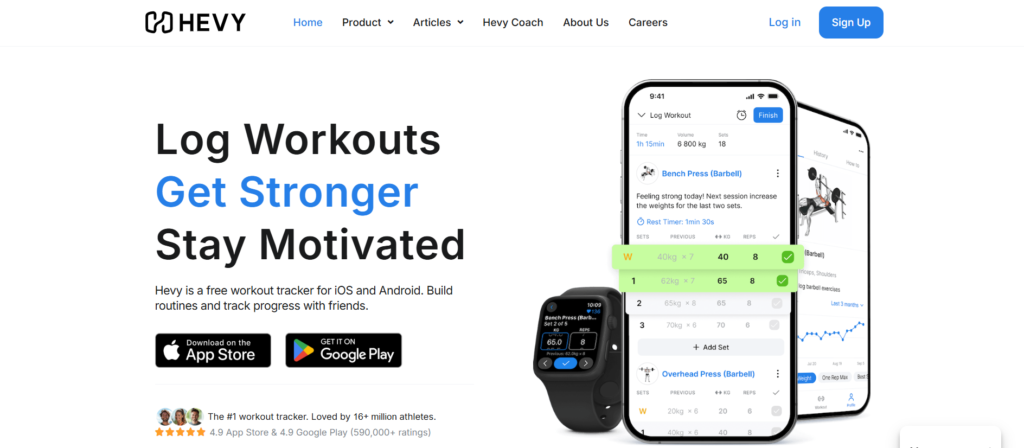
Hevy offers a useful free lifting tracker with workout logging, progress features, social tools, and up to four saved routines. Hevy Pro expands those limits with unlimited routines, unlimited custom exercises, full data history, and additional analytics.
Where Hevy falls short is planning. It’s a logger, not a programmer. The app records what you do and shows how your numbers trend, but it won’t build a program or tell you when to increase your squat. If you’re already following a structured program such as a 5/3/1 cycle, GZCLP, or your own push-pull-legs split, Hevy is an excellent and completely free home for it. If you need the app to do the thinking, look elsewhere.
The Pro tier at $2.99/month unlocks advanced analytics and removes some minor friction, but most lifters will never hit the free tier’s ceiling. It’s one of the few apps in this space where the free version is genuinely complete.
Best for: Lifters who already have a program and want the cleanest, most generous free logging experience available.
Pros:
- Useful free workout logging with up to four saved routines
- Fast two-tap set logging with a built-in rest timer
- Active social feed for accountability and routine sharing
- Apple Watch integration on the free tier
Cons:
- No AI, no auto-progression, no program building
- Exercise library (300+) is smaller than dedicated planning apps
- Advanced analytics require the Pro upgrade
Pricing: Free forever with full logging. Pro at $2.99/month for advanced stats.
3. Fitbod: Best for Adaptive AI Workouts
Platform: iOS, Android
Price: Around $15.99/month or $95.99/year (trial only, no permanent free tier)
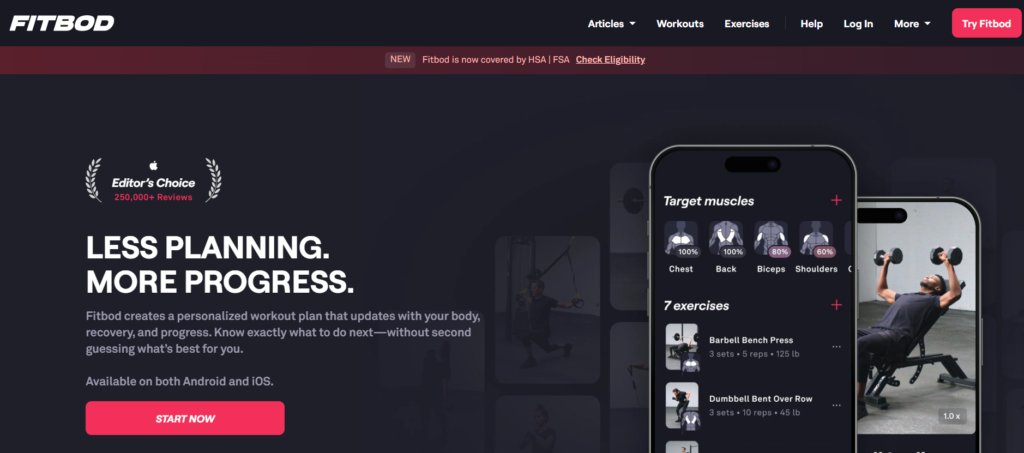
Fitbod does something no other app on this list does quite as well: it adapts to your recovery. Every time you log a session, the AI factors in which muscles you worked, how hard you pushed, and how much time has passed, then generates your next workout to hit fresh muscle groups and avoid beating up fatigued ones. For lifters who train four or more days a week and struggle to manage recovery intelligently, this is genuinely useful.
The workout generation is fast and the exercise library is large, covering barbell, dumbbell, cable, and bodyweight movements with clean instructions. You can set your available equipment (home gym, commercial gym, minimal kit) and the app adjusts automatically. Fitbod also logs your tonnage and estimated 1RM trends over time, adjusting load recommendations as you get stronger.
The honest downside is the paywall. There’s no permanent free tier. You get a handful of free workouts before the app requires a subscription. At $13/month it sits in the mid-range, but the AI is good enough to justify the cost for the right user. Casual lifters will struggle to justify the price. Serious lifters who want the app to manage programming week to week will find Fitbod worth it.
Best for: Lifters who want AI-driven, recovery-aware workout generation without writing their own programs.
Pros:
- Adaptive AI considers muscle fatigue and recovery between sessions
- Large exercise library with equipment filtering
- Adjusts load recommendations as strength improves
- Clean interface with a solid rest timer
Cons:
- No permanent free tier, trial only
- One of the pricier subscriptions on this list
- Less suited to strict powerlifting or peaking programs
Pricing: Free trial available; current U.S. website pricing is $15.99/month or $95.99/year. Prices may vary by platform or promotion.
4. JuggernautAI: Best for Powerlifters
Platform: iOS, Android
Price: Around $34.99/month
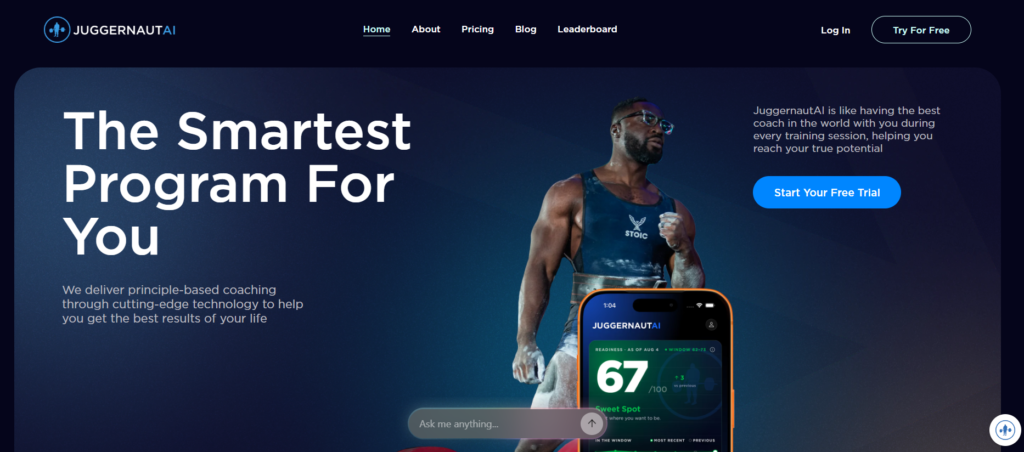
JuggernautAI is the most sophisticated strength programming app available for powerlifters and serious barbell athletes. Built by Chad Wesley Smith, an elite powerlifting coach and athlete, the AI engine is trained on actual coaching principles rather than generic fitness algorithms. It builds periodized programs around your squat, bench press, and deadlift with legitimate auto-regulation: it tracks your readiness, adjusts intensity based on how your last session went, and manages your training block with the goal of peaking at the right time.
This is not an app for someone who wants to get in shape. It’s for lifters who compete, or who follow the sport closely enough to care about RPE, mesocycle structure, and competition prep. The onboarding asks for your current maxes, competition schedule, and training history, and the output reflects that specificity. Sessions are detailed, explanations are technical, and the programming logic is closer to what a high-level coach would prescribe than anything else in an app store.
The price is steep at $34.99/month and there’s no sugarcoating that. For a competitive powerlifter replacing professional coaching, it’s defensible. For everyone else, it’s overkill.
Best for: Competitive powerlifters and serious strength athletes who want elite-level AI periodization for squat, bench, and deadlift.
Pros:
- Auto-regulation based on RPE and session performance
- Built by an elite powerlifting coach with real methodology behind the AI
- Handles full training blocks with peaking and deload management
- Detailed session explanations that teach the reasoning, not just the prescription
Cons:
- Most expensive app on this list at $29.99/month
- Overkill for recreational lifters or beginners
- Steep learning curve if you’re unfamiliar with RPE and periodization
- No meaningful free tier
Pricing: Subscription only at around $34.99/month.
5. Caliber: Best for Coached Strength Programming
Platform: iOS, Android
Price: Free (self-guided) / Paid coaching tiers available
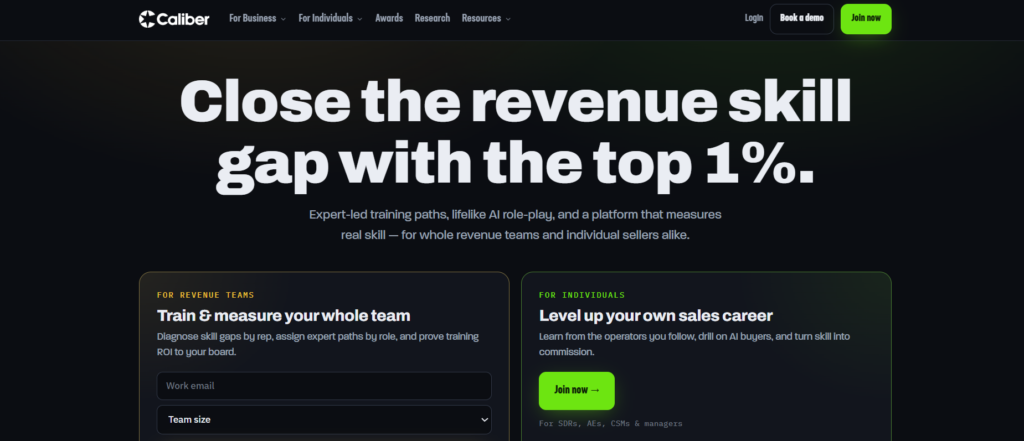
Caliber is the most education-forward app on this list. The free self-guided tier gives you access to structured strength programs, detailed exercise instruction, form cues, and workout logging. The whole thing is designed to teach you how to train, not just tell you what to do. If you’re transitioning from machine circuits to barbell work and want to understand the reasoning behind a strength program, Caliber explains it better than any other app here.
The real differentiator is the coaching model. Caliber lets you upgrade to work with a real human coach directly inside the app. Your coach reviews your logs, adjusts your programming, and sends feedback on form videos. For lifters who want accountability but aren’t ready to commit to an expensive in-person trainer, this hybrid model fills a useful gap. The free tier gets you further than most apps without paying, and the coaching tiers are well structured if you eventually want to invest.
Where Caliber loses points for pure strength athletes is flexibility. The free programs are structured and somewhat rigid. Advanced lifters who want to fully customize their training will find Alpha Progression or JuggernautAI more responsive.
Best for: Intermediate lifters who want structured strength programming with the option to add real human coaching later.
Pros:
- Genuinely useful free self-guided strength program
- Best in-app exercise instruction and form guidance on this list
- Clear path to add human coaching without switching apps
- Educational approach teaches the principles behind each training decision
Cons:
- Free programs are fairly rigid with limited customization
- Best features (1-on-1 coaching) sit behind paid tiers
- Progressive overload tracking is more manual than Alpha Progression or Fitbod
Pricing: Free self-guided tier is solid and permanent. Coached tiers are priced separately based on coaching frequency.
What to Look For in a Strength Training App
Picking the right app comes down to four honest questions.
Do you need a program or just a log? If you already follow a proven program such as 5/3/1, GZCLP, or Texas Method, all you need is a clean tracker. Hevy is free and excellent for this. If you need the app to build your program and manage your progression, Alpha Progression or Fitbod are the right choice.
Are you training for strength sports or general fitness? Powerlifters and competitive athletes should look at JuggernautAI. Nothing else on this list handles peaking blocks, RPE-based auto-regulation, or competition prep as seriously. General strength and hypertrophy goals are better served by Alpha Progression or Fitbod.
How important is cost? Hevy and Caliber’s free tiers are the strongest no-cost options. Start with Hevy for logging or Caliber for a guided free program. Only move to a paid app when you’ve hit a real ceiling on those free options.
Do you want to learn, or just be told what to do? Caliber is the right pick if you want to understand the programming behind your training. Fitbod and JuggernautAI are better if you want the AI to make decisions and you just want to execute.
The Verdict
For most lifters, Alpha Progression is the clear pick in 2026. It handles progressive overload automatically, builds structured programs via the Plan Generator, and costs less per year than a single month of JuggernautAI. It sits in a sweet spot between a basic tracker and a full coaching platform: smart enough to manage your progression, simple enough to log a set in two taps.
If budget is the priority, Hevy is the most complete free lifting tracker available. You won’t get AI or auto-progression, but you’ll get unlimited logging, progress charts, and a social community that keeps you accountable, all for nothing.
Fitbod is the best choice for lifters who train frequently and struggle to manage recovery. The adaptive AI is genuinely useful, and the equipment filtering makes it work whether you’re in a commercial gym or training with a barbell in your garage.
JuggernautAI is in a category of its own for competitive powerlifters. The price is real, but so is the quality.
Caliber rounds out the list as the best option for lifters who want structure and education on a free plan, with a clear upgrade path to real human coaching when they’re ready.
FAQ
What is the best strength training app in 2026?
Alpha Progression is our top pick for 2026 because it automates progressive overload in a way most apps leave entirely to the user. The Plan Generator builds personalized programs around your goals, equipment, and schedule, and the set-specific recommendations during workouts take the guesswork out of every session. For lifters who want to get stronger without micromanaging their own programming, it’s the most complete tool available.
Is there a free strength training app that tracks progressive overload?
Hevy is the strongest free option for logging, though it doesn’t auto-calculate progression. You manage weight increases yourself. Caliber’s free tier includes structured strength programming and tracks your lifts over time. For automated progressive overload at no cost, the options are limited. Alpha Progression offers a trial, but the full feature set requires a subscription.
What app do powerlifters use to track their workouts?
JuggernautAI is the most widely used app among serious competitive powerlifters. It was built by elite coach Chad Wesley Smith and uses real auto-regulation principles based on RPE and readiness. Many powerlifters also use Hevy for raw logging alongside their coach’s programming, using the app to record sessions rather than drive the periodization.
Do I need a paid app to get stronger?
No. Consistent training, a structured program, and progressive overload matter far more than app features. Hevy’s free tier and Caliber’s free self-guided programs are enough for most people to run an effective strength program for months. Paid apps like Alpha Progression or JuggernautAI add convenience and automation, but they don’t replace the fundamentals. If you’re also tracking body composition alongside your lifting numbers, starting with a baseline is useful. This easy BMI calculation tool takes under a minute to use.
What’s the best strength app for beginners?
Caliber is the best starting point for beginners because it explains the reasoning behind each exercise and builds a structured curriculum around the foundational movements. Alpha Progression is also accessible for beginners who want automated progression without having to understand periodization first. Avoid JuggernautAI early on. Its RPE-based system assumes you can read your own effort levels accurately, which takes time to develop.
Other Articles You May Find of Interest...
- P Protect Reviews – Men’s Wellness Patches For Prostate Support and Urinary Comfort
- OnyGuard Anti-Fungal Pen Reviews 2026 – Legit Nail Care Product Or Overhyped?
- DirectMeds ED Reviews 2026 – Is DirectMax A Real Alternative To Standard ED Pills?
- Soda Steel Reviews 2026 – Legit Daily Energy Support or Overhyped Supplement?
- Is Rich Diet App Legit? Subscription, Support, and How to Cancel
- GLP-Star App Review 2026: A GLP-1 Meal Plan for Real Life
- Decamen App Review 2026: Military Calisthenics Workouts for Busy Men