Your Health Magazine Contributor
4201 Northview Drive
Suite 102
Bowie, MD 20716
More Podiatry Foot Care Articles
Topical, Oral or Laser: Comparing Nail Fungus Treatments in 2026
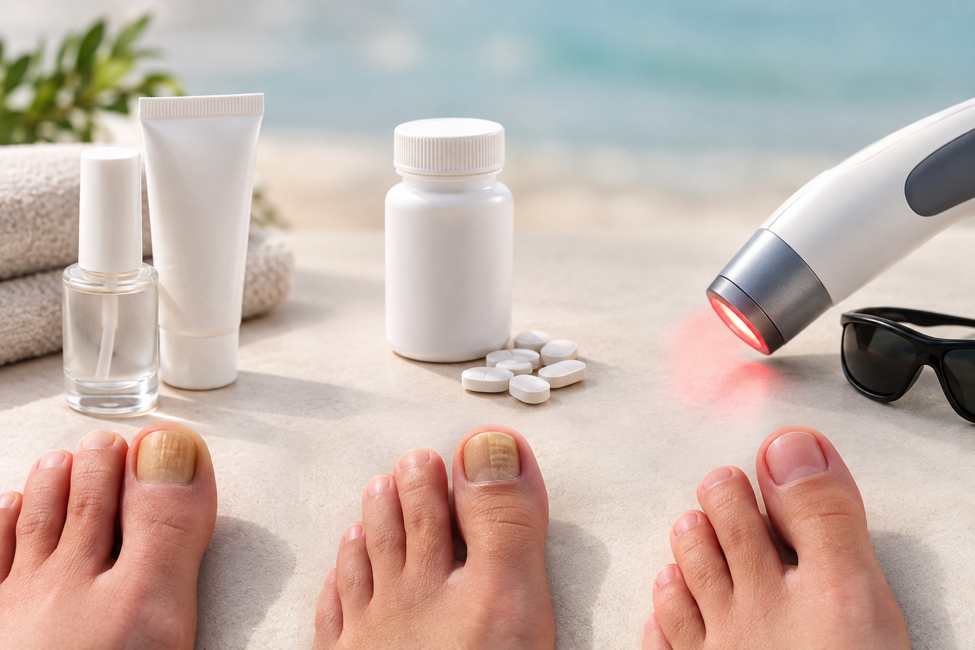
If you’ve been researching nail fungus treatment, you’ve likely run into three very different approaches: topical treatment, oral medication, and laser therapy. Each has genuine supporters, real clinical data, and real trade-offs. Here’s a straightforward comparison to help you understand which approach fits your situation, based on effectiveness, risk, cost, and time commitment.
Why There’s No Single “Best” Treatment
Nail fungus severity varies enormously, from a small patch of discoloration to a fully thickened, separated nail, so it makes sense that no single method is universally the best treatment for nail fungus 2026. What works well for a mild, early-stage infection may be insufficient for a severe, years-long one, and what’s appropriate for a healthy adult may not be advisable for someone with diabetes or liver concerns. The right treatment depends on your specific infection and health profile.
Topical Treatment: The Common Starting Point
Topical treatments can be appropriate for some mild to moderate nail infections. Prescription options specifically used for onychomycosis include topical treatments such as efinaconazole, tavaborole, and ciclopirox. Undecylenic acid is an antifungal ingredient used in over-the-counter products, but FDA does not recognize OTC topical antifungal products as generally safe and effective for treating fungal infection within the nail itself.
Advantages:
- Lowest risk of side effects since it’s not absorbed systemically in significant amounts
- No need for blood work or liver monitoring
- Can be used long-term without the cumulative risk concerns of oral medication
Trade-offs:
- Slower results, often requiring consistent daily application for months
- Less effective on severe, deeply established, or heavily thickened infections
- Success depends heavily on consistency, and sporadic use significantly reduces effectiveness
People comparing nonprescription approaches may also encounter resources such as this proven treatment guide, which discusses products containing undecylenic acid and essential oils such as tea tree oil. These approaches should not be confused with FDA-approved prescription treatments for onychomycosis, and evidence for essential oils remains limited.
Oral Medication: Faster but More Monitoring
Prescription oral antifungals work systemically, reaching the nail bed through the bloodstream rather than penetrating from the outside. This generally makes them more effective for moderate-to-severe infections.
Advantages:
- Generally higher cure rates for established, moderate-to-severe infections
- Can treat multiple affected nails simultaneously
- Shorter treatment courses in many cases (often a few months rather than up to a year)
Trade-offs:
- Requires liver function monitoring due to how the medication is metabolized
- Potential drug interactions with other medications
- Not recommended for people with certain liver conditions or those taking specific other prescriptions
Laser Treatment: Newer, Costly, But Mixed Evidence
Laser devices use concentrated light energy on affected nails and have attracted interest because they do not involve systemic medication. However, FDA-cleared laser devices for onychomycosis are cleared for a temporary increase in clear nail, not for treating or eradicating the fungal infection itself.
Advantages:
- No daily application or medication schedule, with treatment sessions typically spaced weeks apart
- No liver monitoring or systemic drug interaction concerns
- Minimal downtime, with most people resuming normal activity immediately after a session
Trade-offs:
- Clinical evidence is more mixed and less extensive than for topical or oral treatments, and results vary more between individuals
- Usually not covered by insurance, so cost can be a significant factor
- May require multiple sessions, and results can take just as long to become visible as other methods since nail growth is the limiting factor either way
Because so many people search for laser treatment for nail fungus as a “no daily hassle” option, it’s worth being clear that convenience doesn’t necessarily mean faster results; the nail still has to grow out clear, which takes months regardless of treatment method.
Side-by-Side Comparison
| Factor | Topical | Oral | Laser |
| Best for | Mild-moderate infections | Moderate-severe infections | Varies, often used as an alternative to oral |
| Daily commitment | High (daily application) | Low (pill schedule) | None between sessions |
| Systemic risk | Very low | Requires monitoring | Very low |
| Typical cost | Lower, ongoing | Moderate, often insured | Higher, usually out-of-pocket |
| Evidence base | Strong for mild cases | Strong overall | Growing, more variable |
How to Choose
A few practical questions can help narrow down the right starting point:
- How severe is the infection? Mild or limited nail fungus may sometimes be treated with a prescription topical medication. Significant thickening, involvement of multiple nails, or more extensive infection may require a different approach, including consideration of oral antifungal treatment after appropriate medical evaluation. The appearance of a nail alone also cannot reliably confirm that fungus is the cause.
- Do you have liver concerns or take other medications? This can rule out oral treatment and point toward topical treatment.
- How important is daily consistency to you? How important is daily consistency to you? If you are a consistent person and not afraid to follow the process, then go for Topical Treatment; you may find some of the best 2026 topical solutions here.
- What’s your budget and insurance coverage? Laser is often not covered, while oral medication frequently is, but topical treatment would be a good option.
The Bottom Line
There’s no single universally “best” nail fungus treatment in 2026; the right choice depends on infection severity, your health history, and how much daily consistency you can realistically commit to. Prescription topical treatment can be an option for some mild cases; oral medication generally offers stronger results for more established infections with additional safety considerations and monitoring, while laser devices may improve the appearance of affected nails but are not FDA-cleared to eradicate the fungal infection. In every case, expect results to unfold over months, not days, since nail growth is the real limiting factor no matter which method you choose.
Quick Answer: There’s no single best nail fungus treatment for everyone. Prescription topical antifungals can be appropriate for some mild infections, while oral medication is generally more effective for moderate-to-severe cases but carries additional safety and monitoring considerations. Laser devices may improve the appearance of affected nails, but FDA-cleared devices are not cleared to eradicate the fungal infection. The right choice depends on infection severity and individual health factors.
Other Articles You May Find of Interest...
- Lowering the Risk Of Stress Fractures
- Sharp, Stabbing Big Toe Pain at Night: Common Causes
- Topical, Oral or Laser: Comparing Nail Fungus Treatments in 2026
- A Twisted Ankle or Something More? When an Injury Needs a Closer Look
- Style Should Not Hurt: Finding Shoes That Fit Your Feet
- When Sinus Tarsi Syndrome Requires Surgery
- How to Help a Broken Toe Heal as Quickly and Safely as Possible