More Podiatry Foot Care Articles
Red Pimples on the Feet: Causes and Care
By Your Health Magazine Health Information Team
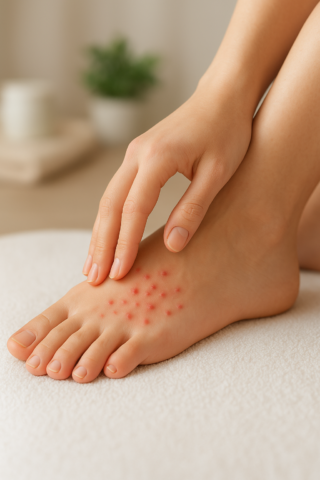
Red pimples on the foot are usually not acne. They are more often caused by friction, athlete’s foot, eczema, irritated hair follicles, contact with an allergen or irritant, or insect bites. The bump’s location, appearance, and symptoms—especially itching, scaling, fluid, pus, warmth, or pain—can help narrow the possibilities. Rapidly spreading redness or signs of infection require medical attention.
Are Red Foot Pimples Actually Acne?
Typical acne develops when hair follicles become clogged, most often on the face, neck, chest, shoulders, and back. The MedlinePlus overview of acne explains how these clogged follicles produce pimples. Although acne-like bumps can appear on the hair-bearing top of the foot or ankle, a “pimple” on the hairless sole is not typical acne.
Do not squeeze or pop a foot bump to find out what it contains. Opening the skin can introduce bacteria, worsen inflammation, and make the original cause harder to recognize.
Common Causes of Pimple-Like Bumps on the Feet
| Possible cause | Typical clues | Common location |
|---|---|---|
| Athlete’s foot | Itching, peeling, scaling, cracks, redness, or occasional blisters | Between the toes, sole, or sides of the foot |
| Dyshidrotic eczema | Clusters of tiny, intensely itchy, fluid-filled blisters followed by peeling | Soles, sides of the feet, or toes |
| Folliculitis | Small red or pus-filled bumps centered around hairs; may itch or feel tender | Top of the foot or around the ankle |
| Friction blister | A tender, fluid-filled bump after walking, running, or wearing tight shoes | Heels, toes, sides, or pressure points |
| Contact dermatitis | Itchy or burning redness after exposure to footwear materials, adhesives, dyes, detergents, or skin products | Where the triggering material touched the skin |
| Insect bites | Sudden, itchy, raised bumps, sometimes with a visible central spot | Exposed areas of the feet and ankles |
Athlete’s Foot
Athlete’s foot, or tinea pedis, is a fungal infection. It commonly causes itchy, red, swollen, or peeling skin between the toes but may also affect the sole and heel. Severe cases can blister. The CDC’s description of athlete’s foot symptoms can help readers recognize its usual pattern.
A suspected fungal rash may be treated with an over-the-counter antifungal when appropriate, following the product label. Because eczema and fungal infections can resemble each other, seek guidance if the cause is uncertain. This comparison of miconazole and clotrimazole antifungal treatments explains two commonly available options. Avoid treating an undiagnosed foot rash with a steroid cream alone, since steroids may mask or worsen a fungal infection.
Dyshidrotic Eczema
Dyshidrotic eczema can produce groups of very small, deep-seated blisters that resemble pimples. The affected skin may itch, burn, or hurt before the blisters become visible. Peeling, dryness, or cracking can follow. The American Academy of Dermatology provides additional details about dyshidrotic eczema symptoms on the feet.
This condition is not contagious. However, scratching can break the skin and create an opportunity for infection. Recurrent, widespread, or painful blisters should be evaluated by a primary care professional or dermatologist.
Folliculitis and Other Infections
Folliculitis is inflammation around a hair follicle. It may occur after shaving, sweating, friction from shoes or socks, or bacterial exposure. The bumps usually appear on hair-bearing areas rather than the sole and may have a white or yellow center.
A boil or abscess may begin as a pimple-like bump but become larger, increasingly painful, warm, or filled with pus. Cellulitis causes a broader area of expanding redness, swelling, warmth, and tenderness rather than a stable cluster of small pimples. Fever, chills, drainage, or red streaks are warning signs.
Safe Care at Home
For a small, mild bump without signs of infection, basic skin care may reduce irritation while you observe how it changes:
- Wash gently. Use lukewarm water and mild, fragrance-free soap. Pat the foot dry, especially between the toes.
- Reduce moisture and friction. Change damp socks, wear breathable footwear, and avoid the shoes that caused rubbing.
- Do not scratch or pop the bumps. Keep nails short and use a cool compress for temporary itch relief.
- Protect an intact blister. Cover it loosely with a clean bandage and avoid removing the overlying skin.
- Pause new products. Stop using a recently introduced foot spray, lotion, adhesive, detergent, or shoe insert if it appears connected to the rash.
- Monitor the area. Note whether redness is spreading, pain is increasing, or new bumps are appearing.
A clinician may need to examine or test the skin when fungal infection, bacterial infection, eczema, or an allergic reaction cannot be distinguished by appearance alone.
When to Seek Care
Contact a primary care professional, dermatologist, or podiatrist if the bumps persist, repeatedly return, spread, interfere with walking, or do not improve with appropriate self-care. Seek prompt medical evaluation for:
- Rapidly expanding redness, swelling, warmth, or pain
- Pus, foul-smelling drainage, yellow crusting, or red streaks
- Fever, chills, weakness, or feeling acutely ill
- A deep wound, ulcer, black or purple discoloration, or loss of sensation
- A rash that developed after starting a medication
- Severe pain or inability to bear weight
People with diabetes, poor circulation, nerve damage, or a weakened immune system should obtain care sooner for any new blister, sore, or unexplained foot rash. Reduced sensation can make injuries difficult to notice, while impaired circulation can delay healing. The CDC recommends daily foot checks for people with diabetes and prompt evaluation of blisters, sores, redness, or swelling.
Most pimple-like foot bumps are manageable once the underlying cause is identified. Paying attention to where the bumps appear and whether they itch, scale, blister, drain, or spread is more useful than relying on their color alone.
Other Articles You May Find of Interest...
- Red Pimples on the Feet: Causes and Care
- Swollen Feet in Women: Common Causes and How to Choose Extra Wide Fit Shoes
- Ballet Flats vs. Loafers: The Ultimate Guide to Choosing Your Perfect Pair
- Electric vs. Manual Callus Removers: How to Choose the Right Foot Care Tool
- How Long Will I Need to Wear a CAM Boot? A Recovery Timeline by Injury Type
- How to Reduce Swelling in Your Feet
- Understanding Podiatry: A Guide to Foot Health and Lower Limb Care