More Podiatry Foot Care Articles
Red Spots on the Feet: Possible Causes
By Your Health Magazine Health Information Team
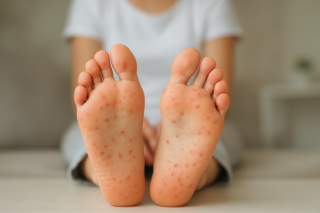
Red spots on feet can have many causes, including irritation from footwear, athlete’s foot, eczema, insect bites, viral infections, bleeding under the skin, and bacterial infection. The location and appearance of the spots, whether they itch or hurt, and whether you have symptoms such as fever, swelling, peeling skin, or unusual bleeding can help narrow down the possibilities.
What the Appearance of Red Spots Can Tell You
“Red spots” can describe flat marks, raised bumps, blisters, scaly patches, or pinpoint dots. On brown or Black skin, inflammation may look red-purple, gray, dark brown, or darker than the surrounding skin rather than bright red.
| Appearance or location | Possible cause | Other common clues |
|---|---|---|
| Itchy rash where shoes or socks touch | Contact dermatitis | Dryness, swelling, blisters, or cracking |
| Peeling or scaly skin between the toes | Athlete’s foot | Itching, burning, cracking, or odor |
| Tiny, deep, itchy blisters on the soles or sides of the feet | Dyshidrotic eczema | Burning followed by peeling or dry skin |
| Small, raised, itchy red dots on feet or ankles | Insect bites | Clusters of bumps or a central puncture mark |
| Flat or slightly raised spots on the soles | Hand, foot, and mouth disease | Fever, sore throat, mouth sores, or spots on the hands |
| Pinpoint, flat dots that do not fade with pressure | Petechiae | Possible bruising, bleeding, infection, or medication-related effects |
| Expanding red, warm, painful area | Cellulitis | Swelling, tenderness, fever, drainage, or red streaks |
Common Causes of Red Dots on the Feet
Contact Dermatitis
Contact dermatitis occurs when the skin is irritated by or develops an allergic reaction to something it touches. Footwear can expose the skin to rubber, leather, dyes, adhesives, metals, plastics, and fabric treatments. Foot creams, powders, nail products, detergents, and fragranced products may also cause a reaction.
The rash is often itchy and may follow the shape of a shoe strap or affect the tops of the feet. The American Academy of Dermatology’s guidance on contact dermatitis notes that shoes and socks are common triggers for foot rashes. A persistent or recurring reaction may require evaluation by a dermatologist and, in some cases, patch testing.
Athlete’s Foot
Athlete’s foot, or tinea pedis, is a fungal infection. It often begins between the toes, where the skin may become itchy, red, swollen, cracked, or peeling. It can also spread across the sole or sides of the foot and may cause blisters in more severe cases.
The CDC’s description of athlete’s foot symptoms can help distinguish it from other rashes. Because eczema, contact dermatitis, and fungal infections can look similar, a healthcare professional may examine or test a skin scraping when the diagnosis is uncertain.
Eczema and Psoriasis
Dyshidrotic eczema can produce groups of intensely itchy, fluid-filled bumps on the soles or sides of the feet. The skin may later peel, crack, or become very dry. Heat, sweating, stress, irritants, and certain allergens may contribute to flare-ups.
Psoriasis can also affect the feet, usually causing well-defined, thickened, scaly areas. A less common form can cause painful, pus-filled bumps on red or discolored skin. Recurrent, thick, painful, or blistering patches should be evaluated rather than treated based only on appearance.
Insect Bites and Minor Irritation
Fleas, mosquitoes, mites, and other insects may cause small, raised, itchy red dots on feet and ankles. Bites may appear in groups or lines, particularly after outdoor exposure, contact with animals, or sleeping in an infested environment.
Pressure and friction from tight shoes can also irritate the skin or break tiny blood vessels. These marks usually occur where footwear rubs and may be accompanied by tenderness, a blister, or a callus.
Hand, Foot, and Mouth Disease
Hand, foot, and mouth disease is a viral illness seen most often in young children, although older children and adults can also develop it. It may cause flat or slightly raised red spots, sometimes with blisters, on the soles and palms. Fever, sore throat, reduced appetite, and painful mouth sores often occur at the same time.
When Red Dots May Be Petechiae
Petechiae are tiny, flat red, purple, or brown dots caused by bleeding under the skin. Unlike redness from inflammation, they do not become lighter when gently pressed. This “blanching” check cannot identify the cause or rule out a serious illness, but nonblanching spots deserve attention.
Petechiae can occur after pressure or minor injury, but they may also be related to infections, low platelet counts, clotting disorders, blood vessel inflammation, or certain medications. MedlinePlus provides additional information about bleeding into the skin and possible causes of petechiae.
Contact a healthcare professional promptly for new petechiae without an obvious explanation, especially if the dots are spreading or occur with unusual bruising, nosebleeds, bleeding gums, blood in the urine or stool, or heavy menstrual bleeding. For related information, read about possible causes of unexplained bruising and itching on the legs.
What You Can Do While Monitoring the Spots
- Note when the spots appeared and whether they are spreading or changing.
- Check for itching, pain, warmth, swelling, scaling, blisters, or drainage.
- Consider recent changes in shoes, socks, soaps, detergents, foot products, medications, or outdoor exposure.
- Keep the feet clean and dry, and avoid scratching or breaking blisters.
- Pause nonessential new skin products that may be causing irritation.
- Do not share shoes, socks, towels, or nail-care tools if a fungal infection is possible.
- Take a well-lit photograph to document changes for a healthcare appointment.
Avoid assuming every itchy foot rash is fungal. Using the wrong treatment may irritate the skin or delay the correct diagnosis. A primary care clinician, pediatrician, podiatrist, or dermatologist can evaluate spots that persist, recur, or remain unclear. The MedlinePlus health topics directory also offers reliable general information about skin conditions and related health concerns.
When to Seek Care
Seek urgent medical evaluation for red spots on the feet accompanied by:
- Fever, confusion, severe weakness, a stiff neck, or feeling seriously ill
- Pinpoint spots that do not fade with pressure and are rapidly spreading
- Difficulty breathing or swelling of the face, lips, tongue, or throat
- Uncontrolled bleeding or blood in the urine, stool, or vomit
- Severe pain, rapidly increasing swelling, or skin turning purple or black
Contact a healthcare professional promptly if the skin is hot, painful, swollen, or quickly expanding; if there is pus, drainage, fever, or red streaking; or if you have diabetes, poor circulation, reduced sensation in the feet, or a weakened immune system. These features may indicate cellulitis or another infection that requires medical treatment.
For nonurgent spots, schedule an examination if they have no clear cause, last more than a couple of weeks, repeatedly return, interfere with walking, or do not improve with basic skin care. A clinician may diagnose the cause by examining the pattern and reviewing exposures and medications, sometimes with a skin scraping, patch testing, culture, or blood test.
Other Articles You May Find of Interest...
- Pain on the Outside of the Ankle: Causes and Treatment
- Red Spots on the Feet: Possible Causes
- Red Pimples on the Feet: Causes and Care
- Swollen Feet in Women: Common Causes and How to Choose Extra Wide Fit Shoes
- Ballet Flats vs. Loafers: The Ultimate Guide to Choosing Your Perfect Pair
- Electric vs. Manual Callus Removers: How to Choose the Right Foot Care Tool
- How Long Will I Need to Wear a CAM Boot? A Recovery Timeline by Injury Type