Your Health Magazine Contributor
4201 Northview Drive
Suite 102
Bowie, MD 20716
More Pain Management & Rehabilitation Articles
Decoding the Pain: Sensations and Diagnostic Clues
Pain Characteristics and What They Signal
The way your back feels can act as a map for the underlying issue. Dull, aching sensations that linger throughout the day are often the result of postural fatigue or deep muscular strains. These aches tend to fluctuate with your activity levels.
Sharp, catching, or stabbing pain often points toward joint locking or acute ligament tears. If you feel a sudden “jolt” when you move, it may be your body’s way of protecting an inflamed structure.
Burning, tingling, or electrical sensations are different. These often signal nerve involvement or radiculopathy. If you feel these sensations traveling down your leg, it suggests a nerve root is being compressed. Finally, notice the distribution: band-like pain across your waist is usually disc-related, while focused, one-sided discomfort often points to a specific muscle or joint issue.
Mechanical Strain vs. Visceral Referred Patterns
Mechanical back pain is usually predictable. It changes based on your movement, such as bending, twisting, or lifting. If your pain improves when you lie down or changes when you shift positions, it is likely mechanical.
Visceral referred pain is different. This occurs when internal organs share nerve pathways with your spine. Because your brain cannot always distinguish between an organ issue and a back issue, it registers the pain in your back.
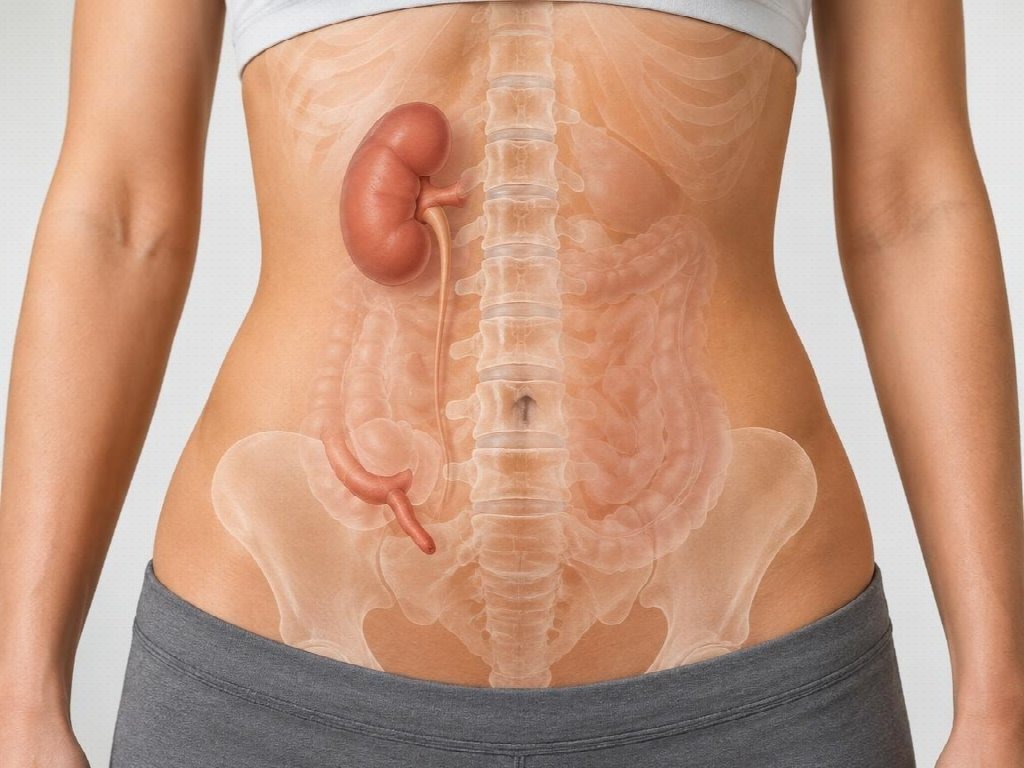
Anatomical placement plays a role here. Your right kidney sits slightly lower than the left, which can make it a common source of right-sided referred pain. If your discomfort fluctuates with digestion, urination, or hormonal cycles, it may be a sign that an internal organ is the true source of the problem.
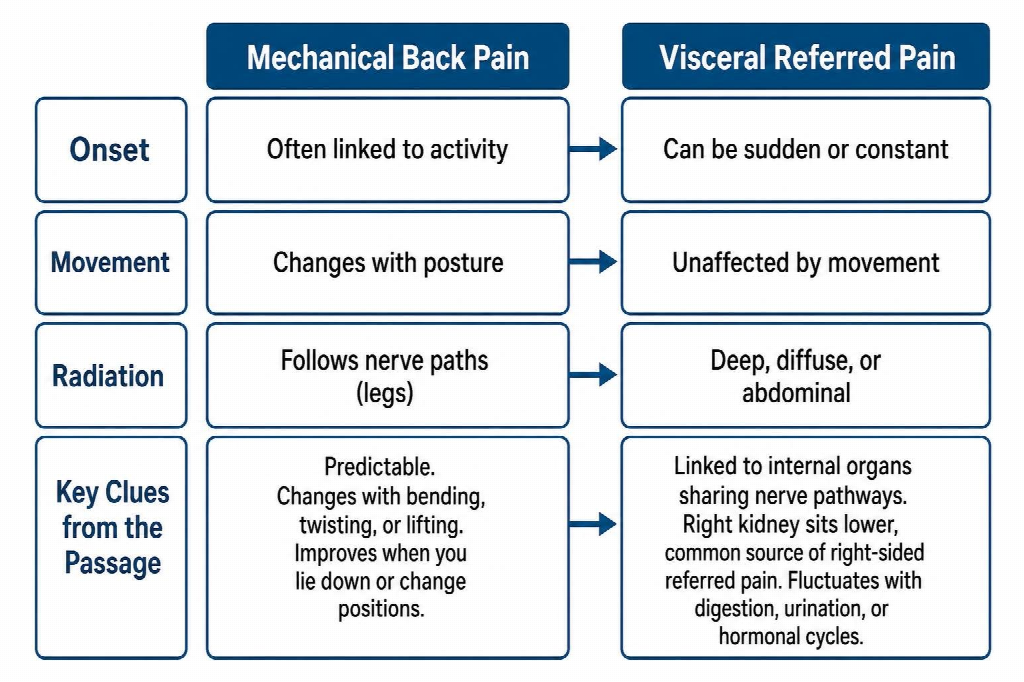
| Feature | Mechanical Back Pain | Visceral Referred Pain |
| Onset | Often linked to activity | Can be sudden or constant |
| Movement | Changes with posture | Unaffected by movement |
| Radiation | Follows nerve paths (legs) | Deep, diffuse, or abdominal |
| Triggers | Bending, lifting, twisting | Digestion, urination, cycles |
Musculoskeletal and Spinal Causes
Soft Tissue Strains, Strains, and Postural Habits
The most common cause of right-sided pain is a simple muscle strain. This happens when you overstretch or create micro-tears in your lumbar muscles or stabilizing ligaments.
Myofascial tension, particularly in the paraspinal muscles or the piriformis, often triggers one-sided pain. This is frequently caused by asymmetric daily habits. For example, if you habitually carry heavy bags or a toddler on your right hip, you force your spine to compensate. Over time, this leads to muscle deconditioning and chronic overload in the lower lumbar region.
Lumbar Disc Herniation and Nerve Compression
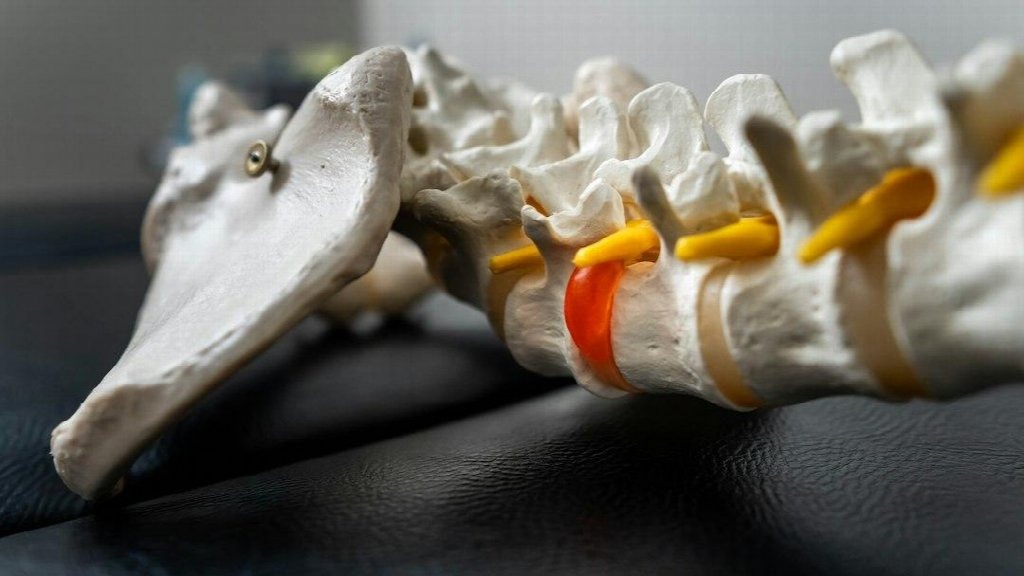
Your intervertebral discs act as shock absorbers between your vertebrae. When a disc protrudes, it can press on spinal nerve roots, typically at the L4-L5 or L5-S1 levels.
This pressure often causes pain to radiate through the right buttock and down the leg. You might find that forward flexion, coughing, or sitting for long periods makes the pain worse. This is a classic sign of nerve irritation.
Facet Joint Irritation and Spinal Wear
Facet joints are the small joints that connect your vertebrae. Wear-and-tear changes in these joints can cause localized stiffness on your right side.
You may notice this as morning stiffness that eases slightly as you move around. Standard imaging, like an MRI, does not always show facet irritation clearly. Instead, the pain is often caused by the secondary muscle guarding that occurs when your body tries to stabilize the inflamed joint.
Internal Organ and Systemic Triggers
Renal Conditions and Urinary Tract Health
Kidney stones are mineral deposits that can lodge in the right ureter. This typically causes severe, colicky flank pain that radiates down into the lower abdomen and groin.
Kidney infections are another concern. These often present with flank tenderness, fever, and nausea. If you suspect a renal issue, a urinalysis is usually the first step to confirm if the problem is rooted in your urinary tract rather than your spine.
Digestive and Abdominal Considerations
Appendicitis is a critical consideration for lower right-sided pain. The pain typically shifts from the area around your belly button to the lower right abdomen and can radiate to your lower back.
Other digestive issues, such as chronic intestinal inflammation or ulcerative colitis, are also linked to back pain. Even trapped gas or bowel irregularities can mimic musculoskeletal tightness. When your gut is inflamed, it often causes the surrounding muscles to tighten in a protective response.
Reproductive Health Factors
In women, reproductive health is a frequent source of referred back pain. Endometriosis tissue can irritate pelvic nerve pathways, causing pain to refer to the back. Ovarian cysts may cause unilateral pelvic heaviness and a dull, aching sensation.
Cyclic discomfort, such as dysmenorrhea, often flares up in the lower back during menstruation. In rare cases, urological emergencies like testicular torsion in men can present as radiating flank pain. These conditions require specific medical attention beyond standard back pain protocols.
Pathways to Recovery and Relief
First-Line Home Care and Self-Management
For acute inflammation, alternating cold therapy can help reduce swelling. Once the initial phase passes, gentle heat can help relax muscle tension.
Focus on gentle mobilization. Exercises like the cat-cow stretch or knee-to-chest movements, performed within an 80-percent pain-free range, can keep your joints moving. Avoid extended bed rest, as this can lead to stiffness. Instead, aim for short, frequent rest intervals. Proper hydration is also vital, as it supports tissue recovery and helps your kidneys filter waste effectively.
Integrative and Holistic Therapies
When initial treatments do not provide sufficient relief, a multidisciplinary approach may be appropriate. Depending on the diagnosis, this can include exercise, physical therapy, acupuncture, or other supportive treatments. Integrative approaches may offer options for treating low back pain through acupuncture, chiropractic care, and other complementary services. Treatment should be individualized based on the underlying condition and available evidence.
Clinical Interventions and Medical Diagnostics
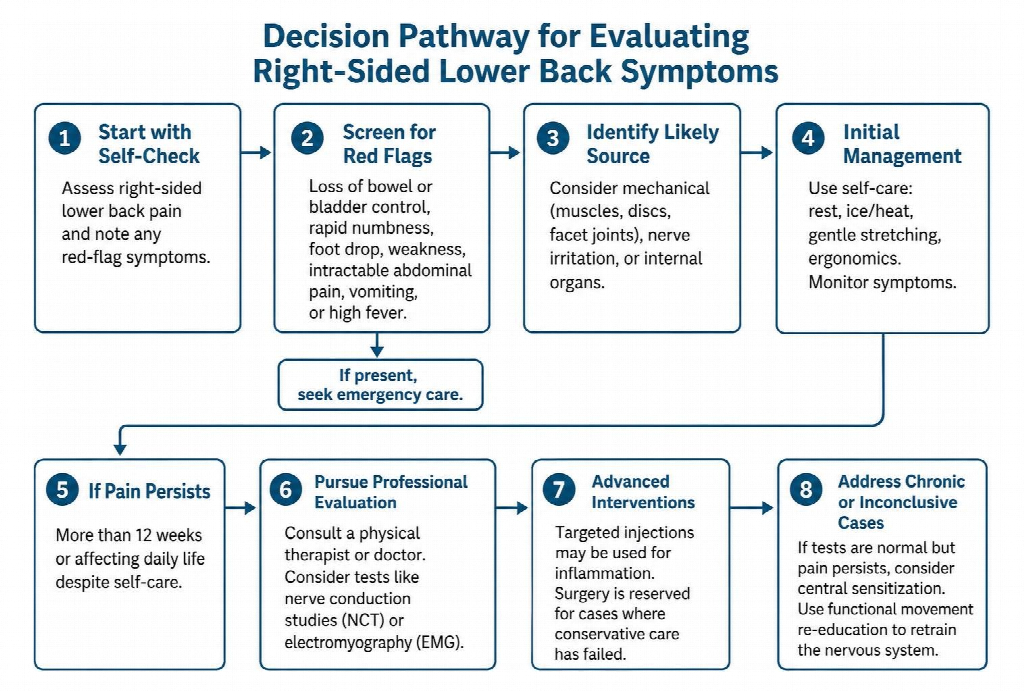
If pain persists, a physical therapist can help you build core stability and restore balanced movement. In some cases, a doctor may order nerve conduction studies (NCT) or electromyography (EMG) to pinpoint nerve issues. Targeted injections may be used to manage acute inflammation, while surgery is generally reserved for cases where conservative care has failed to provide relief.
Knowing When to Seek Medical Attention
Red-Flag Symptoms Demanding Urgent Care
Some symptoms are clear warnings that you need immediate medical help. These include a sudden loss of bowel or bladder control, which can indicate serious nerve compression.
Seek emergency care if you experience rapidly spreading numbness, foot drop, or motor weakness in your right leg. Intractable abdominal pain accompanied by persistent vomiting or a high fever also requires an emergency room visit. These signs could indicate ruptured aneurysms or acute infections.
Addressing Inconclusive Tests and Chronic Pain
It is frustrating when pain lasts beyond the 12-week mark, yet tests show nothing. Standard X-rays and MRIs can be normal even when you are in genuine pain.
This often happens because of central sensitization, where the nervous system remains in a “high alert” state even after the initial injury has healed. In these cases, functional movement re-education is often the most effective way to “retrain” your nervous system and reduce the pain response.
Long-Term Prevention and Spinal Health
Ergonomic Adaptations and Daily Movement
Prevention starts with your daily environment. If you work at a desk, ensure your chair provides adequate lumbar support. Keep your knees level with your hips and make a habit of changing your position every 30 minutes.
When lifting, use your legs rather than your back. Keep items close to your center of gravity to reduce the leverage on your spine. If you stand for long shifts, use a footstool to alternate your weight and keep your pelvis neutral.
Building Core Stability and Resilience
A strong core is your spine’s best defense. Focus on strengthening your transverse abdominis and back extensor muscles to provide a stable base for your lumbar vertebrae.
Low-impact cardiovascular activities, such as daily walking or swimming, keep your tissues supple without adding stress. Sustainable lifestyle habits, including a balanced diet and proper rest, help protect your bone density and keep your spinal discs hydrated for years to come.
Conclusion
Right-sided lower back pain is rarely a one-size-fits-all problem. It can stem from mechanical spine issues, nerve irritation, or even signals from your internal organs. Because the causes are so diverse, the most effective path forward is one that investigates the underlying root cause rather than just masking the pain.
By combining proactive self-care, such as proper ergonomics and movement, with professional integrative therapies, you can build lasting spinal resilience. Listen to your body, advocate for your health, and do not hesitate to seek professional guidance when your pain signals that something more is going on. With the right approach, you can move past the discomfort and return to the activities you enjoy.
Other Articles You May Find of Interest...
- Decoding the Pain: Sensations and Diagnostic Clues
- Structural Anatomy of the Left Lumbar Region
- Wharton’s Jelly Stem Cells for Knee Osteoarthritis: What the Randomized Trials Show
- How Prolonged Sitting May Contribute to Spinal Disc Problems
- Left-Sided Mid-Back Pain: Causes and Relief
- Orthopaedic Care in Central Singapore: What Patients Should Know About Choosing a Specialist
- From Diagnosis to Long-Term Stability: Why Spinal and Joint Injuries Need a Personalized Medical Strategy