Eradizyme | Head Researcher
FREE CONSULTATION – No Obligation To Buy
We are available from 9:00 am to 11:00 pm 7 days a week EST.
Call 888-774-4046
More Home Care & Wellness Products Articles
Why Is a Sudden Cold Snap Causing Unexplained Mystery Bites and Skin Crawling Sensations in Your Home?
The Hidden Winter Pest Shift That Catches Longtime Home Owners Completely Off Guard and Defenseless
Why do you suddenly experience winter skin crawling sensations?
Unexplained cold weather skin irritation frequently strikes without warning. This is because hidden seasonal rodent movements introduce biting organisms directly into human living quarters. As the bitter autumn frost and freezing winter temperatures arrive, a quiet yet frantic biological migration occurs right outside our doors.
Dropping outdoor temperatures instinctively drive wild rodents to seek indoor shelter from the cold. They breach the perimeters of historic rural farmhouses, modern city apartments, and multi million dollar estates alike. While people easily recognize the annual nuisance of scratching sounds in the walls or droppings under the sink, few realize that a routine cold weather invasion can instantly turn into a baffling medical puzzle.
The Myth of Permanent Immunity Against Infestations
The single most dangerous misconception is assuming your household is completely safe just because you have bypassed this issue during previous winters. Longtime property owners face a hidden risk because a home can experience seasonal rodent invasions for years without a single mite incident until a specific population spike triggers a sudden infestation. When desperate families contact us for help with a sudden biting mite crisis, they almost always say the exact same thing: “We have had mice every winter, but we never had this problem before.” The truth is that environmental conditions change, rodent populations fluctuate, and there is certainly a first time for everything.
How Rodent Mites Rely on Live Hosts for Survival
Wild rodents are the primary hosts for blood feeding parasites, specifically the house mouse mite and the tropical rat mite. These tiny arachnids live deep within rodent fur and nesting materials, relying entirely on the host animal for warmth and survival. A catastrophic mistake occurs when people treat this winter like any other and deploy standard poisons or traps without treating the surrounding indoor environment.
The Trigger for Post-Extermination Mite Migration
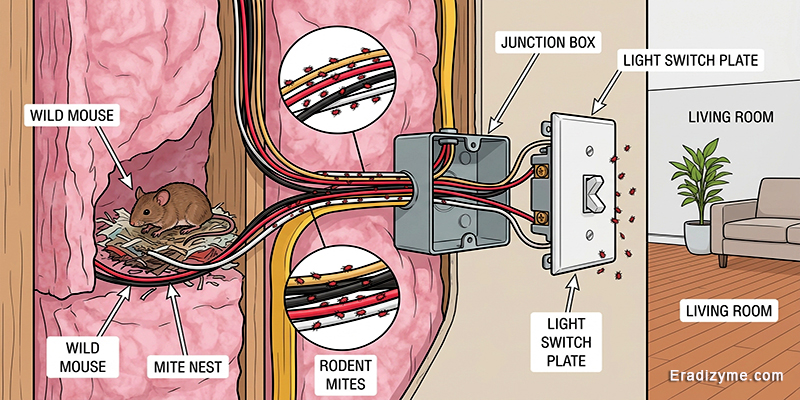
While some mites wander off live hosts, the worst wave of bites often occurs following rodent remediation. To be clear, if and only if the rodents are infected with these tiny, biting arachnids will a massive migration occur. The moment a mouse or rat dies from bait inside an inaccessible wall cavity, attic, or crawl space, its body temperature rapidly plummets, forcing thousands of starving resident rodent mites to flood into living areas simultaneously.
Driven by pure survival instinct, these hungry parasites abandon the dead carcass and migrate into living spaces in search of a new warm blood source. They use the hidden highways of your home, traveling along electrical wiring and utility conduits, bypassing switch plates to flood directly into your bedrooms and living spaces.
Identifying the Symptoms of Rodent Mite Bites
Because rodent mites track mammal body heat and carbon dioxide emissions, humans and domestic pets quickly become their accidental secondary targets. In fact, domestic pets can be just as vulnerable to these biting pests as people, suffering from identical symptoms.
The resulting parasitic bites produce intense itching, severe dermatitis, and painful welts that are frequently misdiagnosed by doctors as standard eczema or hives, and by veterinarians as sarcoptic mange or generic flea allergies. Relying on a family cat often worsens the situation by pushing rodents deeper out of reach where massive mite populations build up completely unnoticed.
Non Toxic Eradication Protocols for Hidden Parasites
Breaking this post extermination nightmare requires a dual approach that addresses both the wildlife and the hidden parasites simultaneously. Safe remediation requires the careful extraction of accessible nests and carcasses alongside the application of natural specialized enzymes to neutralize remaining pests without introducing toxic chemicals into your living space.
Some enzyme-based products are marketed for environmental mite control. Eradizyme Ultra Concentrated Formula, for example, is marketed by its manufacturer as an enzyme-based option for treating infested nesting zones and living areas. Follow the product directions carefully and consider professional pest-management guidance for persistent infestations.
For precise step-by-step containment instructions, including critical safety protocols on handling traps and heavy duty double bagging without compression, refer directly to the detailed guide featured on the knowledge hub section of Eradizyme.com: The Threat Exterminators Leave Behind: Rodent Mites.
For professional support with persistent infestations or unexplained bites, you can call the Free Expert Consultation Line at (888) 774 4046 between 9:00 AM and 11:00 PM EST for a comprehensive evaluation and customized non toxic protocols.
To read the complete, unabridged breakdown of this post extermination phenomenon, read our extended article: The Hidden Winter Pest Danger: Why Rodent Mites Invade Your Home After Rodent Extermination.
About the Author: For more than ten years, I have served as the lead researcher for Eradizyme.com, dedicating my career to understanding the real-world realities of bird and rodent mite crises. Through direct, personal phone consultations with hundreds of individuals facing these relentless infestations, I gather practical field data that textbooks often miss. My research focuses on how ectoparasites migrate through structures and the specialized environmental remediation techniques required to clear them. Ultimately, my goal is to connect established pest management science with the genuine, everyday struggles of those affected.
Medical Disclaimer: The information provided in this article is for educational and structural pest investigation purposes only. It is not intended to be a substitute for professional medical advice, diagnosis, or treatment. Always seek the advice of your physician or other qualified health provider with any questions you may have regarding a medical condition.
Other Articles You May Find of Interest...
- Why Is a Sudden Cold Snap Causing Unexplained Mystery Bites and Skin Crawling Sensations in Your Home?
- How Hot Is Too Hot? The Water Temperature Mistake Families Often Overlook
- Sauna Hats and Heat Comfort: What They Can and Cannot Do for Your Head and Hair
- Why Building Material Specifications Matter for a Safer, Healthier Home
- Healthy Home Plumbing in Philadelphia: Water Quality, Leaks and Other Health Concerns
- Can a Bird Mite Problem Begin Weeks After Birds Have Already Left the Nest?
- Why HVAC Technicians Play an Important Role in Healthy Indoor Environments
Featured Doctors and Practices