Your Health Magazine Contributor
4201 Northview Drive
Suite 102
Bowie, MD 20716
More Hearing Health Articles
Understanding Your Hearing Without Appointments or Equipment
Recognizing gradual hearing loss often takes years because the changes happen so slowly you adapt without realizing how much you’re missing. You turn up the television volume incrementally, ask people to repeat themselves more frequently, and avoid noisy restaurants where conversation becomes exhausting. These small accommodations feel normal until you discover how much clearer communication could be.
Getting your hearing evaluated no longer requires scheduling appointments, traveling to clinics, or waiting in medical offices. An online hearing test provides immediate insight into your hearing capabilities from home using just your computer or smartphone. While not replacing comprehensive audiological evaluations for medical diagnosis, these tests reveal whether you should consider hearing solutions and give you baseline information about your hearing patterns.
How Remote Hearing Assessments Actually Work
Online hearing tests use calibrated tones played through your headphones or earbuds at varying volumes and frequencies. You indicate when you hear each tone, and the system maps your responses against normal hearing ranges. The process typically takes ten to fifteen minutes and requires quiet surroundings where you can focus without distractions.
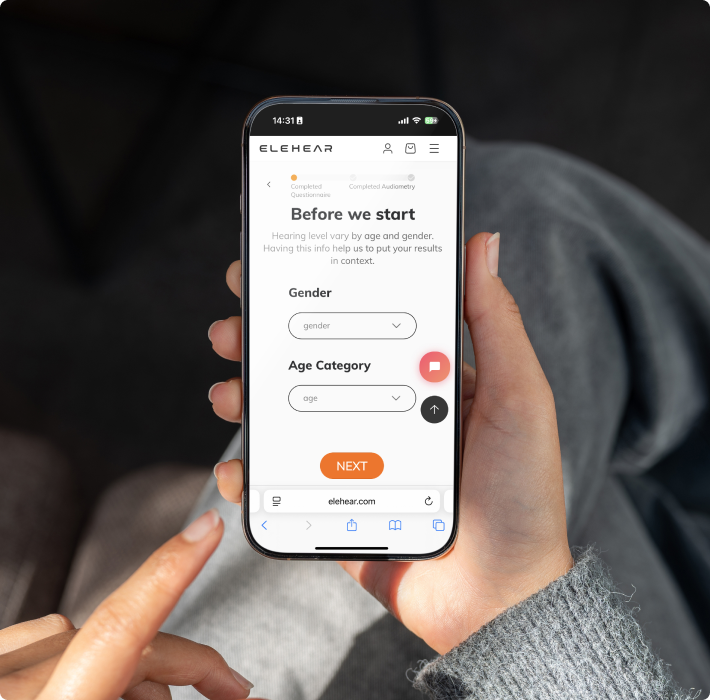
The test presents tones across frequency ranges that matter most for speech understanding and daily communication. Low frequencies correspond to sounds like rumbling traffic or distant thunder, while high frequencies include consonants, bird songs, and children’s voices. Your ability to detect tones at each frequency creates a hearing profile that identifies potential problem areas.
Quality online tests account for equipment variations by including calibration steps that adjust for your specific headphones and device. This calibration helps ensure results reflect your actual hearing rather than your audio equipment’s limitations. Tests that skip calibration produce less reliable results because headphone quality varies dramatically.
What Results Actually Tell You
Your test results show which frequencies you hear clearly and which require louder volumes before you detect them. Normal hearing means detecting soft sounds across all frequencies, while hearing loss manifests as needing increased volume for specific frequency ranges.
High-frequency hearing loss is most common and affects your ability to understand consonants that give words clarity. You might hear that someone is speaking but struggle distinguishing “cat” from “cap” or “fish” from “wish.” This pattern explains why people with hearing loss often say “I can hear but can’t understand.”
Low-frequency loss is less common but creates different challenges. Vowel sounds and environmental awareness suffer, though you may still hear high-pitched sounds clearly. This pattern can make diagnosis more difficult because you pass some informal hearing checks while still missing important auditory information.
Symmetry between ears matters significantly. If one ear tests substantially worse than the other, this asymmetry warrants medical evaluation regardless of the severity. Sudden or uneven hearing loss sometimes indicates treatable medical conditions requiring prompt attention.
Understanding Limitations and Accuracy
Online hearing tests provide useful screening information but cannot replace professional audiological evaluations for several important reasons. Understanding these limitations helps you use online tests appropriately without over-relying on their results.
Equipment variability affects accuracy. Even with calibration, consumer headphones don’t match professional audiometric equipment’s precision. Results give you general guidance rather than the detailed measurements hearing healthcare professionals obtain with specialized equipment in controlled environments.
Self-administered tests depend on your honest, focused responses without professional oversight. Distractions, test fatigue, or misunderstanding instructions can skew results. Audiologists control testing conditions precisely and can verify response patterns that ensure reliable measurements.
Online tests cannot evaluate middle ear function, earwax blockages, or other physical conditions affecting hearing. These factors sometimes cause temporary hearing loss that professional examination reveals and treats. Assuming permanent hearing loss based solely on online test results might cause you to miss simple, correctable problems.
Diagnostic medical evaluations require professional audiologists. If you have ear pain, drainage, sudden hearing changes, dizziness with hearing loss, or significant asymmetry between ears, professional medical evaluation takes priority over online screening regardless of test results.
Using Test Results to Guide Next Steps
Online hearing test results help you make informed decisions about whether exploring hearing solutions makes sense. If results indicate mild to moderate hearing loss matching your daily frustrations, investigating over-the-counter or prescription hearing aids becomes a logical next step.
Compare your results with your actual communication challenges. If tests suggest hearing loss but you experience no difficulty in daily life, you might not need hearing aids yet. Conversely, if tests show minimal loss but you struggle constantly with conversations, professional evaluation could reveal issues online tests miss.
Retesting periodically tracks hearing changes over time. Taking the same online test every six to twelve months creates a personal hearing history that reveals whether your hearing remains stable or declines. Tracking trends helps you decide when to take action rather than waiting for hearing loss to severely impact your life.
Use results to prepare for professional consultations if you choose to seek them. Knowing your general hearing pattern helps you ask informed questions and understand professional recommendations. Many audiologists appreciate patients who arrive with self-awareness about their hearing challenges rather than expecting diagnosis with no prior investigation.
Creating Optimal Testing Conditions
Environmental factors significantly affect online hearing test accuracy. Taking a few minutes to optimize conditions improves result reliability and ensures you get useful information from the screening.
Choose quiet locations away from traffic noise, appliances, HVAC systems, and other people. Background noise masks test tones, causing you to miss sounds you would otherwise detect. If you can’t find perfectly quiet space, early morning often provides the quietest conditions in most homes.
Use quality headphones rather than device speakers or cheap earbuds. While the test calibrates for your equipment, extreme quality differences limit how accurately it can compensate. Over-ear headphones generally provide more consistent results than in-ear options because they better isolate you from environmental sounds.
Take the test when you’re alert and focused. Fatigue, distraction, or time pressure reduce response accuracy. The test only takes fifteen minutes, so choosing a time when you can concentrate fully ensures your results reflect your actual hearing rather than attention lapses.
Follow instructions carefully, particularly regarding volume adjustment and response timing. Setting initial volume too high or too low affects calibration accuracy. Responding too quickly or hesitantly changes how the test interprets your hearing threshold. Careful adherence to instructions maximizes result reliability.
When to Seek Professional Evaluation Instead
Certain situations warrant skipping online tests entirely in favor of immediate professional evaluation. Understanding when self-screening becomes inappropriate ensures you don’t delay necessary medical care.
Sudden hearing loss in one or both ears requires urgent medical attention. If you wake up with hearing loss, experience dramatic hearing change following illness or injury, or lose hearing within hours or days, see a healthcare provider immediately. Time-sensitive medical interventions can prevent permanent hearing loss in some cases, but delays reduce treatment effectiveness.
Pain, drainage, or bleeding from ears needs medical evaluation regardless of hearing changes. These symptoms suggest infections or injuries requiring treatment beyond hearing assessment. Don’t attempt online hearing tests when physical ear problems exist.
Dizziness or balance problems accompanying hearing changes indicate potential inner ear disorders requiring medical diagnosis. The combination of symptoms suggests conditions where online screening provides no benefit and may delay appropriate care.
Children’s hearing concerns should never rely solely on online tests. Pediatric hearing evaluation requires specialized expertise and equipment that accounts for developmental factors. If you suspect your child has hearing difficulties, seek professional pediatric audiology services.
Taking Control of Your Hearing Health
Online hearing tests democratize access to hearing health awareness by removing barriers that prevent people from investigating their hearing status. The convenience of immediate, free screening from home helps you make informed decisions about whether pursuing hearing solutions makes sense for your situation.
While these tests cannot replace professional audiological care for diagnosis or medical treatment, they serve valuable purposes for people wondering whether their hearing has changed or whether hearing aids might help them. Taking an online hearing test costs nothing but fifteen minutes of your time, yet the insights you gain might motivate you to address hearing loss that’s been gradually eroding your quality of life. Understanding your hearing represents the essential first step toward restoring the clear communication and social connection that hearing loss has been stealing from you.
Other Articles You May Find of Interest...
- Understanding Your Hearing Without Appointments or Equipment
- What to Do If You Are Losing Your Hearing
- Wireless motorcycle headset: 7 tips for hearing health
- Hearing Health as Part of Healthy Aging: Staying Connected in Everyday Life
- Signs You Shouldn’t Ignore When It Comes to Your Hearing
- How OTC Hearing Aids Support Healthy Aging: A Clinical Guide for Midlife and Older Adults
- Hearing Test in Singapore: What to Expect, What It Costs, and How to Choose the Right Clinic