Your Health Magazine Contributor
4201 Northview Drive
Suite 102
Bowie, MD 20716
More Health News & Research Articles
How AI Is Helping Healthcare and Why the Right AI Tools Matter
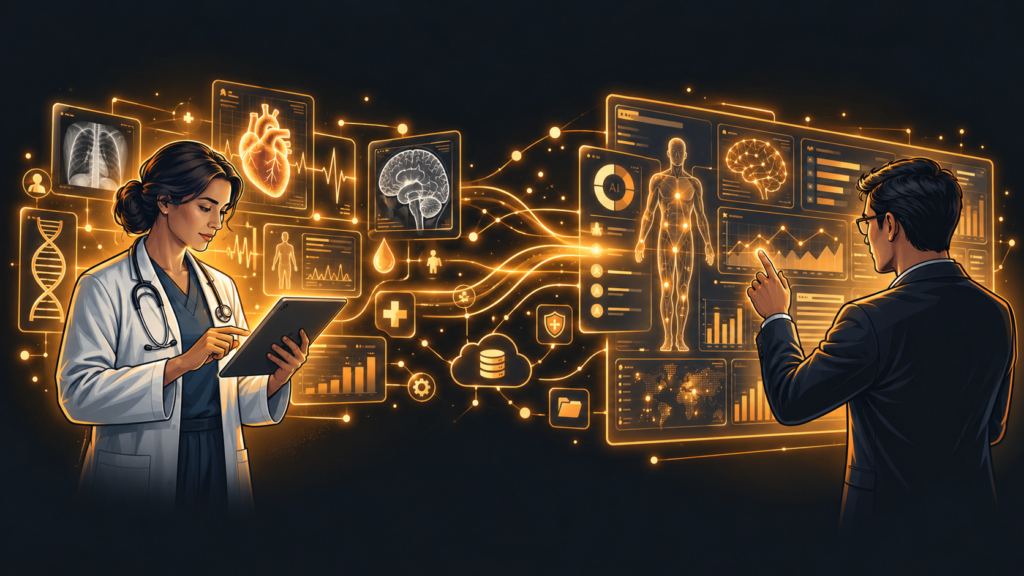
TL;DR: AI is helping healthcare with medical research, documentation, imaging, administration, patient communication, and other information-heavy tasks. Its value is not limited to replacing manual work; it can also help professionals process information and improve workflows. As healthcare AI expands, finding reliable and relevant tools becomes increasingly important, and organized AI tool directories can help with the initial discovery process.
Healthcare Has an AI Opportunity
Healthcare is one of the industries where information matters most. Doctors and nurses work with patient records, researchers process scientific studies, hospitals manage large administrative systems, and patients increasingly interact with digital healthcare services.
That makes healthcare a natural environment for artificial intelligence. AI can process large amounts of information, identify patterns, summarize content, automate repetitive tasks, and assist professionals with different parts of their work.
The most useful applications are not necessarily the ones designed to replace healthcare professionals. In many cases, AI is more valuable as an assistant that reduces repetitive workloads and helps professionals spend more time on tasks that require experience, judgment, and human interaction.
From Medical Imaging to Research
Medical imaging is one area where AI has demonstrated significant potential. AI systems can examine medical images and identify patterns that may require further attention. Rather than making the final decision independently, these systems can provide another layer of analysis for qualified professionals.
Research is another major area of opportunity. Healthcare researchers have to work through enormous amounts of scientific literature and complex datasets. AI can help organize information, summarize relevant research, identify patterns, and narrow down areas that deserve further investigation.
The same principle applies to fields such as drug discovery and biomedical research. AI can help researchers analyze complex relationships and explore possibilities faster. It does not remove the need for scientific validation, but it can make some parts of the research process more efficient.
The Work Behind Patient Care
Some of the most practical healthcare applications of AI are happening behind the scenes.
Healthcare professionals spend significant amounts of time on documentation, transcription, scheduling, record management, and communication. These tasks are necessary, but they can also take time away from direct patient interaction.
AI-powered tools can assist with transcription and documentation, organize information, automate repetitive processes, and support administrative workflows. Even relatively simple improvements can matter when they are applied across a busy healthcare organization.
This is an important distinction when discussing healthcare AI tools. The technology does not always need to make a medical decision to provide value. Sometimes helping a professional prepare information faster or reducing repetitive administrative work can have a meaningful effect on the overall workflow.
Patients Can Benefit Too
AI is also changing how patients interact with healthcare services.
Digital assistants can help users find information, prepare questions, navigate basic administrative processes, or understand general health resources. Other AI-powered systems can support appointment scheduling, communication, and personalized educational content.
However, patient-facing AI requires particular care. General information is not the same as medical advice, and AI-generated responses can sometimes be incomplete or incorrect. Patients should not treat an AI response as a substitute for professional medical evaluation, particularly when dealing with serious or urgent symptoms.
The strongest patient-focused applications are therefore likely to be those that improve access to information and services while keeping qualified professionals involved when clinical judgment is required.
Healthcare Has Higher Stakes
AI adoption in healthcare cannot follow exactly the same approach used for ordinary productivity software.
Accuracy matters more. Privacy matters more. Security, accountability, regulatory requirements, and data governance all become important when technology interacts with sensitive healthcare information.
A tool that works well for summarizing a public document may not be appropriate for processing confidential patient records. Similarly, an AI application designed for general wellness information should not automatically be considered suitable for clinical decision-making.
Healthcare organizations therefore need to evaluate AI tools based on their intended use rather than simply choosing the most popular or technically impressive option.
The right question is not only whether an AI tool works. It is whether it works appropriately and responsibly for the specific healthcare task.
Finding the Right Tool Is Its Own Challenge
The growing number of AI products has created another problem: discovery.
A healthcare organization looking for an AI documentation tool, research assistant, medical imaging solution, or administrative automation platform may find many different products offering similar capabilities. Comparing them individually can take considerable time.
This is where an AI tools directory can become useful.
Instead of searching for every product separately, users can explore tools through categories and use cases. A directory can provide an initial layer of organization that makes it easier to identify relevant solutions and compare possibilities before investing more time in evaluation.
For healthcare, this discovery stage is particularly valuable because organizations need to consider more than basic functionality. They may also need to investigate privacy practices, security, integrations, compliance requirements, pricing, and the suitability of a tool for their particular environment.
Using AI Tool Directories in Healthcare
AI tool directories can provide a useful starting point for healthcare professionals and organizations researching available technology. AIChief, for example, lists more than 12,000 AI tools across hundreds of categories, including tools relevant to healthcare-related workflows.
Its value extends beyond simply listing products. AIChief also provides guides, reviews, comparisons, tutorials, and use-case resources that can help users understand what different AI tools are designed to do before conducting deeper evaluation.
For someone beginning to explore healthcare AI, this can make the first stage of research more manageable. Instead of immediately committing to a product, users can discover potential options, compare them, and then investigate the tools that appear most relevant.
That distinction is important. An AI tools directory should not be treated as a replacement for healthcare-specific due diligence. Rather, it can serve as the discovery layer that comes before deeper technical, legal, security, and professional evaluation.
Start With the Healthcare Problem
One of the biggest mistakes organizations can make is starting with an AI product instead of a real problem.
A hospital department may be struggling with documentation. A research team may need help organizing large volumes of literature. An administrative team may be spending too much time processing repetitive information. A healthcare provider may want to improve patient communication.
Once the problem is clear, it becomes easier to determine what type of AI solution could actually help.
This approach also prevents organizations from adopting AI simply because it is fashionable. The objective should not be to use as many AI tools as possible. It should be to find technology that solves a genuine problem without creating unnecessary complexity or risk.
An AI tools directory can support that early discovery process by helping users explore different categories and identify potential solutions before moving into detailed evaluation.
AI Works Best Alongside Human Expertise
The future of healthcare AI does not have to be about machines replacing doctors, nurses, researchers, or other professionals.
Healthcare depends on human judgment, communication, empathy, ethics, and responsibility. AI can process information quickly, but professionals understand context and make decisions within the realities of individual patients and healthcare environments.
That makes collaboration a more practical model. AI can handle certain repetitive or information-heavy tasks while professionals remain responsible for interpretation, decision-making, and patient care.
When used this way, AI becomes a tool for extending human capability rather than removing the human element.
The Real Opportunity Is Better Healthcare, Not More AI
Artificial intelligence has the potential to influence healthcare at almost every level, from research and medical imaging to administration and patient communication. But the technology itself is only part of the equation.
Healthcare organizations also need reliable ways to discover, compare, and evaluate the growing number of AI solutions available to them.
That is where AI tools directories can play a useful role, organizing products, reviews, comparisons, tutorials, and use cases so users can identify potential solutions before conducting the deeper privacy, security, regulatory, and clinical evaluation required in healthcare.
The goal should not be to put AI into every healthcare process. It should be to identify where AI can genuinely improve a workflow, reduce unnecessary administrative work, support research, or help professionals work with information more effectively.
The healthcare AI market will continue to evolve, but one principle is unlikely to change: the value of AI depends on using the right tool for the right problem, with the right human oversight.
Other Articles You May Find of Interest...
- How AI Is Helping Healthcare and Why the Right AI Tools Matter
- Mad Honey and Heart Medication: Why the Combination Is Risky
- How Researchers Verify Retatrutide Quality: Purity, Testing and What to Look For
- Peptides Studied for Energy Metabolism and Cognitive Function: What Current Research Shows
- Expanding Wellness Markets Are Encouraging More Investment in Supplement Production
- Why Cannabis Access Around Fairfax Doesn’t Always Follow Neighborhood Boundaries
- How Pennsylvania’s Clinical Registrant Program Allows Vertical Integration in Medical Marijuana