






More Hair Care Articles
Hair Transplant for Women: Causes of Female Hair Loss + Best Approaches in 2026
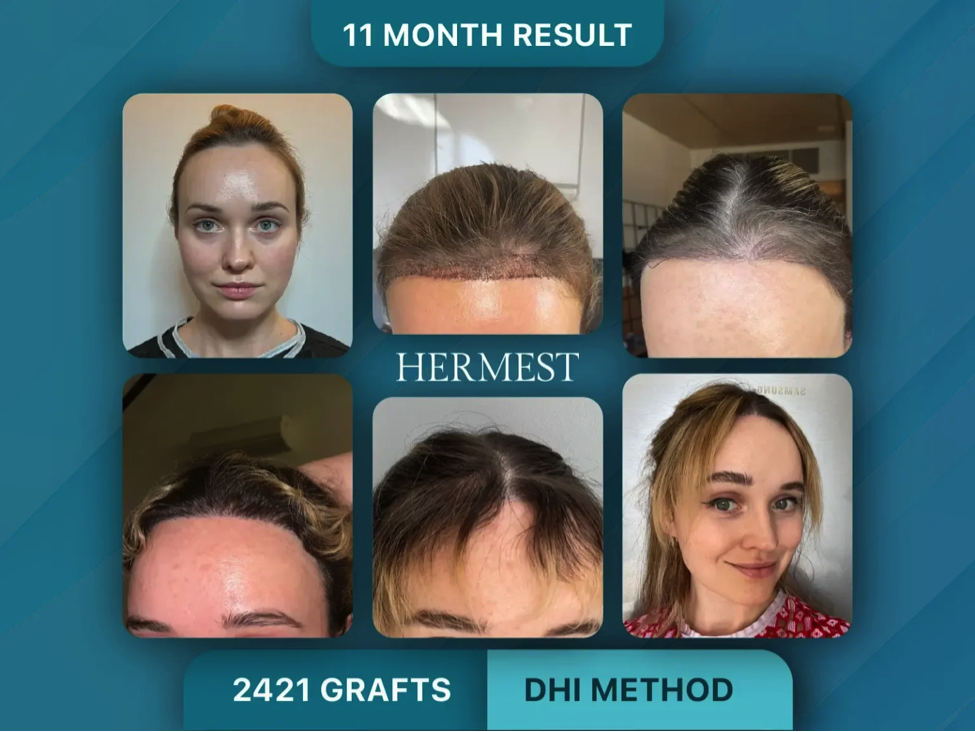
Hair loss affects up to 40% of women by age 50, often starting subtly and causing significant emotional impact. Unlike men’s receding hairlines or bald crowns, women typically experience diffuse thinning, a widening central part, reduced overall volume, or a gradually receding frontal hairline. In 2026, improved diagnostics, non-surgical therapies, and refined surgical techniques offer effective, natural solutions—especially in leading destinations like Istanbul, Turkey.
Main Causes of Female Hair Loss
Female hair loss is rarely due to one factor alone. Accurate diagnosis (via dermatologist, blood tests, scalp biopsy, or trichoscopy) is essential to choose the right approach.
- Female Pattern Hair Loss (Androgenetic Alopecia / FPHL) The most common cause (hereditary + hormone-sensitive). Follicles miniaturize due to DHT sensitivity, leading to thinning at the crown, widening part, or diffuse loss. It accelerates post-menopause (estrogen drop) or in PCOS (elevated androgens). Starts as early as late teens/20s in some, peaks after 40–50.
- Hormonal Imbalances & Life Stages
- Pregnancy/postpartum telogen effluvium (shedding 3–6 months after birth).
- Menopause (estrogen decline).
- Thyroid issues (hypo/hyperthyroidism).
- PCOS or other endocrine disorders.
- Telogen Effluvium Acute or chronic shedding from stress, illness, surgery, rapid weight loss, medications (antidepressants, birth control, blood pressure drugs), or nutritional shocks. Hairs enter resting phase en masse; often reversible if trigger resolved.
- Nutritional & Lifestyle Factors Deficiencies in iron (common in women), vitamin D, B12, zinc, biotin, or protein. Crash diets, chronic stress, or poor scalp hygiene worsen it.
- Other Causes
- Alopecia areata (patchy autoimmune).
- Frontal fibrosing alopecia (scarring recession, postmenopausal).
- Traction alopecia (tight styles).
- Scalp conditions or medications (chemotherapy).
Early intervention prevents permanent follicle miniaturization.
Best Treatment Approaches in 2026
Start conservatively; combine therapies for optimal results.
Non-Surgical / Medical Treatments (First-Line)
- Topical Minoxidil (2–5% foam/solution): FDA-approved; stimulates growth, thickens hairs. Results in 3–6 months; lifelong use required.
- Oral Anti-Androgens: Spironolactone or low-dose finasteride (off-label) block DHT; effective for hormone-driven cases (with birth control to manage side effects).
- PRP Injections: 3–6 sessions using your blood’s growth factors; improves thickness in early/moderate thinning.
- Low-Level Laser Therapy (LLLT): Home devices (caps/combs) enhance circulation; good adjunct.
- Nutritional & Lifestyle Fixes: Supplement deficiencies; manage stress; avoid tight hairstyles.
These stabilize or improve 60–80% of early cases.
Hair Transplant Surgery for Women
When non-surgical options plateau or thinning is stable/advanced (Ludwig II–III, receding hairline, crown sparsity, traction/frontal fibrosing), transplants redistribute healthy follicles from donor areas (back/sides) to thinning zones.
Benefits for Women — Restore part-line density, lower hairlines, fill sparse areas, correct scarring/traction. Success depends on stable loss, good donor supply, realistic expectations (fuller look, not perfect reversal).
Best Techniques in 2026 (Especially in Istanbul):
- DHI (Direct Hair Implantation) — Top choice for women. Choi pens allow precise, angle-controlled placement without pre-incisions. No-shave/partial-shave options preserve hairstyle/discretion. High survival (90–98% in top clinics), natural density, minimal downtime.
- Unshaven/Long-Hair FUE — Extracts/implant without shaving recipient area; ideal for privacy and feminine styling during recovery. Sapphire blades reduce trauma.
- Advanced/Proprietary FUE — Some clinics emphasize donor-first planning, fast implantation, and high survival for better density preservation—suitable for diffuse thinning.
Why Istanbul Excels for Women:
- Cost: $2,400–$5,500 all-inclusive (vs. $10,000–$20,000+ in US/UK/Canada/Australia).
- Specialization: High-volume experience with female cases; no-shave DHI/FUE refined for privacy.
- Support: Multilingual coordinators, 12-month aftercare, lifetime warranties in premium clinics.
Recovery & Results — 7–10 days social downtime; initial shed normal; growth visible 4–6 months, full density 12–18 months. Success rates 90%+ in reputable clinics.
Hair Transplant in Turkey — Some women seeking discreet, high-density results with no-shave options and aftercare, might consider hair transplant in Turkey from providers like Hermest Hair Clinic.
Female hair loss is treatable—start with diagnosis and non-surgical therapies. If needed, modern transplants (DHI/unshaven FUE in Istanbul) provide reliable restoration. Since you’re in Istanbul right now (March 9, 2026), a free consultation can assess your case quickly. Early action maximizes success—reach out for expert guidance today!
FAQs
What is the cost of a hair transplant in 2026? Costs can vary. For example, Hermest offers all-inclusive packages ranging from $3,000 to $5,500 USD, depending on the technique and number of grafts.
- Sapphire FUE: approximately $3,250
- DHI: approximately $3,800
- UNIQUE FUE (proprietary method): approximately $4,750–$4,950 Every package includes the procedure, 5-star hotel stay (3–5 nights), VIP private airport transfers, PRP therapy, full medications and aftercare kit, 12 months of 24/7 multilingual support, and a lifetime warranty on graft growth.
What makes UNIQUE FUE different from regular FUE or DHI?
UNIQUE FUE is Hermest Clinic’s patented, proprietary technique developed with German engineering input. It uses micro-angle extraction, low-torsion harvesting, faster implantation, temperature-regulated storage, and donor-first planning to achieve a claimed 99% graft survival rate and higher natural density while preserving the donor area better than standard FUE or DHI.
Do I need to shave my head for a hair transplant?
Not necessarily. Some clinics, like Hermest, offer no-shave or partial-shave options, particularly with DHI and UNIQUE FUE techniques. The donor area is trimmed minimally, and the recipient area can often remain unshaved, making the procedure more discreet — especially important for women and patients who prefer to return to daily life quickly without obvious signs of surgery.
Other Articles You May Find of Interest...
- How Many Inches Does Hair Grow in a Year?
- Hair Transplants Explained: What to Know Before Considering Surgery
- What Scalp Micropigmentation Can and Cannot Do for Visible Scalp and Hair Loss
- How Long Does Rosemary Oil Take to Grow Hair?
- How Alopecia Areata, Totalis, and Universalis Differ in Progression and Unpredictability
- Is a Hair Transplant Worth the Cost? What to Consider First
- Why Leg Hair Can Grow Curly, Kinked, or Suddenly Different





