Your Health Magazine Contributor
4201 Northview Drive
Suite 102
Bowie, MD 20716
More Chiropractic Care Articles
Can a Chiropractor Help With Sciatica?
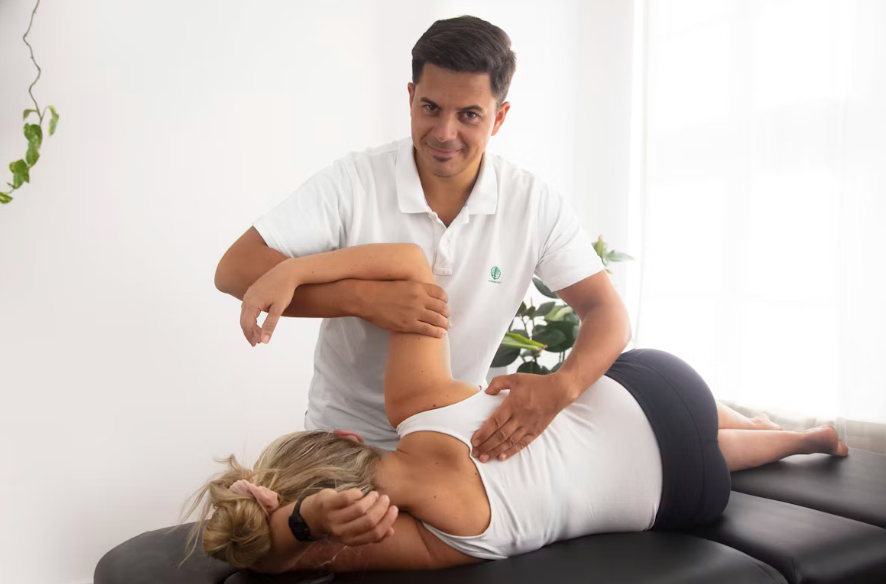
What You Need to Know Before Your First Visit
Often yes, though it depends on what is actually causing your leg pain, and most people arrive at a first appointment without knowing. That is not a failure on your part. It is a limitation of the word itself.
Here is what to understand before you book, including the symptoms that mean you should skip the chiropractor entirely.
Sciatica Is a Symptom, Not a Diagnosis
An international expert panel convened by the Neuropathic Pain Special Interest Group reviewed the term in 2023 and recommended discouraging its use in clinical practice. The sciatic nerve is typically not the structure affected, and the word has no agreed definition.
What people call sciatica is really three problems. Pain referred from an irritated joint or muscle, which feels deep, dull and achy. Radicular pain from an irritated nerve root, which feels electric, shooting or lancinating. And radiculopathy, where there is measurable nerve dysfunction, meaning numbness, weakness or a lost reflex rather than pain alone.
They feel similar to the person experiencing them and they respond to different things. Sorting out which one you have is the point of a first visit.
Most of the Research Is About Back Pain, Not Leg Pain
The American College of Physicians does strongly recommend trying non-drug treatment first for low back pain, and spinal manipulation is on that list. But the ACP’s own announcement of that guideline is titled as guidance for nonradicular low back pain, and states that the evidence was insufficient to determine treatments for radicular low back pain. In the guideline’s summary of benefits, the only non-drug therapy listed under radicular low back pain is exercise.
The UK’s NICE guideline does cover sciatica, and it says something more specific. It advises clinicians to consider manual therapy for low back pain with or without sciatica, but only as part of a treatment package that includes exercise. “Consider” is NICE’s weaker recommendation language, and the exercise condition is not optional.
So the defensible claim is that chiropractic care may be one conservative option for some people with low back pain with or without sciatica, particularly when manual therapy is combined with exercise. The sciatica-specific research is thinner and lower certainty than much of the broader back-pain research it is often borrowed from. Any clinic promising more than that is telling you something the literature does not support.
One useful piece of context comes from a well-known trial involving patients with severe sciatica caused by lumbar disc herniation that had lasted six to 12 weeks. Early surgery produced faster relief, but at one year roughly 95 percent of patients in both treatment groups reported recovery. For patients similar to those studied, the main difference between the strategies was how quickly relief occurred rather than the one-year recovery rate. That is useful context when considering how long sciatica lasts.
When to Skip the Chiropractor and Go to the Emergency Room
A small number of presentations are surgical emergencies, and manual therapy is the wrong building entirely. Go to an emergency department, the same day, if leg or back pain comes with any of the following:
Difficulty starting urination, not feeling the flow, or any new loss of bladder or bowel control. Numbness or altered sensation around the groin, genitals or the area that would contact a saddle. New weakness in both legs. Loss of the sensation of needing to empty your bowels. New inability to achieve an erection or ejaculate, or loss of genital sensation.
These can indicate cauda equina syndrome. It is rare, affecting roughly one to three people per hundred thousand, and it carries permanent loss of bladder, bowel and sexual function and possible leg paralysis if treatment is delayed. National pathway guidance treats it as an emergency requiring urgent MRI.
Worth saying directly: people routinely do not mention these symptoms, because they are embarrassing and because nobody connects a bathroom problem to a back problem. Mention them anyway. Severe or rapidly worsening weakness in one leg, such as a foot that has started dragging, also warrants urgent assessment rather than an adjustment.
What a Good First Visit Looks Like
Expect a detailed history and a physical and neurological examination. Expect strength, sensation and reflexes to be tested, because that is what separates radiculopathy from the other two categories. Expect a straight leg raise test, and know what it can tell you. A negative result is reasonably informative. A positive one on its own is not, because the test flags a great many people who do not have a disc herniation.
At Cedar Park Chiropractic Relief, the first visit includes a discussion of the patient’s health history and current symptoms, followed by a physical examination that can include range-of-motion, orthopedic and neurological testing. That type of assessment can help determine whether imaging or referral is warranted rather than assuming every new patient needs an X-ray.
That is also the published position of the chiropractic profession itself. The American Chiropractic Association’s Choosing Wisely list advises avoiding routine spinal imaging without clear clinical indicators for acute low back pain under six weeks, advises against repeat imaging to monitor progress, and advises against prolonged passive treatment not supporting an active plan. A clinic that X-rays every new patient and books follow-up films is working outside its own association’s guidance.
There is a good reason for that caution. A review of imaging in more than three thousand people with no symptoms at all found disc bulges in 30 percent of 20-year-olds and 84 percent of 80-year-olds. Degenerative findings are often a photograph of ordinary aging rather than an explanation for your pain, which is why a frightening MRI report does not automatically mean surgery.
Questions Worth Asking Before You Commit
Ask whether the plan includes exercise, since that is the condition attached to the guideline support. Ask what would have to change for the clinician to refer you elsewhere, and be wary of anyone who cannot answer. Ask how many visits before you reassess together, and treat an open-ended package sold upfront as a reason to pause.
One safety distinction is worth knowing. Most of the alarming literature about spinal manipulation concerns the neck and the risk of arterial injury, which is a different region and a different procedure from a lumbar adjustment. Serious events after low back manipulation appear to be very rare, though published estimates vary too widely for anyone to claim a precise figure.
So Should You Book the Appointment?
Chiropractic care may be a reasonable conservative option for some people with sciatica, provided symptoms are screened properly, the plan includes active exercise rather than passive treatment alone, and nobody is promising to fix a disc. If the leg pain comes with bladder, bowel or saddle symptoms, or with weakness that is getting worse, that is a different situation and it belongs in an emergency department today.
Other Articles You May Find of Interest...
- What Chiropractic Care Looks Like in Practice
- Can a Chiropractor Help With Sciatica?
- Beyond the Adjustment: What a Comprehensive Approach to Chiropractic Care Looks Like
- How Long Does a Chiropractic Adjustment Last?
- Are Your Headaches Becoming Too Common? When It’s Time to Get Them Checked
- What Should You Know About Chiropractic Care Before Starting Treatment
- Spinal Decompression Therapy in Oklahoma: What to Know