More Beauty Skin Care & Gorgeous Smiles Articles
Itchy Red Mark on the Leg: What Could Cause It?
By Your Health Magazine Health Information Team
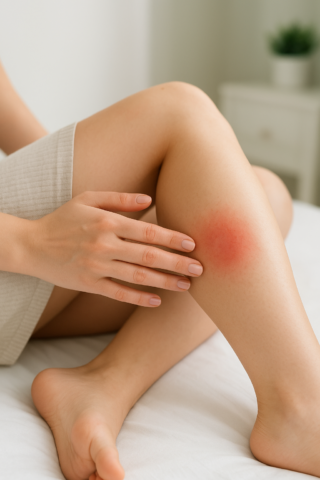
An itchy red mark on the leg is commonly caused by an insect bite, irritated or allergic skin, eczema, or a fungal infection such as ringworm. Less often, it may be related to a tick bite or bacterial skin infection. Its shape, texture, timing, and whether it is spreading, warm, painful, or accompanied by other symptoms can help narrow the possibilities, but appearance alone cannot confirm a diagnosis.
Common Causes of an Itchy Red Mark on the Leg
| Possible cause | Typical clues |
|---|---|
| Insect bite | A small, raised, itchy bump that appears after time outdoors or possible exposure to mosquitoes, fleas, or other insects. Several marks may appear in a cluster or line. |
| Contact dermatitis | An itchy, dry, bumpy, or blistered patch where the skin touched a plant, soap, lotion, laundry product, adhesive, fabric, or other irritant or allergen. |
| Eczema | A dry, scaly, inflamed patch that may repeatedly itch or flare. Scratching can make the skin thicker, cracked, or raw. |
| Ringworm | An itchy, scaly mark that gradually forms a raised circular border, sometimes with clearer skin in the center. |
| Hives | Raised, intensely itchy welts that may change shape, move, fade, and reappear elsewhere within hours. |
| Tick-related reaction | A small bump shortly after a bite, a persistent nodule, or an enlarging rash developing days later. |
| Cellulitis | An area that becomes increasingly red or discolored, warm, swollen, tender, or painful rather than simply itchy. |
Skin inflammation is not always bright red. On darker skin tones, a rash may look purple, gray, dark brown, or simply darker than the surrounding skin.
Was It a Bug Bite?
Mosquito and flea bites usually itch, while some stings are more likely to hurt. A bite may have a visible central dot and localized swelling. Multiple bites can occur after sleeping in an infested room, spending time around animals, or being outdoors with exposed legs. Most are minor, although insects can occasionally transmit disease or cause a serious allergic reaction. MedlinePlus provides an overview of insect bites and stings.
Try not to scratch. Broken skin can bleed, become irritated, and allow bacteria to enter. Seek emergency help for trouble breathing, faintness, widespread hives, or swelling of the lips, tongue, face, or throat after a bite or sting.
Could It Be Dermatitis or Eczema?
Contact dermatitis develops when something touching the leg irritates the skin or triggers an allergic reaction. Possible triggers include poison ivy, fragranced moisturizer, shaving products, topical medicines, laundry detergent, clothing dye, adhesives, and metal fasteners. The pattern may offer a clue: plant exposure can produce streaks, while a product reaction may follow the exact area where it was applied.
Eczema can also cause itchy, dry, scaly patches. It may flare when the skin is dry or exposed to irritants. Review reliable information about eczema and dermatitis if the mark is dry, recurrent, or accompanied by similar patches elsewhere.
Until the cause is clearer, stop using any new product that touched the area. Gently wash the skin, apply a cool compress, and use a plain fragrance-free moisturizer if the skin is dry and unbroken.
Does a Circular Mark Mean Ringworm?
Ringworm is a fungal infection, not a worm. It often produces an itchy, scaly, slightly raised ring that expands outward. The center may look clearer, but not every fungal rash forms a perfect circle. The infection can spread through contact with an infected person or animal or with contaminated towels, clothing, bedding, and surfaces.
The CDC describes common ringworm symptoms, including overlapping rings and bumps within the affected area. Because eczema and other rashes can resemble ringworm, ask a healthcare professional or pharmacist for guidance if you are uncertain. Using a corticosteroid cream by itself on an undiagnosed ring-shaped rash can mask or worsen a fungal infection.
When a Tick May Be Involved
A small area of redness or a mosquito-like bump immediately after a tick bite is common and may resolve within a day or two. A Lyme disease rash is different: it usually begins several days after the bite and gradually expands. It can be uniformly colored or develop central clearing, and it is usually not very itchy or painful. Not every Lyme rash looks like a classic bull’s-eye.
Contact a healthcare professional if an expanding rash, fever, headache, fatigue, muscle aches, joint pain, or swollen lymph nodes develop after possible tick exposure. A firm, persistent bump can occasionally remain at the bite site; learn more about tick-bite granulomas and their management.
Signs the Mark Could Be Infected
Cellulitis is a bacterial infection affecting deeper layers of skin. It commonly occurs on the feet and legs and is more likely to be painful, warm, tender, and swollen than merely itchy. It may begin after a cut, scratch, bite, cracked skin, or another break in the skin, although an entry point is not always visible.
Review the CDC’s information about cellulitis symptoms and care. Cellulitis requires medical evaluation and is treated with antibiotics; it should not be managed as a routine itchy rash.
What to Do at Home
- Look for changes. Note when the mark appeared and whether it is enlarging, changing shape, or becoming painful.
- Consider recent exposures. Think about outdoor activities, insects, pets, new clothing, shaving, plants, adhesives, and recently used skin or laundry products.
- Clean the area gently. Use mild soap and water, then pat dry. Avoid scrubbing.
- Reduce irritation. Apply a cool compress and avoid scratching, tight clothing, fragranced products, and unnecessary creams.
- Document it. A daily photograph beside a ruler can help show whether the mark is expanding. Do not delay care if concerning symptoms develop.
When to Seek Care
Arrange an appointment with a primary care clinician or dermatologist if the mark persists, repeatedly returns, spreads, or does not begin improving with basic skin care. Earlier evaluation is appropriate after a possible tick bite, when a fungal infection is suspected, or if you have diabetes, poor circulation, chronic leg swelling, or a weakened immune system.
Seek prompt medical care if the area is rapidly expanding, hot, increasingly painful, or significantly swollen, or if it develops pus, blisters, red streaks, or an open sore. Fever, chills, or feeling seriously unwell with a spreading skin change also warrants urgent evaluation. Call emergency services for breathing difficulty or swelling involving the mouth, tongue, or throat.
Other Articles You May Find of Interest...
- Itchy Red Mark on the Leg: What Could Cause It?
- Itchy Bumps on the Legs Without Redness: Possible Causes
- What to Expect After Abdominoplasty Surgery in London
- Why Patients Choose V-line Jaw Reduction in Korea for a Softer Facial Profile
- When Breast Revision Surgery in Korea Makes Sense After a Disappointing Result
- Choosing the Right Surgeon for Asian Rhinoplasty in Korea Without Regrets
- Double Eyelid Surgery in Korea Recovery Timeline from Swelling to Final Look