More Beauty Skin Care & Gorgeous Smiles Articles
Itchy Bumps on the Legs Without Redness: Possible Causes
By Your Health Magazine Health Information Team
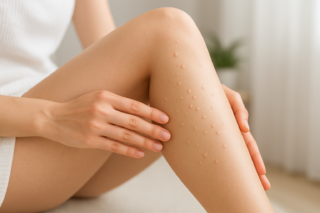
Itchy bumps on the legs that are not red are often caused by keratosis pilaris, dry skin, mild eczema, shaving-related irritation, or hives. Less commonly, intense itching—especially at night—may be related to scabies. A lack of redness does not rule out skin inflammation because some rashes remain skin-colored or appear brown, purple, gray, or slightly darker than the surrounding skin.
Why Itchy Bumps May Not Look Red
Skin reactions do not always produce obvious redness. The bumps may be too mild or too new to show much color change. Their appearance also depends on natural skin tone. In brown or Black skin, inflammation may look darker, purple, gray, or nearly the same color as the surrounding skin.
Scratching can eventually make the area more noticeable by causing swelling, scaling, scratch marks, scabs, or temporary light or dark spots. It can also introduce bacteria into broken skin, so the appearance may change over time.
Common Possible Causes
| Possible cause | Typical clues |
|---|---|
| Keratosis pilaris | Numerous tiny, rough, skin-colored bumps, usually on the thighs, upper arms, or buttocks. They may feel like sandpaper or permanent goosebumps. |
| Dry skin | Itching, tightness, rough texture, or fine scaling that becomes worse after hot showers, during cold weather, or in low-humidity environments. |
| Eczema or contact dermatitis | Dry, sensitive, itchy patches that may develop after exposure to fragranced products, detergents, fabrics, adhesives, or other irritants. |
| Shaving or friction | Bumps centered around hairs, often after shaving, waxing, sweating, or wearing tight clothing. Ingrown hairs may sometimes be visible. |
| Hives | Smooth, raised, itchy welts that appear suddenly, change shape or location, and usually disappear individually within 24 hours. |
| Scabies | Intense itching that is often worse at night, possibly with tiny bumps or crooked, skin-colored lines. Other household members may also itch. |
Keratosis Pilaris
Keratosis pilaris is one of the most likely explanations when the bumps are small, evenly distributed, rough, and concentrated on the front or outer thighs. The bumps form when dead skin cells plug hair follicles. According to the American Academy of Dermatology, keratosis pilaris bumps can be skin-colored or white and may become itchy or more noticeable when the skin is dry.
This condition is harmless and is not contagious. It tends to persist rather than appearing and disappearing during the day. Picking or aggressively scrubbing the bumps may increase irritation.
Dry Skin and Eczema
The lower legs are especially prone to dryness because the skin there may produce less natural oil. Hot water, harsh soap, indoor heating, frequent bathing, aging, and dry weather can weaken the skin barrier. Review these MedlinePlus dry-skin care recommendations for information about gentle cleansing and moisturizing.
Eczema can also cause dry, itchy bumps or patches before obvious discoloration develops. It is not contagious, and its appearance can vary considerably between people and skin tones. The MedlinePlus overview of eczema and dermatitis explains that several types can cause dry, itchy skin and recurring rashes.
Contact dermatitis is more likely when symptoms started after using a new lotion, body wash, laundry product, self-tanner, topical medication, or fabric. The affected area may match where the product or material touched the legs.
Shaving, Ingrown Hairs, and Follicular Irritation
Shaving can irritate hair follicles even when the skin does not initially look red. Bumps may appear where hair is growing back, particularly after a close shave or repeated passes with a razor. Tight pants, exercise clothing, sweating, and rubbing can worsen the irritation.
Folliculitis—an inflamed or infected hair follicle—is more concerning when bumps become painful, warm, red or discolored, crusted, or filled with pus. Those features are less consistent with simple dry skin or keratosis pilaris.
Hives or Scabies
Hives can be skin-colored, especially on darker skin tones. Unlike keratosis pilaris, individual hives are temporary. They may disappear within several hours while new welts develop elsewhere. Heat, cold, pressure, infections, medications, and allergic reactions are among the possible triggers.
Scabies should be considered when itching is severe at night or affects close contacts. Although scabies often involves the wrists, finger webs, waist, buttocks, or skin folds, the legs can also be affected. The CDC notes that scabies may cause pimple-like bumps and skin-colored burrows. Medical evaluation is important because nonprescription products have not been approved to eliminate human scabies, and close contacts may require coordinated treatment.
Clues That Can Help Narrow the Cause
- Rough bumps that remain in place: Keratosis pilaris is more likely.
- Fine scaling, tightness, or winter worsening: Dry skin or eczema may be responsible.
- Bumps after shaving or exercise: Consider follicular irritation, friction, or ingrown hairs.
- Welts that move or disappear within a day: Hives are possible.
- Nighttime itching or itching among household members: Arrange an evaluation for possible scabies.
- Bruising or unexplained discoloration: Read more about possible causes of bruising and itching on the legs.
Gentle Steps That May Reduce Irritation
- Take short, lukewarm showers rather than long, hot showers.
- Use a mild, fragrance-free cleanser and avoid scrubbing the bumps.
- Apply a thick, fragrance-free cream or ointment while the skin is still slightly damp.
- Pause recently introduced lotions, fragranced products, and laundry additives.
- Wear loose, breathable clothing and change out of sweaty garments promptly.
- Use a cool compress instead of scratching when itching becomes distracting.
- Avoid picking bumps or attempting to remove ingrown hairs with sharp objects.
Introducing several medicated or exfoliating products at once can make irritation worse and make the original cause harder to identify. A clinician or pharmacist can help determine whether an over-the-counter anti-itch or keratolytic product is appropriate.
When to Seek Care
Contact a primary care clinician or dermatologist if the bumps persist for several weeks, repeatedly return, interfere with sleep, spread, or do not improve with gentle skin care. Evaluation is also appropriate for severe nighttime itching, suspected scabies, unexplained bruising, or itching without a visible skin change.
Seek prompt care if the area becomes painful, hot, rapidly swollen, or begins draining pus, or if fever or red streaks develop. Call 911 for trouble breathing, faintness, or swelling of the lips, tongue, mouth, or throat, as these may signal a serious allergic reaction.
This information is for general education and cannot determine the cause of an individual skin condition. Because many rashes look similar, an in-person examination may be needed for an accurate diagnosis.
Other Articles You May Find of Interest...
- Itchy Bumps on the Legs Without Redness: Possible Causes
- What to Expect After Abdominoplasty Surgery in London
- Why Patients Choose V-line Jaw Reduction in Korea for a Softer Facial Profile
- When Breast Revision Surgery in Korea Makes Sense After a Disappointing Result
- Choosing the Right Surgeon for Asian Rhinoplasty in Korea Without Regrets
- Double Eyelid Surgery in Korea Recovery Timeline from Swelling to Final Look
- Are Glutathione IV and Injections in Korea Safe for Skin Brightening Goals