More Beauty Skin Care & Gorgeous Smiles Articles
Bump on the Leg With Redness Around It: Possible Causes
By Your Health Magazine Health Information Team
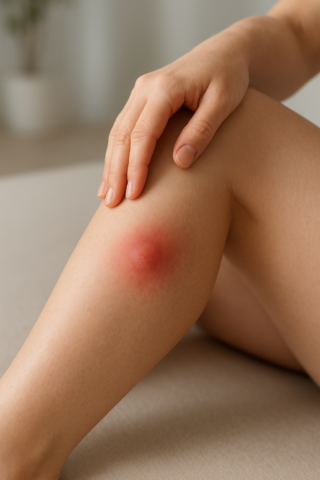
A bump on the leg with redness around it is often caused by an insect bite, irritated hair follicle, ingrown hair, boil, or inflamed cyst. However, increasing warmth, pain, swelling, drainage, or spreading redness may indicate a skin infection that needs medical care. An expanding rash after possible tick exposure or swelling involving most of one leg also deserves prompt evaluation.
Possible Causes of a Red Bump on the Leg
| Possible cause | Typical clues |
|---|---|
| Insect bite or sting | An itchy or puffy bump that appeared suddenly, sometimes with a small puncture mark. Several bumps may occur together. |
| Folliculitis or an ingrown hair | A small pimple-like bump centered on a hair follicle, often after shaving, sweating, friction, or wearing tight clothing. |
| Boil or skin abscess | An increasingly painful, warm lump that may develop a white or yellow center, soften, or drain pus. |
| Inflamed skin cyst | A rounded lump beneath the skin that may have been present before becoming red, swollen, or tender. |
| Cellulitis | Redness, warmth, swelling, and tenderness that spread beyond the original bump. Fever, chills, or swollen lymph nodes may also occur. |
| Tick-related reaction | A small immediate reaction may fade within a day or two. A rash that gradually expands over several days requires evaluation for Lyme disease or another tick-associated illness. |
| Inflammatory nodules | Multiple deep, tender bumps, particularly over both shins, sometimes accompanied by joint pain, fever, or recent illness. |
The appearance alone may not identify the cause. For additional background on rashes, infections, cysts, and other conditions, review this overview of common skin problems.
When Redness May Mean an Infection
A minor bite or blocked hair follicle can become infected when bacteria enter broken or scratched skin. A localized collection of pus is called an abscess or boil. Cellulitis is an infection affecting deeper skin tissues and may begin around a cut, bite, blister, ulcer, or other opening in the skin.
Features that make infection more likely include:
- Redness that is expanding rather than staying localized
- Increasing warmth, tenderness, throbbing, or swelling
- Pus, cloudy drainage, blistering, or an open sore
- Red streaks extending away from the area
- Fever, chills, fatigue, or swollen lymph nodes
According to MedlinePlus information about cellulitis, the condition can cause painful, red, tender skin and may require antibiotic treatment. A healthcare professional should assess suspected cellulitis rather than relying on home treatment.
Could It Be a Tick Bite?
A small bump or limited redness immediately after a tick bite is usually a local skin reaction. In contrast, the erythema migrans rash associated with Lyme disease typically begins several days after exposure and gradually expands. It may feel warm but is usually not especially itchy or painful, and it does not always have the familiar bull’s-eye appearance.
Contact a healthcare professional if an enlarging rash appears after time spent in wooded, brushy, or grassy areas, especially if it is accompanied by fever, headache, fatigue, muscle aches, joint pain, or swollen lymph nodes. The CDC’s description of Lyme disease symptoms includes examples of the different ways this rash can appear.
Occasionally, a firm bump remains at the bite site after the initial irritation has resolved. Learn more about persistent tick-bite granulomas and their management.
What You Can Do at Home
If the bump is small, symptoms are mild, and the redness is not spreading, basic skin care may be reasonable while monitoring the area:
- Wash gently. Clean the skin with mild soap and water, then pat it dry.
- Do not squeeze or puncture it. Trying to drain a boil, cyst, or ingrown hair can push infection deeper or spread bacteria.
- Use an appropriate compress. A cool, damp cloth may relieve itching and swelling from a bite. A comfortably warm compress may help a small boil-like bump drain naturally.
- Protect draining skin. Cover an open or draining area with clean gauze and wash your hands before and after changing it.
- Track changes. Note whether the redness is enlarging, take a dated photograph, or lightly mark its outer edge. Do not use monitoring as a reason to delay care if symptoms are worsening.
Avoid scratching, shaving over the bump, or sharing towels. If you are considering a nonprescription pain reliever, antihistamine, or anti-itch product, read the label carefully and ask a pharmacist or healthcare professional whether it is appropriate for you.
Could a Blood Clot Cause Redness?
A deep vein thrombosis, or DVT, usually does not look like a single superficial pimple or bite. It more often causes swelling, aching, tenderness, warmth, and red or discolored skin affecting a larger part of one leg. Risk can be higher after surgery, prolonged immobility or travel, serious illness, pregnancy, or use of certain hormone-containing medicines.
Seek prompt medical evaluation for unexplained one-sided leg swelling or calf pain. The National Heart, Lung, and Blood Institute provides more information about DVT symptoms and diagnosis. Sudden shortness of breath, chest pain, coughing blood, fainting, or a rapid heartbeat with leg symptoms requires emergency care.
When to Seek Care
Arrange same-day medical care through a primary care clinician, urgent care center, or dermatologist if:
- The redness is spreading or the bump is becoming rapidly larger or more painful.
- The skin is hot, very tender, draining pus, blistering, or developing red streaks.
- You have fever, chills, or feel generally unwell.
- An enlarging rash develops after possible tick exposure.
- The bump followed an animal or human bite, puncture wound, or retained splinter.
- You have diabetes, poor circulation, significant leg swelling, or a weakened immune system.
- The bump repeatedly returns, does not heal, bleeds easily, or remains unexplained for several weeks.
Seek emergency care for difficulty breathing, swelling of the lips or tongue, faintness after a bite or sting, rapidly spreading redness with severe pain, purple or black skin changes, confusion, or chest pain and shortness of breath. These symptoms may indicate a serious allergic reaction, aggressive infection, or blood clot complication.
A clinician may examine the bump, check whether pus is present, ask about shaving, injuries, bites, travel, and tick exposure, and sometimes obtain a culture or order imaging. Treatment depends on the cause, so antibiotics, drainage, or other procedures should only be used when medically indicated.
Other Articles You May Find of Interest...
- Bump on the Leg With Redness Around It: Possible Causes
- Small Itchy Bumps on the Skin: Possible Causes
- Palmar Erythema: Causes of Red Palms
- Breast Lift Scars: Incision Types, Healing Timeline and What Affects the Final Result
- Why Does the Jawline Look Square? Understanding the Masseter Muscle and Non-Surgical Options
- How Rhinoplasty Can Improve Both Aesthetics and Breathing
- Beyond Wrinkles: The Medical Benefits of Facial Botox